
Progress Keeps Moving, Storage Often Lags Behind
Civil and infrastructure projects rarely stay static. As work advances, crews expand, materials increase, and equipment requirements shift. What once felt like adequate storage soon becomes insufficient.
The challenge is not recognizing the problem. The challenge is solving it without slowing the project. Stopping work to build permanent storage is rarely realistic. Schedules are tight, access is limited, and operations must continue.
This is why modern civil teams are moving toward flexible storage solutions. Instead of permanent structures, fabric building construction allows storage capacity to grow alongside the project without disrupting active workflows.
When Growing Projects Start to Feel Constrained
Early-stage planning often underestimates how quickly storage needs evolve. Materials arrive in larger volumes. Equipment cycles increase. Temporary laydown areas become crowded.
Weather exposure adds another layer of risk. Unprotected materials can delay work, increase waste, and create safety concerns. Crews also lose time navigating cluttered sites.
Most project managers understand that storage is not just about space. It is about efficiency, safety, and keeping momentum intact. The solution must fit into live operations, not work against them.
The Real Challenges of Expanding Storage on Active Sites
Civil sites operate under constant constraints:
- Space is limited.
- Many projects run within narrow corridors, urban zones, or active roadways.
- There is little room to spare.
- Time is critical.
- Traditional steel construction requires foundations, curing time, and extended installation windows. Pausing work is rarely an option.
- Access is restricted.
- Large cranes and heavy deliveries are difficult to manage around live traffic and crews.
These conditions make conventional building methods impractical during active phases. Storage solutions must adapt to the site, not demand the site adapt to them.
Why Permanent Buildings Rarely Match Civil Workflows
Permanent structures are designed for fixed locations and long-term use. Civil projects, however, are constantly evolving.
- Foundations increase cost and complexity.
- Permitting slows progress.
- Once installed, relocation is not feasible.
When a project phase ends, permanent buildings often lose relevance. This creates unnecessary sunk costs. Civil teams need infrastructure that can move, scale, and adjust as the project does.
That need has driven growing adoption of flexible, engineered alternatives.
Storage Solutions Designed to Work Around Live Operations
Sheltirx addresses storage expansion with adaptability as the core principle.
Stormax™ clearspan fabric structures are designed for bulk storage, equipment staging, and protected work zones. Their open interiors allow uninterrupted movement of machinery and materials.
SkyShield™ container-mounted shelters add flexibility where ground space is limited. These systems can be installed directly over active laydown yards or temporary access routes, using containers as structural anchors.
Both systems are deployed without halting daily operations. This makes them especially effective on live civil and infrastructure sites.
The Engineering Behind Fabric-Based Structures
Modern fabric building construction is engineered for strength, speed, and adaptability.
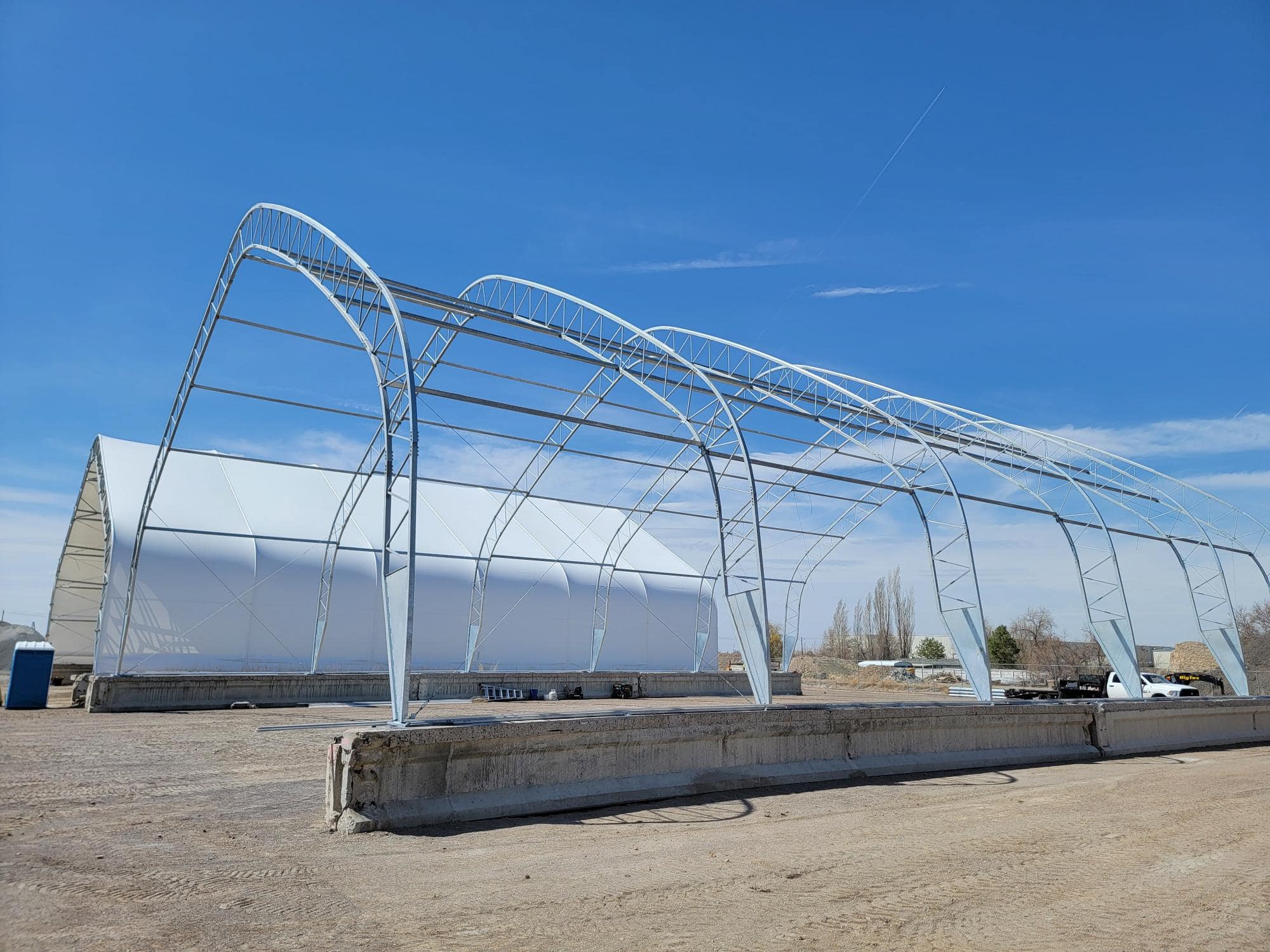
Hot-dip galvanised steel trusses form the structural backbone. Tensioned PVC or PVDF fabric membranes provide weather protection while remaining lightweight.
Each structure is engineered using site-specific ZIP code data. Wind and snow loads are calculated before deployment. This ensures compliance and performance across different regions.
Modular design allows sections to be added, removed, or reconfigured during the project lifecycle. Storage capacity can grow as material volumes increase.
Another advantage is foundation flexibility. These structures do not require permanent concrete foundations. Ballast systems or container anchoring provide stability while keeping the structure fully relocatable.
How These Structures Fit Seamlessly Into Civil Workflows
Installation timelines are short. Setup typically takes days, not months. Crews continue working while structures are assembled nearby.
Fabric structures can be installed over existing surfaces. Asphalt, compacted soil, and ballast areas all work without extensive preparation.
As procurement ramps up, coverage can expand in stages. Instead of overbuilding early, teams align storage capacity with real-time demand. This approach keeps sites organized and efficient throughout the project.
Planning for Change: Storage That Evolves With the Jobsite
PART 1: Planning for Change on Active Civil Jobsites
Civil projects are rarely static.
Layouts shift, timelines adjust, and material volumes grow as work progresses. Storage plans made during the early stages often become outdated long before the project reaches completion.
Fixed infrastructure struggles in these conditions. Once installed, permanent buildings lock the site into a layout that may no longer support active workflows. Relocating or resizing them is rarely practical.
This is where fabric building construction brings real value. Instead of forcing the project to adapt to the structure, the structure adapts to the project.
As construction advances, storage needs change in both size and location. Early-stage materials may no longer be required. Equipment staging areas often move as work fronts shift. Logistics hubs may need to be positioned closer to active zones to reduce travel time and congestion.
Fabric-based structures are designed for this level of change. They can be repositioned, expanded, or removed as site conditions evolve. This flexibility allows project managers to respond quickly without redesigning workflows or slowing progress.
By planning storage as a flexible asset rather than a fixed installation, civil teams maintain control even as project variables change.
PART 2: Reducing Risk, Cost, and Operational Friction Over Time
Change on site is not just a planning challenge. It also introduces risk.
Exposed materials increase the likelihood of damage, rework, and delays. At the same time, overbuilding storage early in the project ties up budget and valuable space.
Expandable fabric structures help balance these risks. Coverage can be added only when required, keeping costs aligned with real-time demand rather than early estimates. This phased approach improves budget control without sacrificing protection.
There is also a direct safety benefit. Congested jobsites increase the chance of incidents. Organized, covered storage zones improve visibility and reduce unnecessary movement of materials and equipment. When storage is placed closer to work areas, transport routes shorten, and site coordination improves.
Weather resilience is another operational advantage. Rain, snow, and wind can disrupt schedules when materials or curing zones are exposed. Fabric structures create protected environments that support consistent productivity in changing conditions.
Despite their flexibility, modern fabric building construction systems remain fully engineered. Structures are designed to meet site-specific wind and snow requirements and maintain stability even as they are reconfigured.
For civil teams focused on efficiency, storage that evolves with the jobsite reduces friction between planning and execution. It supports better decisions, smoother coordination, and safer operations from start to finish.
Practical Use Cases Across Civil and Infrastructure Projects
Flexible storage plays a role across multiple project functions.
- Covered rebar and formwork storage
- Enclosed curing zones for precast elements
- Equipment staging near the bridge and utility corridors
- Temporary contractor logistics hubs
- Crew staging and shelter areas
Each use case benefits from protection, proximity, and adaptability. These are essential factors on busy civil sites.
Cost and Schedule Advantages That Matter
From a project management perspective, the benefits extend beyond space.
There is no downtime caused by long construction schedules.
There are no re-permitting delays tied to permanent buildings.
Fabric structures typically offer a lower cost per square foot than steel alternatives. Installation requires less heavy equipment and fewer labor hours.
Because the structures are reusable, they retain value across multiple project phases. With fabric building construction, storage becomes a flexible asset rather than a fixed liability.
Engineering Support and Compliance Without Delays
Civil projects demand documentation and compliance. Sheltirx provides site-specific engineering packages to support approvals.
- Wind and snow load calculations are included.
- Structural drawings support safe installation.
- Local compliance data simplifies coordination with authorities.
This support helps teams deploy storage quickly without introducing administrative friction.
Conclusion: Storage That Keeps Pace With the Job
Civil projects move fast, and storage needs change just as quickly. Fixed buildings often struggle to keep up with shifting layouts, growing material volumes, and active work zones.
Flexible solutions offer a better path. With fabric building construction, storage can expand, relocate, or scale without interrupting daily operations. Materials stay protected, sites remain organized, and crews can stay focused on progress instead of logistics challenges.
This adaptability helps reduce delays, control costs, and improve safety across every phase of the project. For modern civil and infrastructure work, storage must support momentum, not slow it down.
Engineered Storage That Scales
Every site has unique demands. The right storage strategy makes those demands easier to manage.
Contact Sheltirx to develop an engineered storage plan that scales seamlessly with your construction workflow.
Frequently Asked Questions
-
How quickly can fabric storage structures be installed on an active site?
Most fabric structures can be installed in a matter of days, allowing work to continue with minimal disruption. -
Do fabric buildings meet wind and snow load requirements?
Yes. Each structure is engineered using site-specific data to meet local wind and snow load standards. -
Can these structures be expanded later in the project?
Yes. Modular designs allow additional sections to be added as storage needs grow. -
Are permanent foundations required?
No. Ballast systems or container anchoring eliminate the need for concrete foundations. -
Can fabric structures be reused on future projects?
Yes. They are fully relocatable and reusable across multiple project phases or sites. -
Are fabric buildings suitable for heavy equipment storage?
Yes. Clearspan designs allow safe storage and movement of heavy machinery and materials. -
Do these solutions work in tight or urban construction zones?
Yes. Container-mounted and modular options are well-suited for limited-access and space-constrained sites.