
Objective
This guide explains the practical differences between inside and outside mounting for a shipping container canopy. It will help buyers choose a mounting style based on required coverage, site access, drainage, installation work, and budget.
Key Takeaways
- An inside mount covers the working space between two containers.
- An outside mount covers the center bay and the container roofs.
- Inside mounting usually requires a narrower frame and less fabric.
- Outside mounting provides more total covered space but generally costs more.
- Container placement must match the selected mounting configuration.
- The canopy frame and mounting system must suit local wind and snow conditions.
A contractor orders a container canopy to cover a material-handling area. The containers arrive, the ground is prepared, and the crew positions everything according to the available space.
Then the mounting kit arrives.
The frame was designed for an outside mount, but the site only has enough clearance for an inside mount. Moving the containers delays the job and adds equipment costs that could have been avoided.
Mounting style may look like a small detail during planning. On-site, it controls the canopy width, protected area, drainage path, and container placement. Buyers need to settle this decision before ordering the structure.
What Is a Shipping Container Canopy?
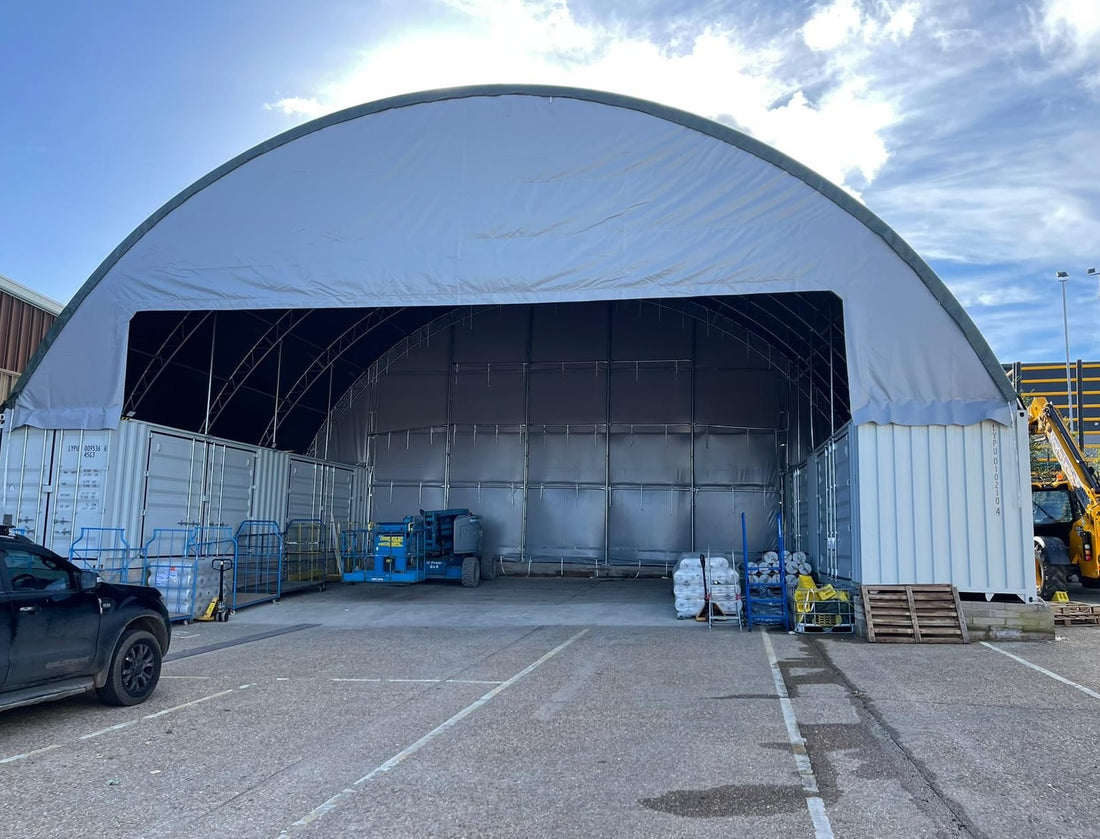
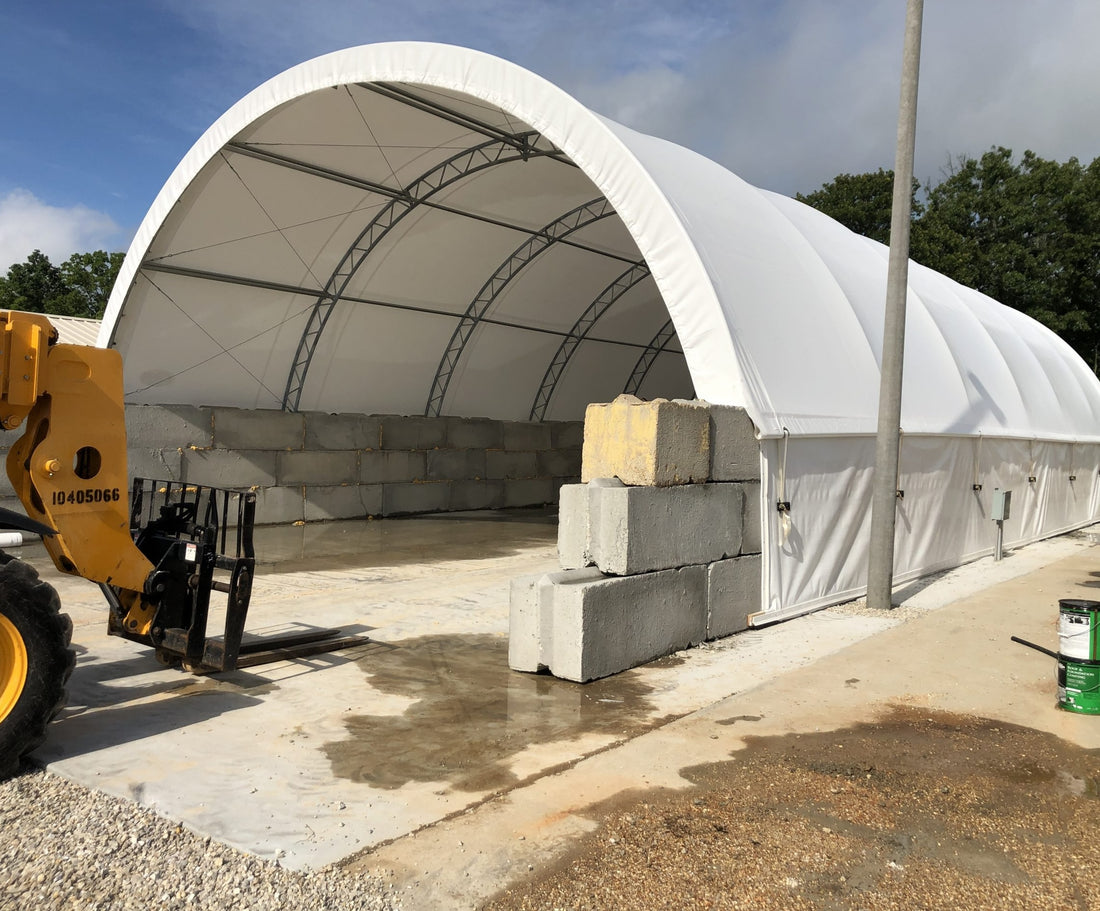
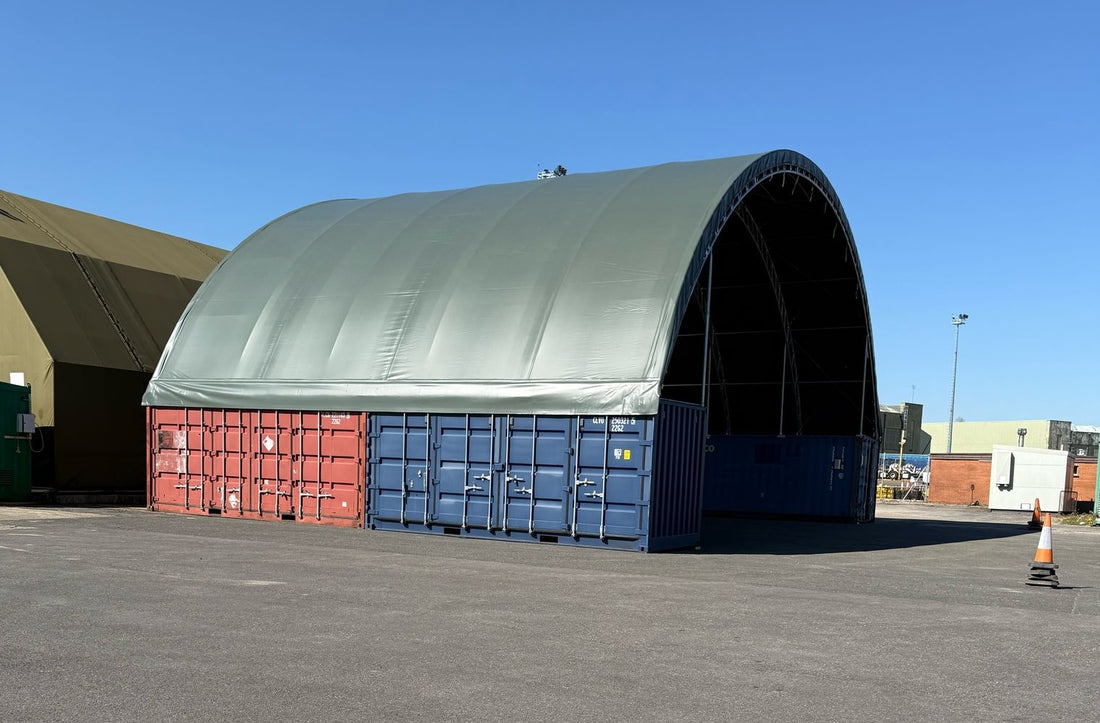
A shipping container canopy is a framed fabric roof commonly mounted between two parallel shipping containers. The containers support the structure while also providing secure storage, office space, or workshop space.
The open area between the containers can be used for:
- Equipment storage
- Vehicle parking
- Material handling
- Loading and unloading
- Repair work
- Farm supply storage
- Temporary workshop space
A container canopy creates covered space without requiring the same foundation and construction process as a conventional building. Its modular design also makes it suitable for sites where storage needs may change.
These structures are also called a conex canopy, conex box canopy, or shipping container cover. The names vary, but the basic layout remains the same: containers provide the supporting base, and a framed cover protects the area around them.
Inside Mount vs Outside Mount: The Main Difference
The difference is the position of the mounting brackets.
An inside mount attaches near the inward-facing top edges of the containers. It covers the open bay between them while leaving the container roofs exposed.
An outside mount attaches near the outer top edges. The frame spans across the center bay and both containers, placing the container roofs beneath the fabric cover.
That difference changes the complete container canopy setup.
|
Feature |
Inside Mount |
Outside Mount |
|
Covered Area |
Space between containers |
Center bay and container roofs |
|
Required Frame Width |
Narrower |
Wider |
|
Container Roof Protection |
No |
Yes |
|
Fabric Required |
Less |
More |
|
Exterior Clearance Needed |
Lower |
Higher |
|
Roof Access |
Easier |
More restricted |
|
Typical Cost |
Lower |
Higher |
|
Best Suited For |
Focused work or storage bay |
Broader weather protection |
The mounting position does not determine the canopy’s strength by itself. Strength depends on the frame design, mounting hardware, container condition, fabric tension, and site-specific load requirements.
For sites exposed to stronger winds, regular snowfall, or demanding daily use, the frame design also requires careful consideration. Our guide to single vs double truss canopy systems explains how these options differ.
How an Inside Mount Container Canopy Works
An inside mount container canopy is fixed along the top edges facing the central bay. The frame spans only the distance between the containers.
This layout keeps the structure compact. It works well when the main goal is to protect equipment, vehicles, stock, or workers in the open space between the containers.
Inside mounting often suits crowded yards where there is limited room beyond the outer container walls. It can also reduce the amount of steel and fabric required because the frame covers a narrower span.
There are tradeoffs. The container roof remains exposed to rain, snow, and direct sunlight. Water also drains close to the containers, so the ground must direct runoff away from the working area.
Roof access remains straightforward. Crews can inspect the containers, service vents, or reach approved rooftop equipment without working beneath the canopy cover.
Where Inside Mounting Makes Sense
Inside mounting is often the practical choice for:
- Narrow industrial yards
- Covered repair bays
- Equipment parking
- Loading areas
- Temporary construction compounds
- Farm machinery storage
- Sites where container roof access must remain open
A landscaping company, for example, may use two containers for secure tool storage and park compact equipment in the center. The business only needs the central bay covered. Paying for a wider outside mount would add little operational value.
How an Outside Mount Container Canopy Works
An outside mount container canopy extends across the entire arrangement, including the two container roofs. Its brackets attach near the containers’ outer top edges.
This design produces a larger covered footprint. It protects the main working bay while reducing direct exposure across the container roofs.
Outside mounting can make sense for sites that store temperature-sensitive materials inside containers or operate in areas with frequent rain and snow. Covering the container roof may reduce direct weather exposure, although the containers still require normal inspection and maintenance.
The wider span usually requires more frame material, more fabric, and additional installation work. The site also needs enough clearance beyond the containers for the frame, cover, drainage, and installation equipment.
Where Outside Mounting Makes Sense
Outside mounting is commonly used for:
- Long-term storage yards
- Industrial maintenance areas
- Container-based workshops
- Agricultural storage
- Weather-sensitive inventory
- Sites needing the largest possible covered footprint
- Operations using approved container-top storage
A parts yard may keep stock inside the containers and use the center bay for loading. Covering the entire conex box canopy arrangement protects a larger portion of the operation and gives workers more usable space during poor weather.
Which Mounting Option Fits Your Site?
Start with the work being done beneath the canopy.
If crews only need a dry central bay, an inside mount usually provides the required coverage without adding unnecessary width. If the container roofs and surrounding edges also need protection, an outside mount may be worth the extra cost.
Access matters too. An outside mount can restrict access to vents, rooftop services, lifting points, and container surfaces. Identify anything that requires regular inspection before approving the layout.
Drainage deserves equal attention. Inside-mounted roofs release water closer to the containers and center bay. Outside-mounted roofs direct runoff farther from the working area but require suitable drainage space beyond the structure.
Ask these questions before choosing:
- What needs to stay dry?
- Do the container roofs need protection?
- How much width is available on the site?
- Will workers need regular access to the container roofs?
- Where can rainwater and melting snow drain?
- Will trucks or forklifts pass close to the container walls?
- Could the structure need to move later?
- Does the site require front or rear panels?
The right answer comes from the actual site layout, not from which option looks better in a product photo.
What to Check Before Ordering a Container Canopy
Measure the site before requesting a final quote. Record the container length, planned spacing, available exterior clearance, nearby structures, access routes, and ground conditions.
The containers must sit level and parallel. Small positioning errors can make frame installation difficult and prevent the fabric from tensioning correctly.
Inspect the containers as well. The top rails, corner castings, and mounting areas must be suitable for the selected connection system. Heavy corrosion or structural damage needs attention before installation.
Buyers should also review:
- Required canopy width and length
- Frame and truss configuration
- Wind and snow load requirements
- Mounting bracket design
- Fabric weight and expected service life
- Open or enclosed configuration
- Front and rear panel options
- Equipment required for installation
- Local permit and setback requirements
Sheltirx SkyShield™ container canopies use hot-dip galvanized steel frames with waterproof and UV-resistant fabric. The modular systems can be configured for open or enclosed use and extended to suit different site layouts.
Available cover options include 25 oz PVC with a 10-year guarantee and 32 oz PVDF with a 20-year guarantee. Buyers should choose the material according to expected exposure, operating period, and project budget.
Cost and Installation Factors
Inside mounting often costs less because it uses a narrower frame and smaller cover. It may also require less time and equipment during assembly.
Outside mounting generally costs more. The wider span requires additional steel and fabric, while the larger structure can increase handling and lifting requirements.
The final cost will also depend on:
- Canopy dimensions
- Frame type
- Cover material
- End panels and doors
- Delivery location
- Site preparation
- Installation crew size
- Required lifting equipment
- Structural documents or permits
Do not position the containers permanently until the supplier confirms the required spacing and mounting dimensions. Correct placement is one of the most important parts of the installation.
For a practical breakdown of site preparation, frame assembly, fabric tensioning, and final checks, read how to install a container canopy.
Frequently Asked Questions
Is an Inside Mount Container Canopy Cheaper?
Inside mounting is usually less expensive because the structure covers a narrower span and requires less material. Final pricing still depends on the canopy size, frame type, fabric, delivery, and installation requirements.
Does an Outside Mount Stop Shipping Containers From Rusting?
An outside mount can reduce direct rain and snow exposure on the container roof. It does not prevent corrosion entirely. Containers still need proper drainage, ventilation, inspections, and surface maintenance.
Can I Change an Inside Mount Canopy to an Outside Mount Later?
Only if the frame, fabric cover, and mounting system are designed to support both layouts. Most conversions require different components because an outside mount covers a wider span. Confirm compatibility with the supplier before making changes.
Which Mounting Option Provides More Covered Space?
An outside mount provides more total covered space because the roof extends across the container roofs. An inside mount focuses coverage on the central bay.
Can a Canopy Be Mounted on Used Shipping Containers?
Yes, provided the containers are structurally suitable. The top rails, corner castings, and mounting areas must be inspected for damage, deformation, and corrosion before installation.
Choose the Mounting Style Before Setting the Containers
Choose an inside mount when the project needs a compact and cost-conscious cover for the central bay. Choose an outside mount when protecting the container roofs and creating the largest covered footprint are priorities.
Both options can work well when the site is measured correctly and the structure matches local conditions. Problems usually begin when the mounting style is selected after the containers have already been positioned.
To discuss the right SkyShield™ frame, cover, and mounting configuration for your site, contact Sheltirx for a project quote.