
Objective
Help operations managers, site supervisors, and procurement teams understand the US permit landscape for container shelters so they can plan installations confidently and avoid delays.
Key Takeaways
- Most US jurisdictions treat container shelters as temporary structures, but that doesn't automatically mean no permit is required.
- Permit requirements vary by state, county, and intended use - there is no single national rule.
- Having proper engineering documentation ready speeds up approvals significantly.
- The way you classify and present your structure to the AHJ (Authority Having Jurisdiction) affects the outcome.
- A good supplier provides the drawings, load data, and documentation you need — you shouldn't be chasing this yourself.
The Permit Question Nobody Asks Until It's Too Late
You've identified the location. The containers are scheduled. The supplier has confirmed lead time. Then someone from the office asks: "Did you check if we need a permit for this?"
It happens more often than it should. Permit requirements for a container shelter get overlooked during planning and surface at exactly the wrong moment - when the clock is already running.
The answer isn't as simple as yes or no. It depends on your state, your county, your site classification, and how long the structure will be there. This guide cuts through the ambiguity so you can plan properly from the start.
What Is a Container Shelter Under US Building Law?
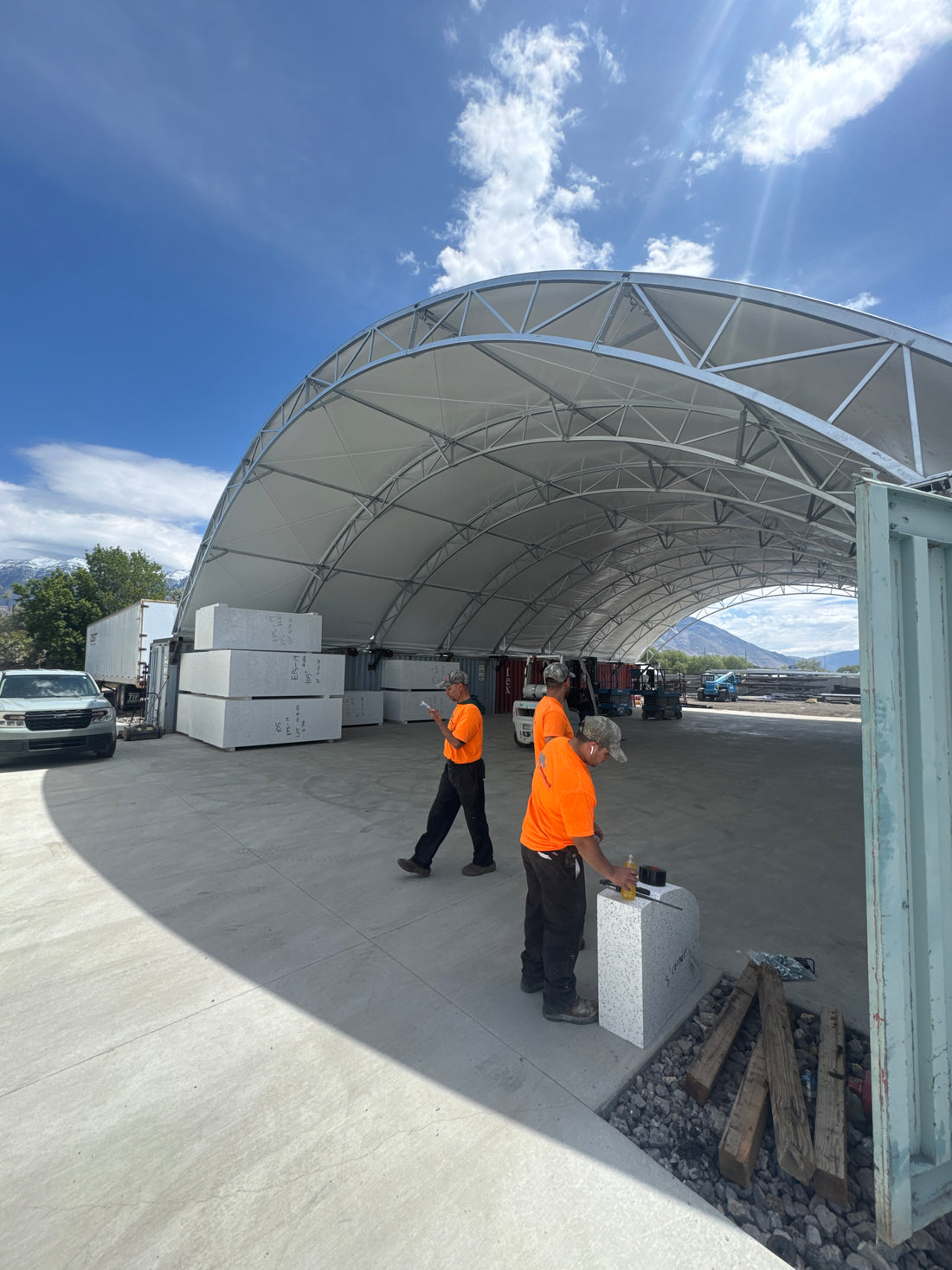
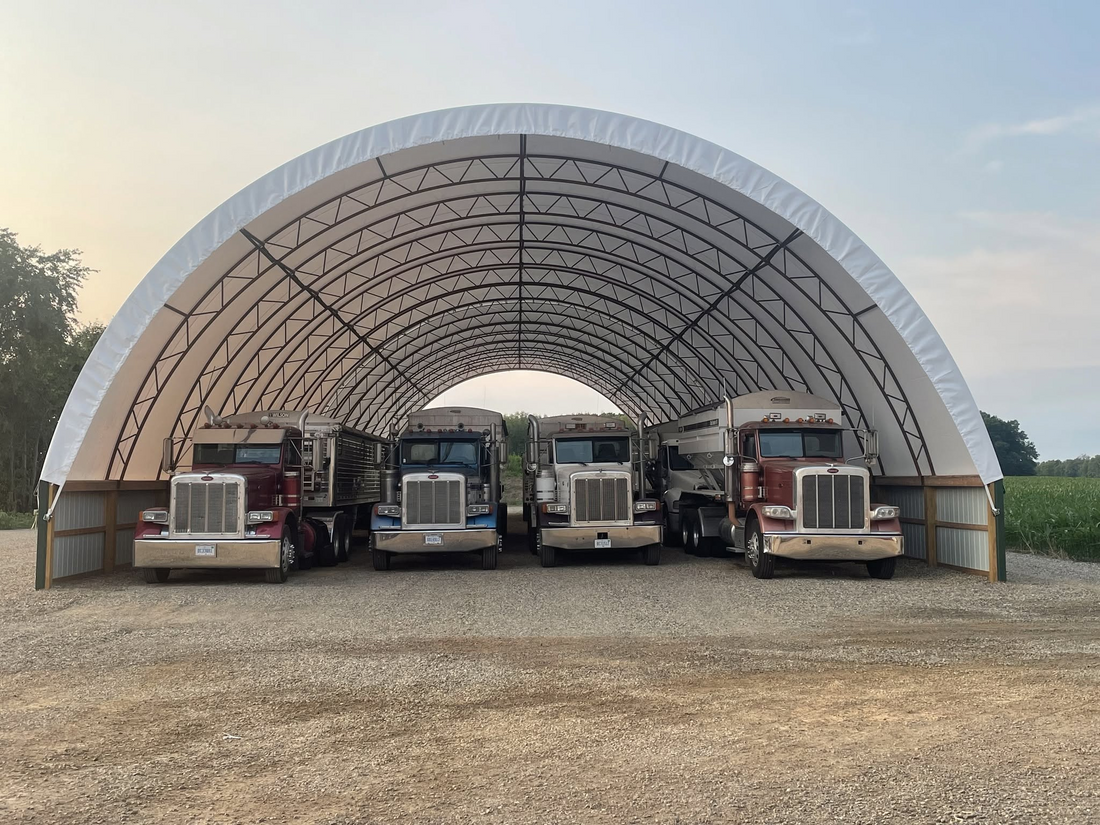
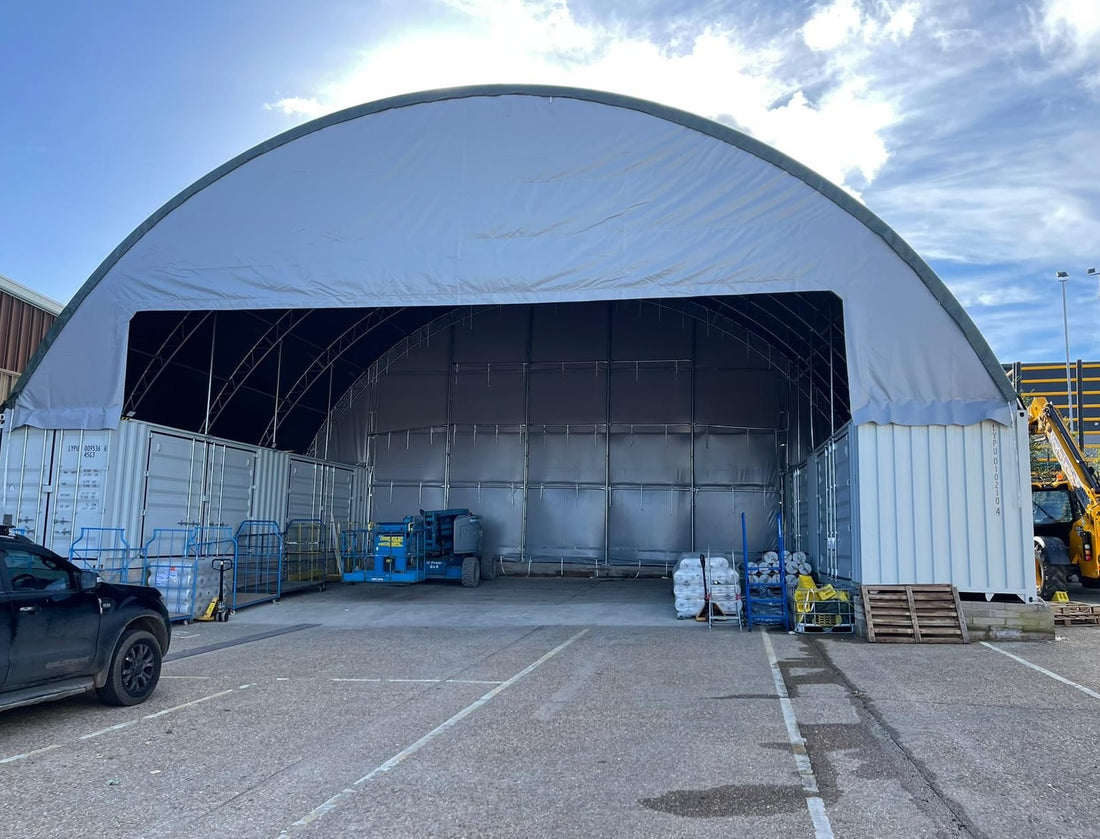
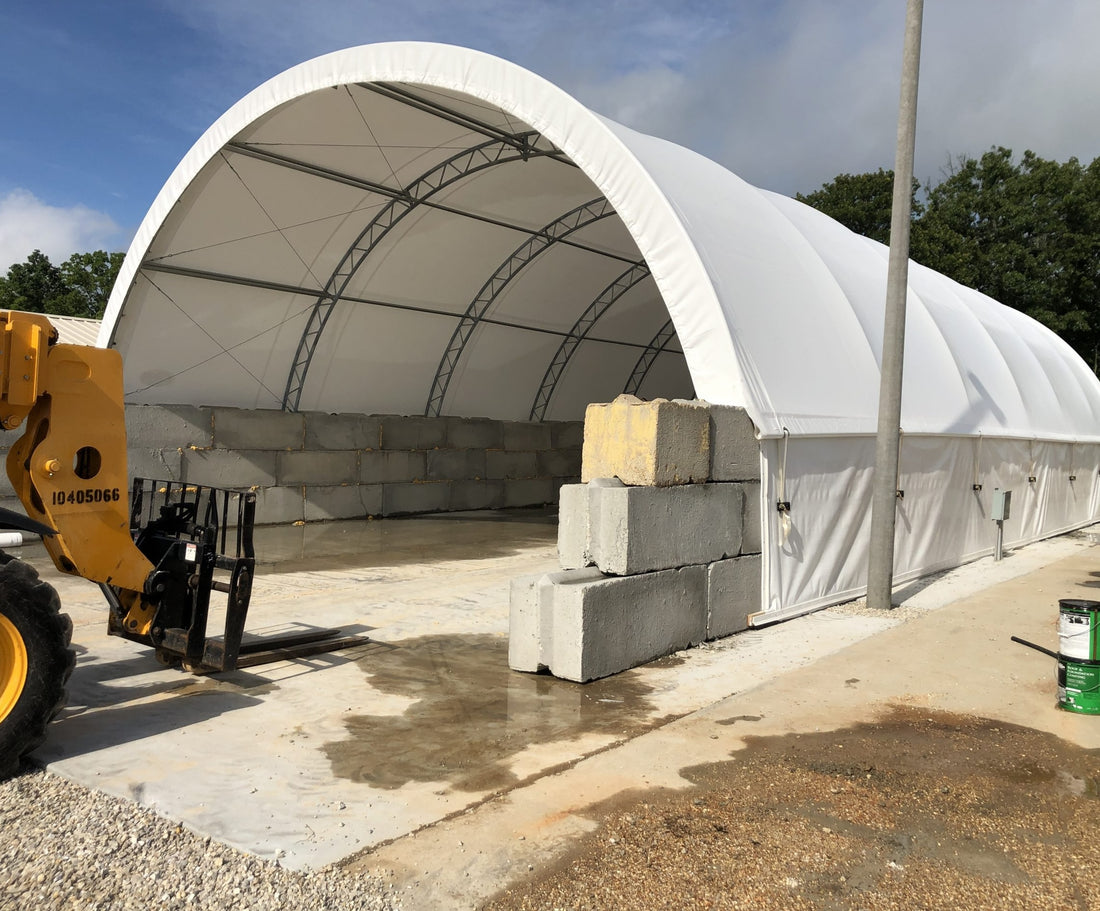
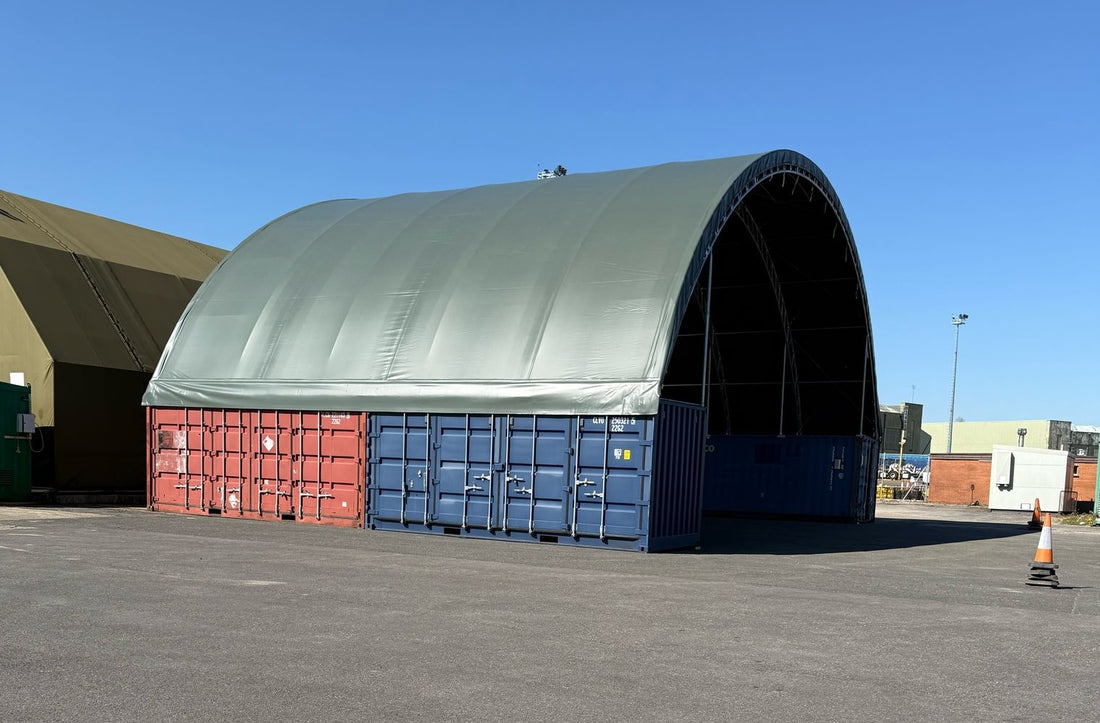
A container shelter - also referred to as a shipping container shelter, conex canopy, or container dome - is a fabric-covered arch structure that spans across two ISO shipping containers. The containers act as the structural base. The arch frame bolts onto their top rails: no ground penetration, no concrete footings.
Under US building law, how a structure is classified determines what approvals it needs. The two categories that matter here are permanent structures and temporary structures. Permanent structures almost always require a full building permit. Temporary structures may or may not, depending on jurisdiction.
Container shelters typically fall into the temporary category - but "typically" is doing a lot of work in that sentence. Read on.
Is a Container Canopy a Temporary Structure?
This is the question that determines your permit path, and the answer depends on a few factors your local Authority Having Jurisdiction (AHJ) will consider.
Intended duration - If the structure will be in place for less than 180 days, most jurisdictions are more likely to treat it as temporary. Beyond that window, some will require you to meet permanent structure standards.
Foundation type - Container shelters use the containers themselves as ballast with no ground anchors or concrete. That supports a temporary classification in most cases.
Use type - A covered loading bay on a commercial yard is viewed differently from a structure used for public assembly or food production. Industrial use generally faces less scrutiny than public-facing applications.
Relocability - Structures that can be dismantled and moved are more consistently treated as temporary. A SkyShield™ container canopy from Sheltirx is fully relocatable — it comes down, moves, and goes back up without modification.
The IBC (International Building Code) provides a baseline, but local amendments override it. What's acceptable in Wyoming may require additional steps in California or Florida.
Container Shelter Regulations USA - What Actually Varies
There is no federal permit standard for container dome or industrial canopy structures. Regulation sits at the state and local level, which means the rules in one county can be meaningfully different from the county next door.
Here's what typically varies:
Permit threshold by structure size - Many jurisdictions set a square footage threshold below which a permit isn't required. A small conex canopy covering a single equipment bay may fall under that threshold. A larger multi-bay shipping container shelter almost certainly won't.
Engineer stamp requirements - Some states require a licensed PE (Professional Engineer) to stamp drawings before a permit is issued. Others accept manufacturer-provided load documentation. Sheltirx structures can be stamped by state engineers where certification is needed.
Zoning classification of your site - Industrial-zoned land generally has more permissive rules for temporary structures than commercially or residentially zoned land. If your site sits near a zone boundary, it's worth confirming which rules apply.
Fire rating requirements - Certain jurisdictions require fabric structures to meet specific fire rating standards. Sheltirx uses UV-stable, fire-rated PVC and PVDF fabrics as standard, which satisfies most requirements - but verify locally.
The safest starting point is a direct conversation with your local building department or AHJ before you order. Most will give you a clear steer within a day or two.
What Documentation You'll Typically Need
If a permit is required, you'll generally need to provide:
Structural drawings - Plan view, elevation, and cross-section showing the container positions, arch frame, and fabric cover. Sheltirx provides these as standard.
Load calculations - Wind and snow load data specific to your site location. Sheltirx researches your city and ZIP code to produce location-specific calculations from the start of the project.
Site plan - A simple drawing showing where the structure sits on your property relative to boundaries, access roads, and other buildings.
Engineer stamp (where required) - A licensed PE certification of the structural drawings. Available for Sheltirx projects where your jurisdiction requires it.
Intended use statement - Some AHJs ask for a brief description of what the structure will be used for. Keep it accurate and specific.
Having this documentation ready before you approach the building department shortens the approval timeline considerably. Arriving without it means multiple back-and-forth trips that delay your project for no good reason.
When You're Most Likely to Need a Permit
To give you a practical picture, here are real situations where a permit is typically required:
A logistics company installs a 40-meter shipping container shelter in a Texas industrial yard for year-round loading cover. The structure exceeds local size thresholds and will be in place indefinitely - permit required, with engineer stamp.
A construction contractor sets up a container dome on a 90-day project site in Colorado to cover materials and equipment. Temporary use, sub-180 days, industrial zone - permit not required, but the contractor keeps load documentation on file in case of inspection.
A utility operator in Florida installs a conex canopy in a coastal area for equipment storage. Florida's wind load requirements are among the most stringent in the US - permit required, and engineering to Florida Building Code is mandatory.
These aren't edge cases. They're the kinds of decisions site managers make every month. Getting clarity upfront takes an hour, and getting it wrong can lead to weeks of delays.
How to Handle the Process Without Slowing Down Your Project
The permit process doesn't have to delay your timeline if you sequence it correctly.
Start the permit enquiry before you order. Contact your local building department with the basic structure dimensions and intended use. In most cases, they'll tell you within 48 hours whether a permit is required and what they need to process it.
Order your structure in parallel. Once you know what documentation is required, place your order and request the necessary drawings and load data from your supplier at the same time. Sheltirx provides full documentation as part of the project process - not as an afterthought.
Submit early. Most building departments process temporary structure applications faster than permanent ones. Submit as soon as you have the documentation and follow up weekly.
Keep a copy of everything on site. Once approved, keep the permit, drawings, and load calculations on site for the duration of the installation. Inspectors ask for these, and not having them creates unnecessary problems.
If you're still working through the bigger question of whether to own or rent your structure, our guide on renting vs buying a container shelter covers the financial and operational trade-offs in detail.
For a broader look at everything a site manager needs to consider before installation - permits included - the container canopy site manager guide is the place to start.
Frequently Asked Questions
My Site Is Temporary. Does That Mean I Automatically Do Not Need A Permit?
No. A temporary site may reduce permit requirements, but it does not remove them completely. The local authority having jurisdiction will decide based on size, use, location, and code requirements.
Who Is Responsible For Getting The Permit?
The site owner or contractor is usually responsible for submitting the permit application. The supplier should provide supporting documents such as drawings, load data, and engineering certification where required.
What Happens If I Install Without A Required Permit?
You may face a stop-work order, fines, or an order to remove the structure. It can also create insurance issues if something goes wrong. It is safer to check first.
How Long Does Permit Approval Take For A Container Shelter?
Temporary structure approvals often take one to three weeks when the paperwork is complete. Missing drawings, load data, or engineering documents can delay the process.
Does Sheltirx Provide Engineer-Stamped Drawings?
Yes. Sheltirx can provide engineer-stamped drawings where required by the local jurisdiction. It is best to mention this during quoting so it can be included in the project timeline.
Final Word
Permit requirements for a container shelter in the US are not one-size-fits-all. They depend on where you are, what you're building, how long it stays, and how you present it to your local authority. Most industrial applications go through without significant friction - but only when the groundwork is done properly.
Get the documentation right, sequence the process alongside your order, and you won't lose a day to permit delays.
If you're planning a container shelter installation and want support from specification through to documentation, contact the Sheltirx team for a same-day response.