
Objective
This guide explains how high winds affect a shipping container canopy shelter. It covers the parts most likely to suffer damage, how to prepare the site, and what buyers should check before ordering a canopy for an exposed location.
Key Takeaways
- A canopy should never be treated as hurricane-resistant without a documented wind rating.
- Wind can push against the frame while also lifting the roof from below.
- Loose fabric, weak connections, and unsecured panels can lead to larger failures.
- Shipping containers provide support, but their weight alone does not protect the canopy.
- Nobody should remain under a container canopy during severe winds.
- The complete structure should be inspected after a major storm.
A hurricane warning gives a site manager limited time to act. Equipment must be moved, loose materials secured, and workers sent home safely. The canopy often becomes a concern only after the rest of the yard has been handled.
That is too late to start thinking about wind performance.
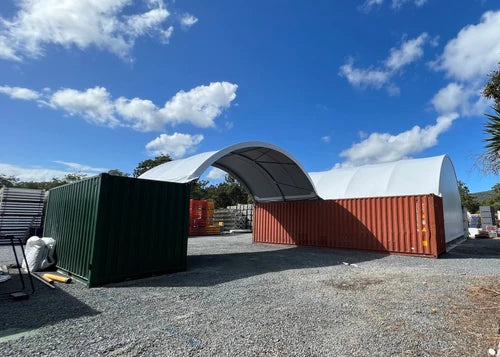
A shipping container canopy shelter can provide dependable cover in difficult weather, but no structure has unlimited strength. Its performance during a hurricane depends on its design, installation, condition, and rated capacity.
What High Winds Do to a Shipping Container Canopy Shelter
Strong wind places pressure on every exposed part of a canopy. It pushes against the sides, pulls at the fabric, and creates uplift beneath the roof.
Gusts make the situation harder. They arrive quickly, change direction, and repeatedly load the frame and connections. A loose component may survive steady wind but fail after several strong gusts.
Open-ended canopies allow wind to enter beneath the roof. That air can press upward against the fabric. Enclosed designs face different pressure patterns, especially if a door or panel opens during the storm.
Damage often starts in one small area. A loose strap lets the fabric move. The moving fabric places more stress on nearby fasteners. Once those fasteners fail, a larger section of the cover may pull away.
Shipping containers add weight and support, but they do not guarantee the canopy will remain secure. The frame, brackets, containers, and ground must work together as one structure.
Why Container Canopy Wind Rating Matters
A container canopy wind rating shows the wind conditions a specific canopy design is intended to handle when installed correctly.
The rating applies only to the approved layout. Changing the mounting system, container spacing, canopy length, doors, or end panels may affect performance.
The shipping container shelter wind load is the force placed on the complete structure. Several site conditions influence that load:
- Local wind speeds
- Sudden gusts
- Canopy width and height
- Roof shape
- Open or enclosed layout
- Nearby buildings
- Open land or coastal exposure
- Mounting and anchoring method
Do not rely on descriptions such as “heavy-duty” or “all-weather.” Ask for the actual industrial canopy wind rating and confirm that it applies to the model, size, and configuration being ordered.
Buyers should also ask how the rating was calculated. A gust speed, sustained wind speed, and structural design wind speed do not mean the same thing.
How Container Dome Wind Resistance Works
The curved roof of a container dome allows wind to move over the structure more smoothly than it would over a flat wall. That shape helps, but it does not remove uplift or side pressure.
Container dome wind resistance depends on a clear load path. Wind pressure moves from the fabric into the frame, through the brackets, and into the containers or other supports.
One weak connection can interrupt that path. A strong frame cannot perform as intended if a mounting plate, bolt, brace, or container rail fails.
Fabric tension matters as well. Tight fabric transfers pressure across the frame. Loose fabric moves in the wind and repeatedly pulls against straps, fasteners, and frame sections.
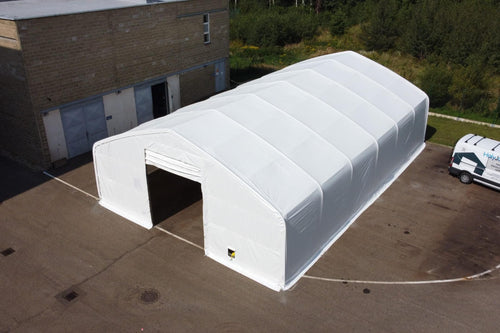
Sheltirx SkyShield™ canopies use hot-dip galvanized steel frames with waterproof and UV-resistant fabric covers. Double-truss options provide more resistance to wind and snow for exposed sites. The selected system must still match the conditions at its installation location.
Parts Most Likely to Be Damaged During a Conex Canopy Storm
A conex canopy storm failure does not always begin with a bent frame. Smaller parts often fail first.
Fabric Cover
Loose fabric can flap hard enough to damage its edges and tensioning points. Existing cuts or worn areas may spread quickly under repeated pressure.
The cover should remain evenly tensioned. Any section that sags or moves more than usual needs attention before storm season.
Straps and Fasteners
Straps, ratchets, bolts, and fasteners keep the cover and frame connected. Missing, loose, or corroded hardware reduces the strength of the complete structure.
These parts should be checked regularly. Waiting until a storm warning leaves little time to replace damaged components properly.
Bracing and Mounting Points
Cross-braces help the frame control movement. Bent braces, loose bolts, or damaged mounting plates may prevent the canopy from carrying wind forces as designed.
The top rails and mounting areas of the containers also require inspection. Heavy rust or previous impact damage can weaken an otherwise suitable installation.
Doors and End Panels
An unsecured panel can catch the wind and pull against the frame. A door that opens during a storm may also change the internal pressure beneath the canopy.
Follow the manufacturer’s instructions for securing doors and panels. Do not remove or add panels based on guesswork before a conex canopy storm.
Surrounding Yard Materials
Loose pallets, signs, tools, sheet materials, and bins can become airborne. These items may tear the canopy fabric or damage the frame even if the structure remains within its rated wind conditions.
Clearing the surrounding yard is a basic part of container cover storm protection.
How to Prepare a Container Shelter for a Hurricane
Preparation should begin well before a storm appears in the forecast. Sites in hurricane-prone or exposed areas need a written inspection and shutdown process.
Use this container shelter hurricane checklist:
- Confirm the canopy’s documented rating.
- Review the manufacturer’s storm instructions.
- Check the fabric for tears, wear, and loose sections.
- Inspect bolts, braces, brackets, and mounting points.
- Secure doors and panels as instructed.
- Remove loose materials from the surrounding yard.
- Move valuable equipment to a safer location.
- Clear drainage routes around the containers.
- Close access to the canopy before winds arrive.
- Follow local evacuation orders.
Do not send workers onto the containers once strong winds begin. Repairs attempted during a storm place people directly beneath moving fabric and structural components.
A container shelter hurricane plan should also identify who closes the site, where equipment will be moved, and who will inspect the canopy afterward.
What to Inspect After High Winds
Keep people away from the canopy until the storm has passed and the area is safe. Loose components can fall even when the structure appears stable from the ground.
Inspect the container cover storm protection system for:
- Torn or displaced fabric
- Loose straps and tensioners
- Bent frame sections
- Missing or loose bolts
- Damaged cross-bracing
- Shifted mounting plates
- Damage to container top rails
- Container movement or settlement
- Impact damage from debris
Do not assume that tightening one loose strap solves the problem. Movement in one area may have placed stress on other parts of the structure.
A qualified person should inspect the canopy after a major wind event. Keep photographs and written records of any damage, repairs, or replaced components.
What to Check Before Buying for an Exposed Site
Tell the supplier where the canopy will be installed and how it will be used. A sheltered inland yard has different requirements from an open coastal site.
Ask for the exact container canopy wind rating for the proposed size and configuration. Confirm that the rating covers the selected mounting method, panels, doors, and truss system.
Also request details about:
- Site-specific wind requirements
- Frame and bracing design
- Required container condition
- Mounting hardware
- Fabric specification
- Installation process
- Maintenance schedule
- Storm preparation steps
- Permit and approval requirements
The shipping container shelter wind load should be reviewed before selecting a canopy. Trying to strengthen an unsuitable structure later may require new brackets, additional frame sections, or complete replacement.
Site managers comparing different shelter types can also read container canopy vs steel carport wind.
Cost of Preparing for High-Wind Conditions
A canopy designed for an exposed site will usually cost more than a basic shelter. Stronger frames require more steel. Additional bracing, heavier mounting components, and site-specific documentation also affect the price.
Cost may depend on:
- Canopy size
- Single or double-truss construction
- Required industrial canopy wind rating
- Container or block mounting
- Cover material
- Open or enclosed design
- Doors and end panels
- Delivery and installation
- Permit requirements
The cheapest canopy is not the lowest-cost option if it cannot meet the site’s conditions. Storm damage can affect the shelter, stored equipment, nearby vehicles, and surrounding property.
Frequently Asked Questions
Can a Shipping Container Canopy Survive a Hurricane?
It depends on the structure’s documented rating, installation, condition, and the strength of the storm. Never assume a canopy can handle hurricane winds without supporting information for the specific site.
Are Shipping Containers Heavy Enough to Stop the Canopy From Lifting?
No. Container weight helps, but the mounting brackets, frame, fabric, container condition, and ground stability must all be suitable.
Should End Panels Be Removed Before a Storm?
Follow the instructions provided for the canopy. Removing or adding panels changes how wind moves through the structure and may increase pressure in unexpected areas.
Is It Safe to Store Equipment Beneath the Canopy During a Hurricane?
Valuable or essential equipment should be moved to a safer location when possible. A canopy should not be treated as guaranteed hurricane protection.
Does the Fabric Guarantee Cover Storm Damage?
A fabric guarantee may not cover damage caused by winds beyond the structure’s rating. Review the guarantee terms and insurance coverage before ordering.
Plan for High Winds Before Installation
A shipping container canopy shelter performs best when it is selected for the site, installed correctly, and inspected regularly. Storm preparation cannot correct an unsuitable design or weak installation at the last minute.
Sheltirx offers modular SkyShield™ systems with reinforced and double-truss options for demanding sites. To discuss your location, mounting method, and required wind performance, contact Sheltirx for a quote.