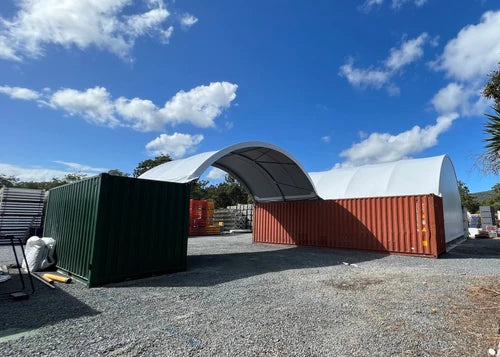
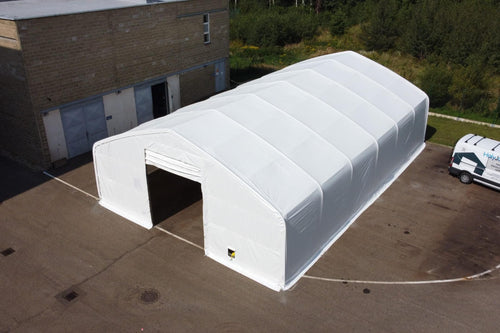


Parts storage has different needs from parking large equipment. Replacement components, hoses, fittings, fasteners, tool kits and service supplies are easier to manage when there is space to separate categories and keep frequently needed items close to the work they support. A dedicated parts storage building gives inventory a defined location instead of spreading it across workshops, vehicles and outdoor containers.
The footprint should account for shelving or storage systems selected by the operator, aisle width, receiving space and room to move parts safely. If forklifts or pallet-handling equipment will be used, aisle and door dimensions should be established before the building is specified. Equipment storage buildings may also need higher clearance for mowers, pumps, generators, compact machinery or specialized maintenance equipment.
Separating larger assets from small-parts inventory can help prevent traffic conflicts and make both areas more useful. The storage plan should also consider how items will be labeled, counted, rotated and replenished, especially where crews rely on the same parts across multiple vehicles or work areas.