
Objective:
Educate readers on the benefits, sizes, and key considerations of choosing a shipping container canopy shelter for creating durable, practical storage and workspaces using existing shipping containers.
Key Takeaways
1. A shipping container canopy turns the space between two containers into usable covered ground, without the complexity of a permanent building..
2. Sizes typically range from 20x20 ft to 60x80 ft, so the right choice depends on what you're storing, not just what container footprint you already have.
3. Frame material matters more than fabric color. Hot-dip galvanized steel resists rust in ways that painted or powder-coated steel can't match over time.
4. Structures engineered to meet local wind and snow load codes, or the International Building Code, hold up through real weather instead of failing in year two.
5. Installed canopies typically deliver faster ROI than steel or concrete builds, since they go up in days and can be relocated if your site changes.
You've already got shipping containers on site. What you don't have is a dry, usable space between them where crews can work, load out, or stage materials without the weather deciding the schedule for you. Building a permanent structure takes months of permits and planning that most sites don't have room for.
A shipping container canopy solves the actual problem: fast, engineered cover that spans your existing containers and turns dead space into working space, this month, not next quarter.
What Is a Shipping Container Canopy?
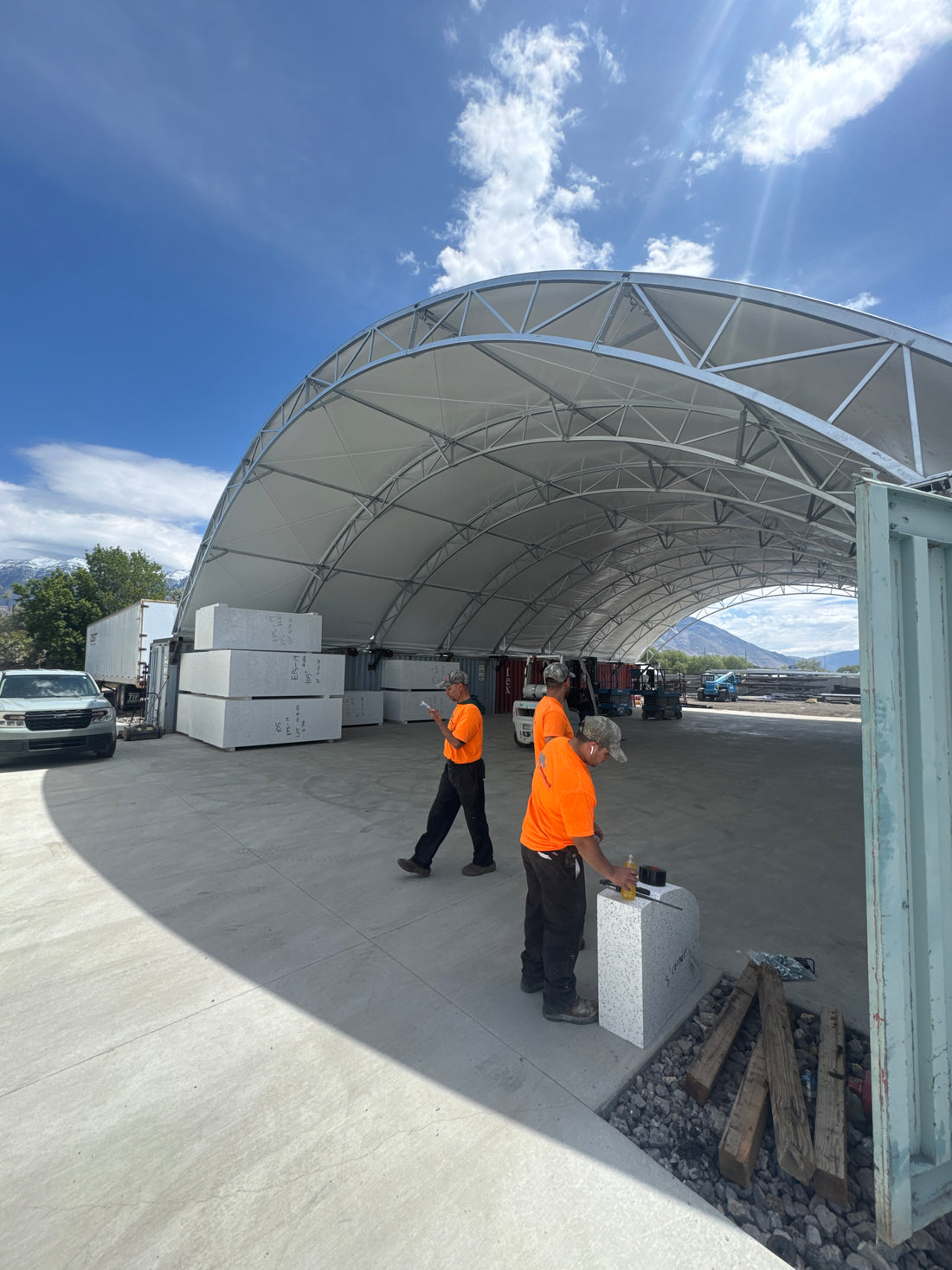
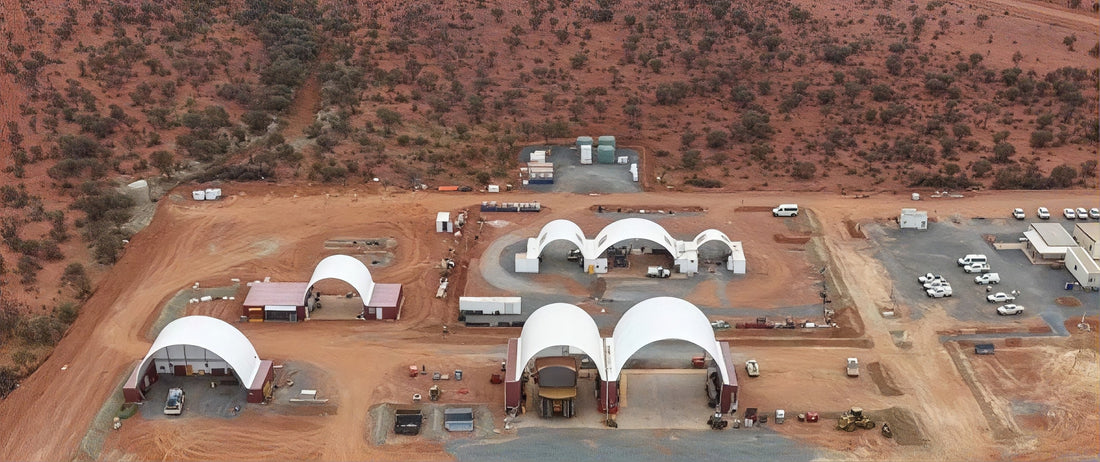
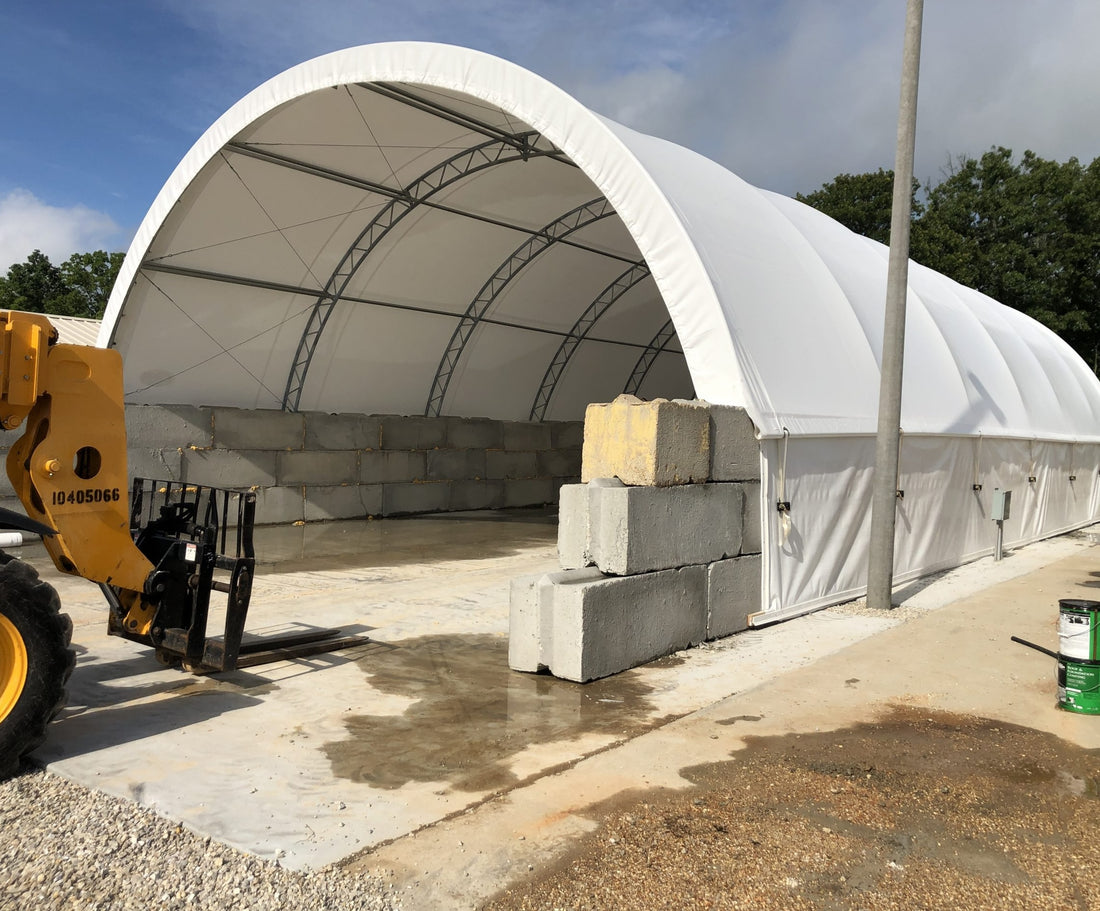
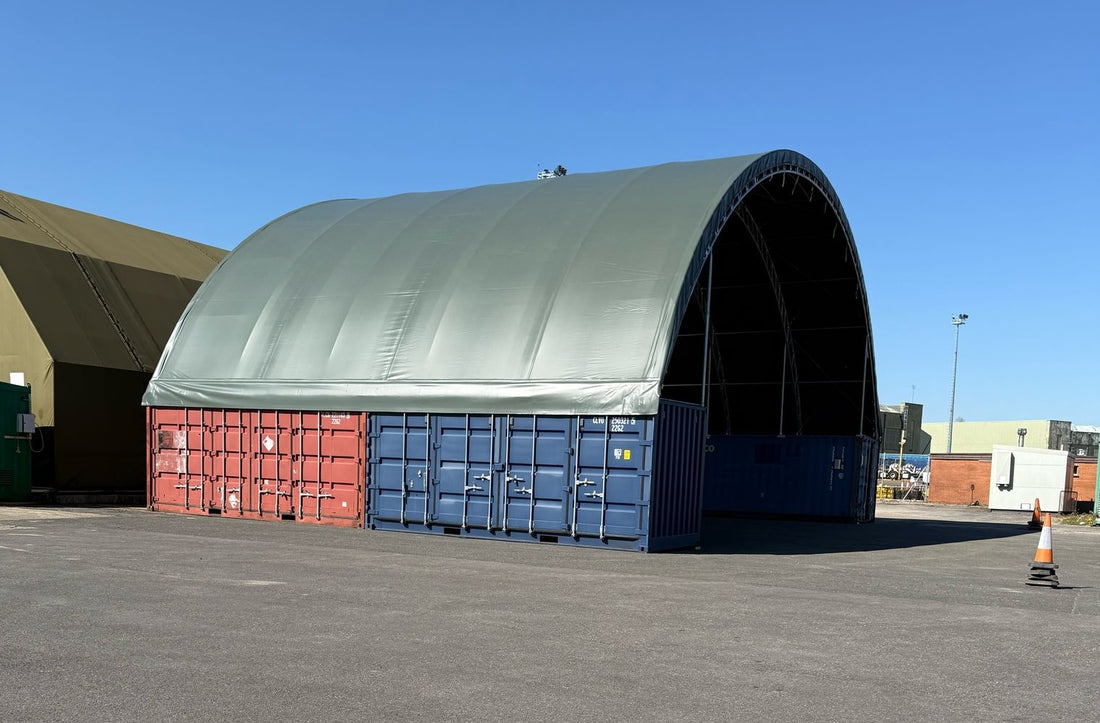
A shipping container canopy is an engineered fabric roof structure that spans the gap between two containers, using the containers themselves as the mounting points.
The frame typically bolts or clamps to the container's top rails, so no foundation work is needed. A tensioned fabric top, usually PVC or PE, stretches across a galvanized steel frame to shed rain, block sun, and in properly engineered designs, carry snow load without sagging.
It's not a tarp system and it's not a tent in the camping sense. It's a structural building component sized to match standard 20 ft and 40 ft container dimensions.
How Does It Work With Existing Containers?
The canopy frame attaches directly to the container rails, then the fabric top tensions across it to create a fully sheltered span between the two units.
Most installs use the containers as load-bearing anchor points on either side, with the frame spanning the width you specify. This means your container layout largely determines your canopy width, though custom spans are available for sites that need more flexibility.
Installation crews typically finish a standard-size canopy in a day or two, depending on span and site access. No concrete, no curing time, no waiting on a foundation inspection before you can start using the space.
What Sizes Are Available?
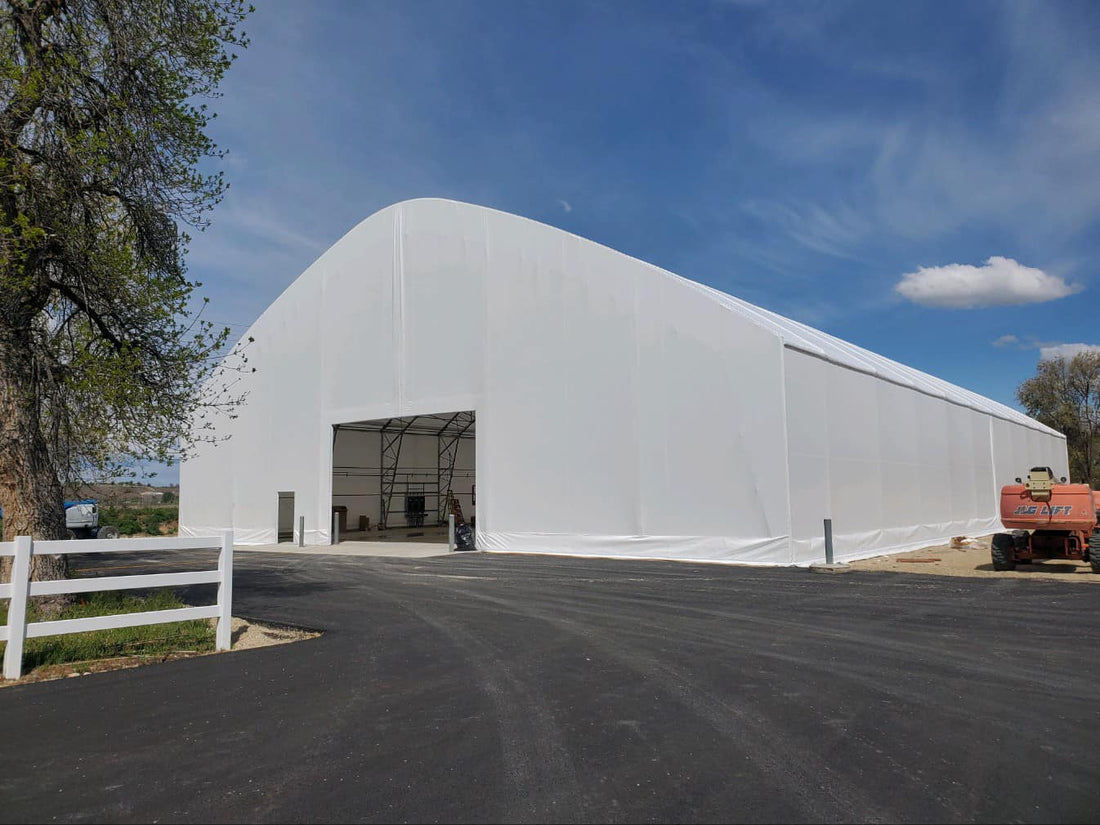
Canopy sizes generally run from 20x20 ft for a compact storage bay up to 60x80 ft for large equipment yards, with several sizes in between.
| Size | Best For |
|---|---|
| 20 x 20 ft | Small equipment storage, single vehicle bay |
| 20 x 40 ft | Materials staging, small crew workspace |
| 40 x 20 ft | Loading dock cover, wider single-container span |
| 40 x 40 ft | Mid-size equipment shelter, dual-bay storage |
| 60 x 40 ft | Larger fleet or machinery storage |
| 40 x 80 ft | Extended warehouse-style coverage |
| 60 x 80 ft | Full-scale industrial storage or multi-bay operations |
Sheltirx stocks all seven of these sizes as ready-to-ship container shelters, and custom spans are available for sites with non-standard layouts. If your footprint doesn't match a standard container run, it's worth asking about a custom quote rather than forcing a fit.
What Should You Look For Before Buying?
The frame material, the code compliance, and the installer's track record matter more than the price tag on its own..
Frame material. Hot-dip galvanized steel resists corrosion in a way that painted steel simply doesn't over five or ten years outdoors. This is the single biggest factor in whether your container canopy shelter is still standing in year three.
Wind and snow load engineering. A canopy built to a generic spec might look identical to one engineered for your region's actual wind and snow loads, right up until the first heavy storm. Ask whether the structure is designed to meet International Building Code standards or your local code, not just "industrial grade."
Guarantees and structural track record. A supplier confident in their build quality backs it with a real guarantee. Sheltirx points to a zero structural failure record across its installed projects, which is the kind of claim worth asking any supplier to match.
Customization options. Span width, door placement, end walls, and lighting all affect whether the space actually works for your operation once it's built, not just how it looks in a product photo.
Common Use Cases
A storage container canopy shows up most often in a handful of recurring jobs across industrial and logistics sites.
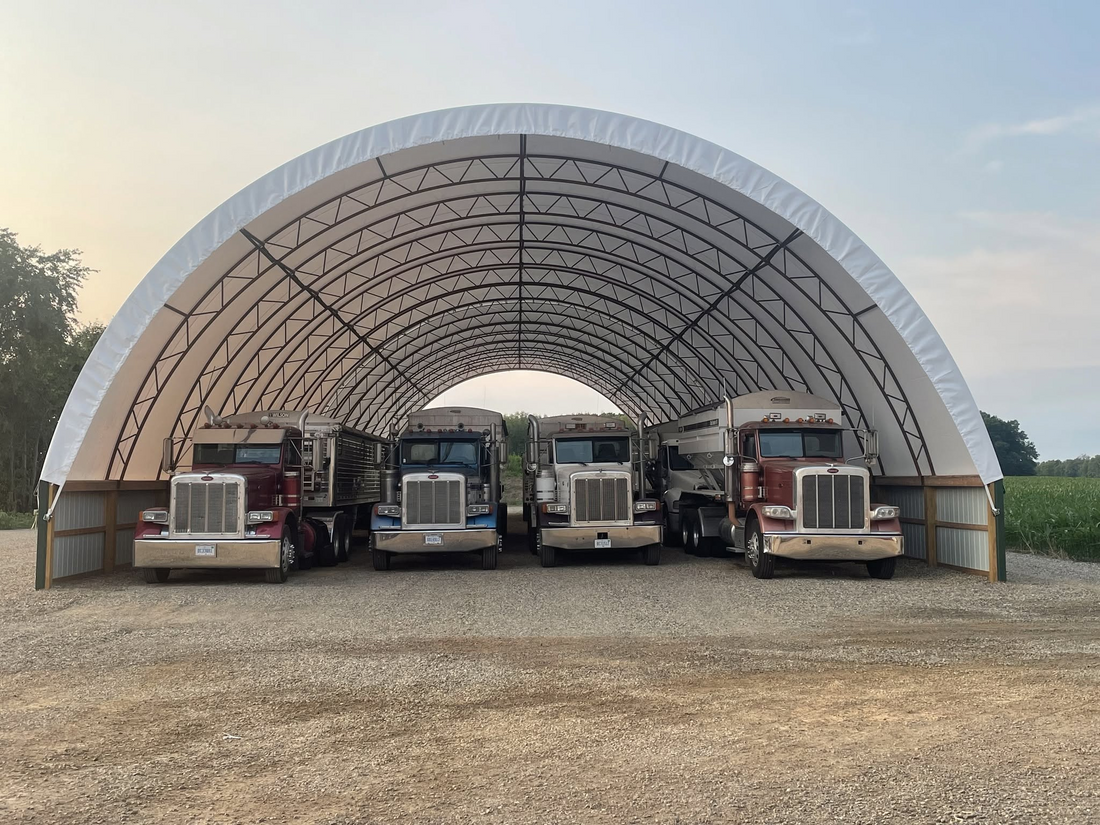
1. Equipment protection. Machinery, generators, and vehicles stay out of direct sun and rain without needing individual covers.
2. Materials staging. Lumber, steel, and palletized goods stay dry between delivery and use, cutting weather-related waste.
3. Loading and unloading cover. Crews work loading docks without stopping for rain delays.
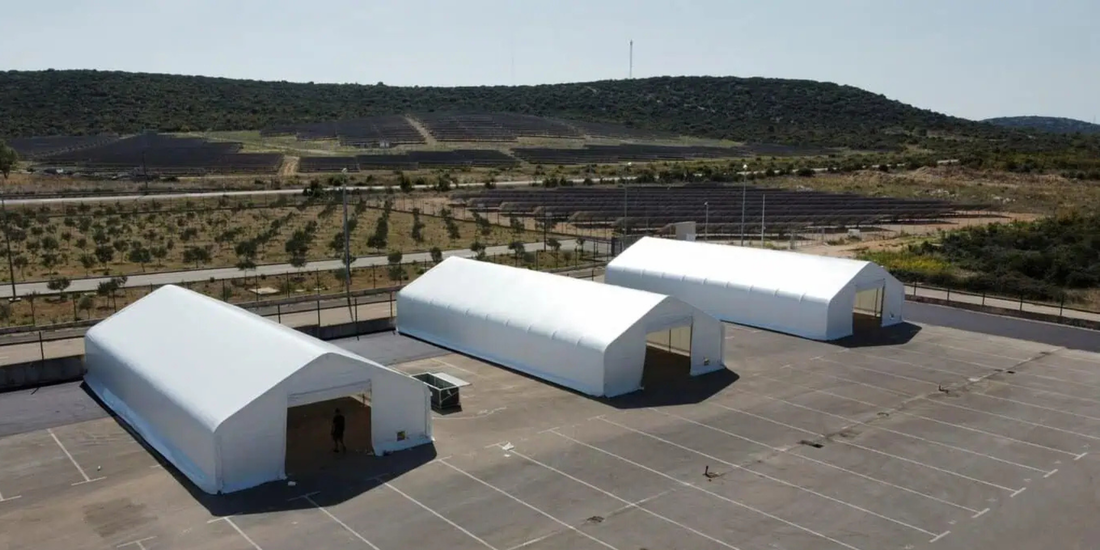
4. Temporary warehousing. Sites waiting on a permanent building, or handling seasonal overflow, get usable covered square footage in days.
5. Site workspace. A dry, shaded area for tools, breaks, or fabrication work that doesn't require a permanent building permit.
Ports, construction compounds, and logistics yards are the most common settings, but the same logic applies anywhere a site has containers already and needs covered space fast.
Canopy vs. Permanent Building: Which Makes Sense?
A canopy makes sense when speed and flexibility matter more than permanence. A steel or concrete building makes sense when the space is truly fixed for the long term.
| Factor | Container Canopy | Permanent Building |
|---|---|---|
| Install time | Days | Months |
| Permitting | Minimal in most jurisdictions | Full building permit process |
| Relocatable | Yes | No |
| Upfront requirements | Lower | Significantly higher |
| Code compliance | Engineered to IBC/local codes | Engineered to IBC/local codes |
Neither option skips code compliance. The real difference is speed to use and whether your site's footprint is likely to change in the next few years. Sites in flux, expanding, downsizing, or leasing land short-term, tend to lean toward the canopy option for exactly that reason.
FAQs
Q. How long does it take to install a shipping container canopy?
Most standard sizes go up in one to two days once the frame and fabric arrive on site. Larger spans or custom configurations can take longer, but there's no foundation curing time slowing things down.
Q.Can a container canopy handle snow load?
Yes, if it's engineered for your region. A properly designed shipping container canopy accounts for area-specific snow and wind loads, so ask any supplier for the load rating before you buy, not after.
Q. Do I need a permit for a container canopy?
It depends on your local jurisdiction, but most container canopies require less permitting than a permanent structure since they're relocatable and don't require a poured foundation. Check with your local building department to confirm.
Q. What's the difference between a container canopy and a storage tent?
A canopy spans between two shipping containers and uses them as anchor points. A storage tent is a freestanding fabric structure with its own frame and foundation, useful when you don't have containers to build off of.
Q. Can the canopy be moved if I relocate the site?
Yes. One of the main advantages of a shipping container shelter over a poured building is that the frame and fabric can be disassembled and reinstalled at a new location.
Conclusion
Your containers are already doing half the job. A shipping container canopy finishes it, turning wasted space between them into covered storage or workspace your crew can actually use, without months of permitting or a permanent building budget.
Sheltirx stocks seven standard canopy sizes ready to ship, with custom spans available for sites that need something different. Get a quote and find out what fits your site.