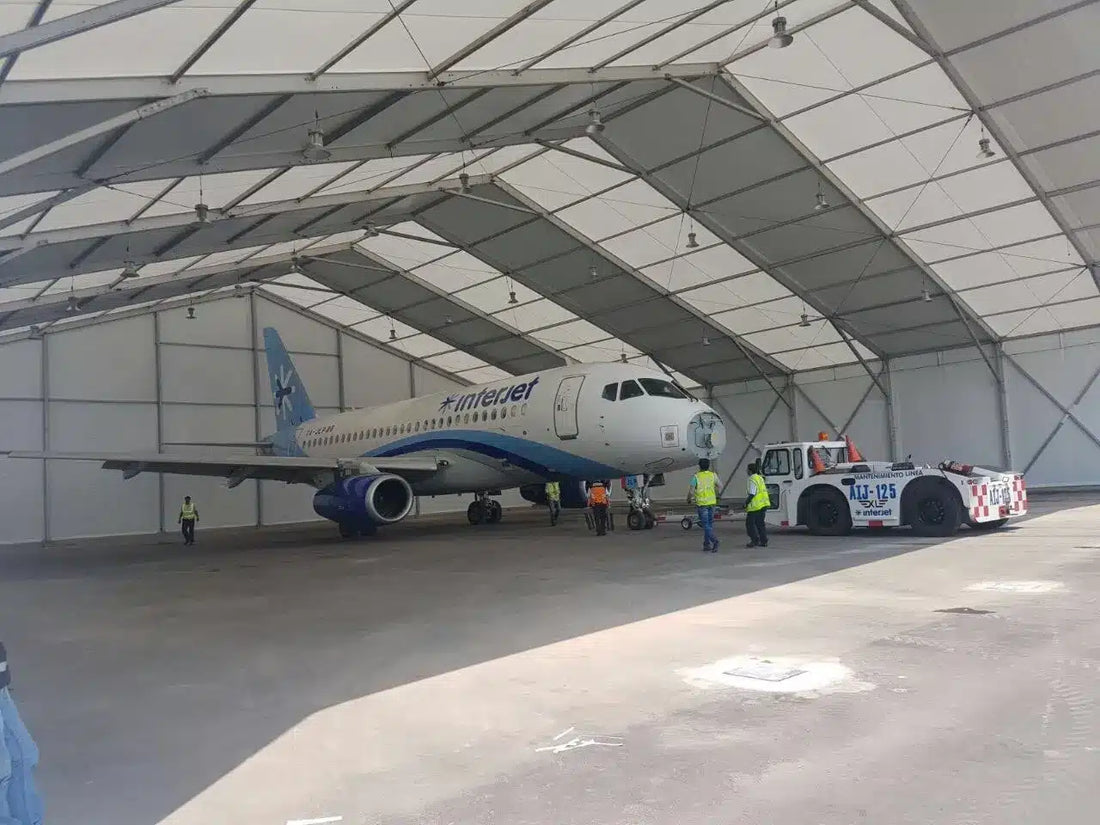



Think about how often each aircraft is used and when it needs to leave. Frequently flown aircraft may need a direct route to the main opening, while seasonal or reserve aircraft can occupy less immediate positions if the layout allows them to be retrieved safely. Establish a consistent parking plan and mark the area reserved for tugs, tow bars, wheel chocks and other ground equipment.
If the building stores a mixed fleet, group aircraft by size or operating pattern where it improves access. Keep pedestrian paths clear of tow routes and avoid using door approaches as overflow parking. If a stored aircraft may need inspection or minor servicing, identify that requirement early rather than assuming every storage bay can function as a repair station. For operators handling visiting or leased aircraft, agree on a check-in and parking allocation process so incoming aircraft do not block the planned exit route for the next departure.