
Objective
This blog covers how construction shelters built around shipping containers actually get used on active job sites, so a project manager can decide where a container tent fits into their site plan before the next phase starts.
Key Takeaways
1. Construction shelters made from container-based canopies cover equipment, materials, and crew workspaces without needing a poured foundation.
2. A container tent installs in days, not weeks, which matters on sites where the schedule shifts constantly.
3. Common construction uses include tool and equipment cover, material staging, site offices, and covered work areas for concrete, welding, or finishing trades.
4. Because the structure bolts to containers already on site, it comes down and relocates as the project moves through phases.
Engineered frames meet local wind and snow load codes, so these shelters hold up on active sites through a full build cycle.
A site superintendent moves through four or five phases on a typical build. Excavation gives way to foundation work, then framing, then finishing trades. Each phase needs different cover for materials and crews, and none of it justifies pouring a permanent structure that gets demolished a few months later.
That's the gap construction shelters built from shipping containers fill. The containers are usually already on site holding tools or materials, so turning them into support for a canopy costs nothing extra in delivery or storage.
This article walks through where a container tent actually earns its place across a construction timeline, not just in theory but in the phases where crews use them most.
What Are Construction Shelters Built From Shipping Containers?
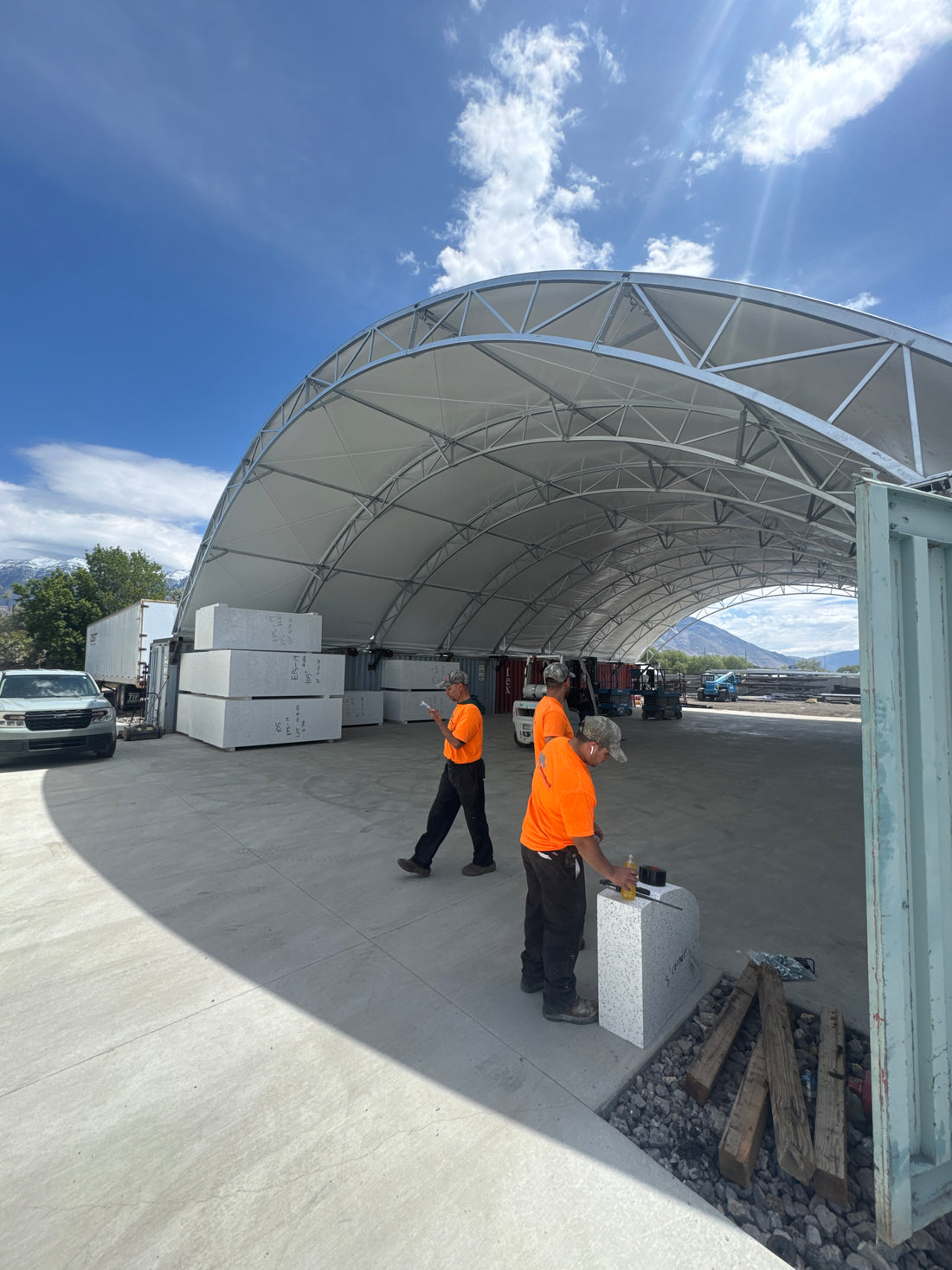
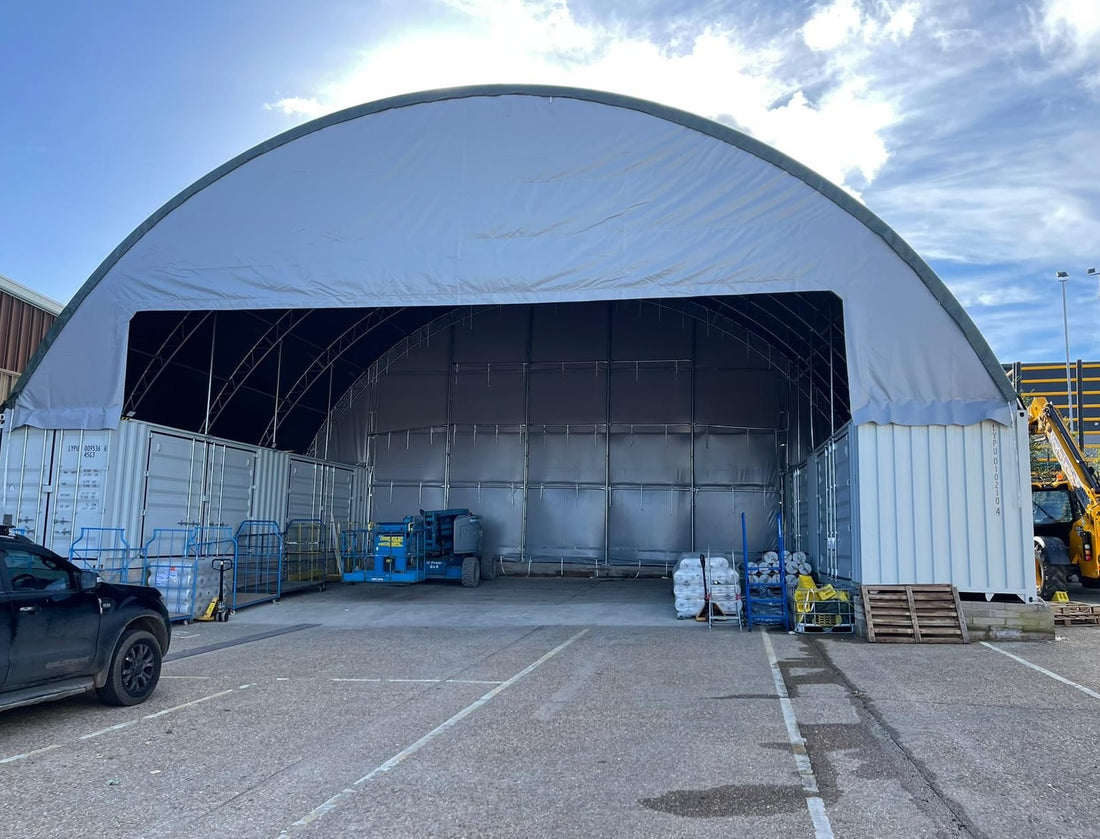
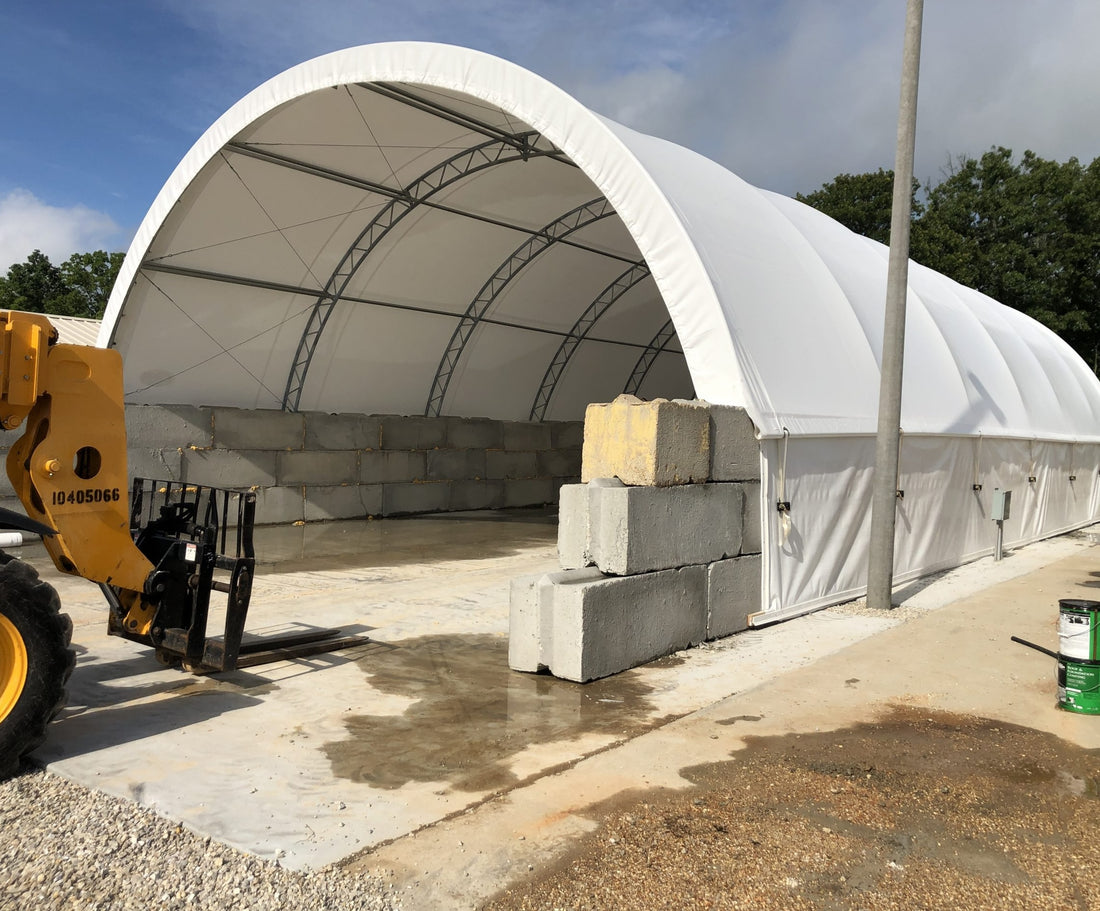
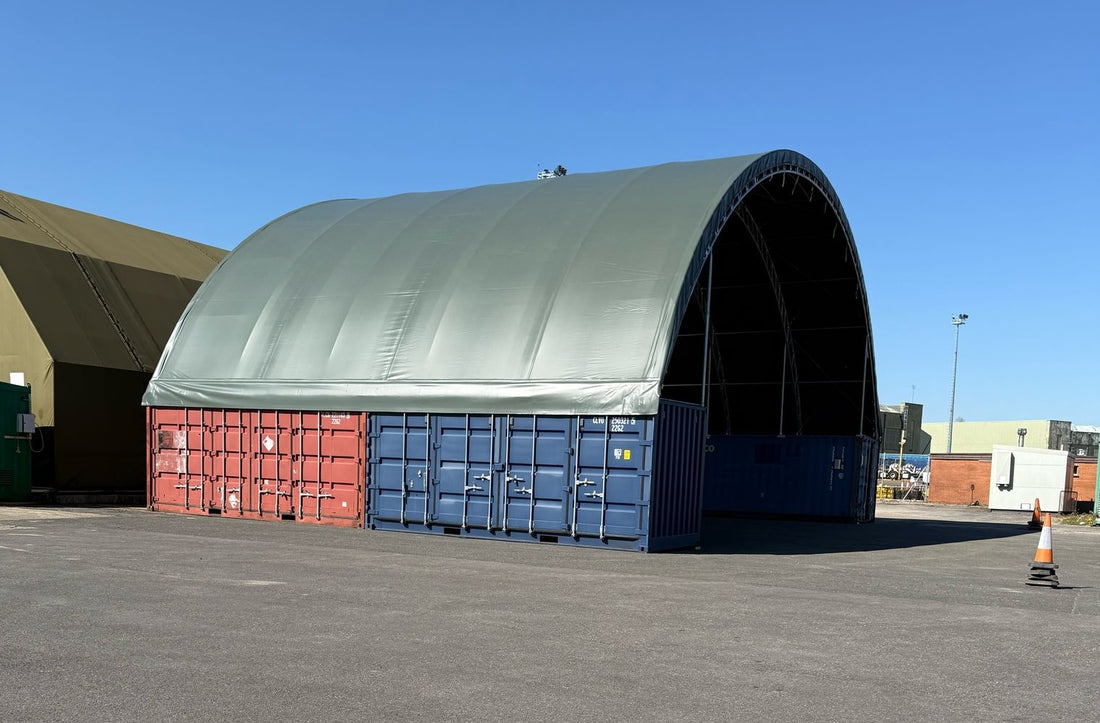
A construction shelter built this way is a fabric canopy spanning between two shipping containers, using the containers as the load-bearing support instead of a foundation.
Also called a container tent or conex tent, the setup uses a galvanized steel frame bolted to the container top rails, with heavy-duty fabric stretched across it. No concrete, no excavation, and nothing left behind when the job wraps.
On a construction site, the containers are frequently already there for tool storage. Adding the canopy frame turns dead space between two containers into usable, covered square footage without bringing in extra equipment.
How Do Contractors Use a Container Tent on Site?
Contractors use a container tent as covered space that goes up fast, adapts to changing site layouts, and comes down cleanly when the project phase ends.
The typical workflow looks like this:
1. Position two containers at the required spacing for the canopy size needed.
2. Bolt the steel frame across the container top rails.
3. Tension the fabric skin over the frame.
4. Anchor and inspect against local wind and snow load requirements.
Because installation runs in days rather than weeks, crews can bring in a canopy mid-project when a new need comes up, like extra material storage after a delivery arrives ahead of schedule.
What Are the Main Applications on Construction Projects?
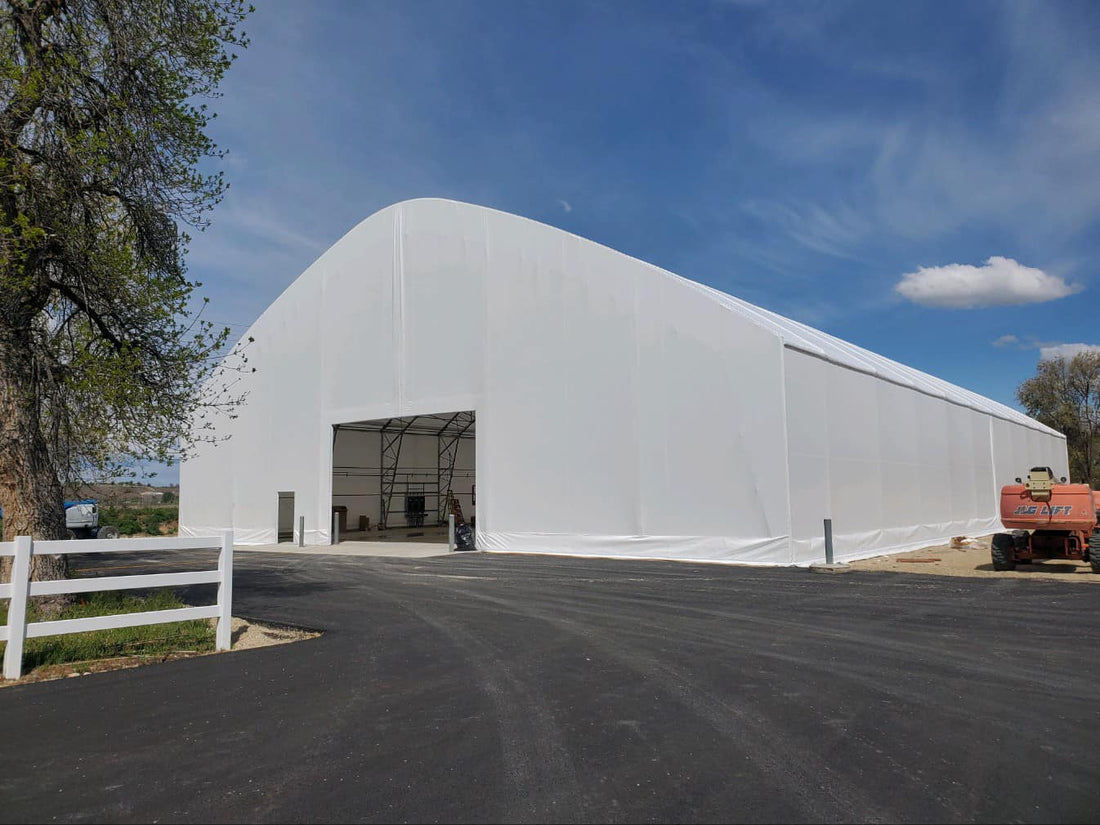
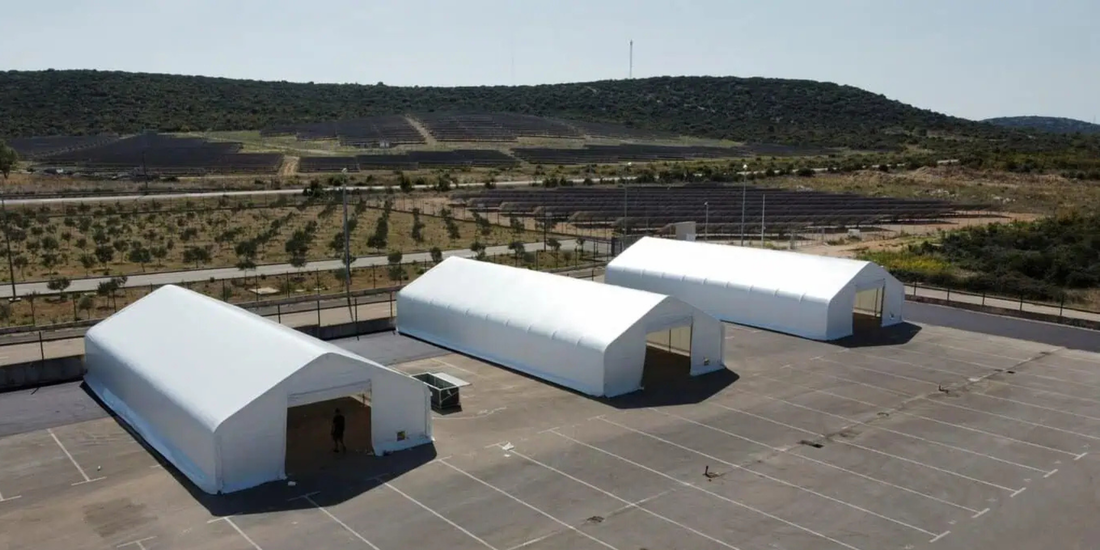
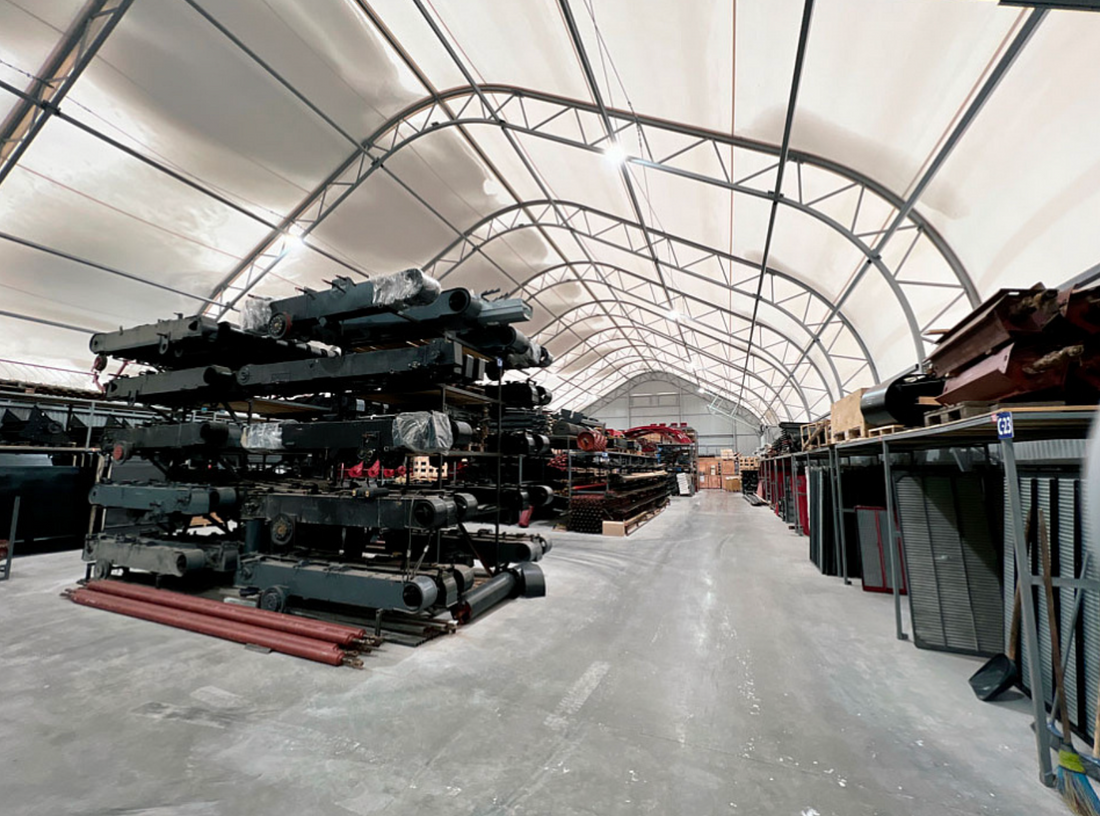
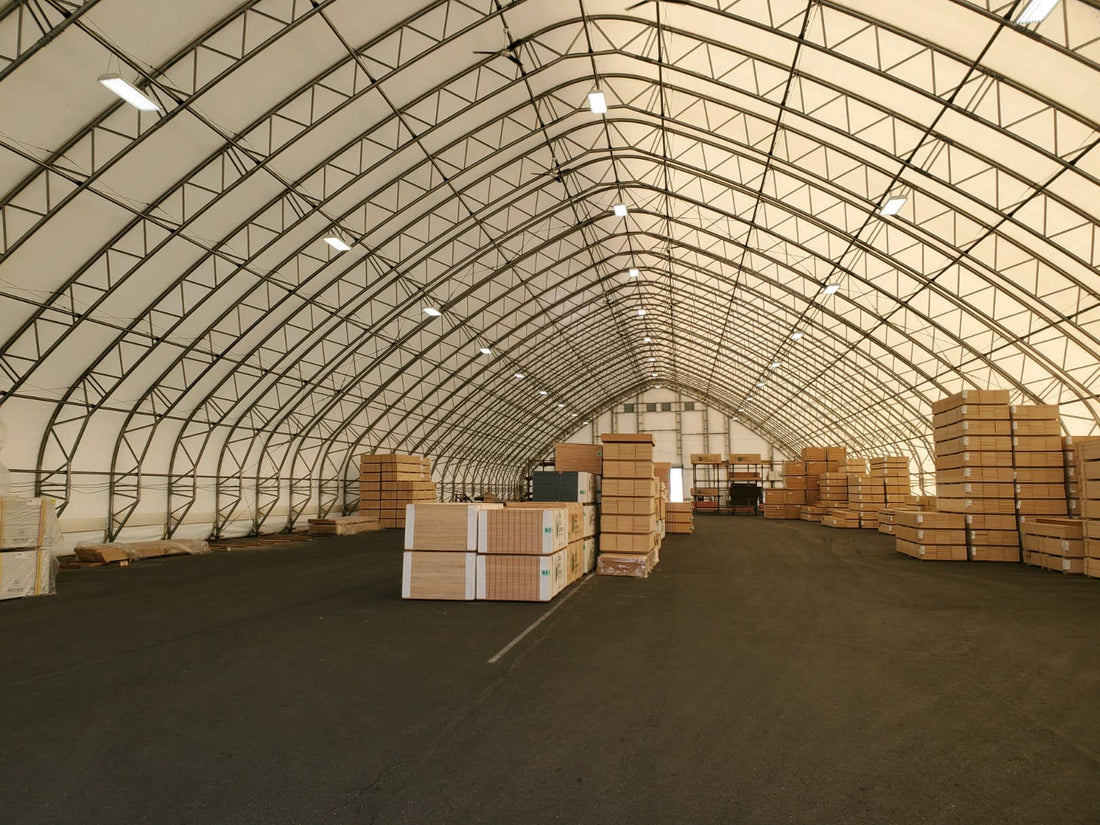
Construction sites use container tent and shipping container shelter setups for equipment cover, material staging, crew workspaces, and site security enclosures.
Here's where they show up most often:
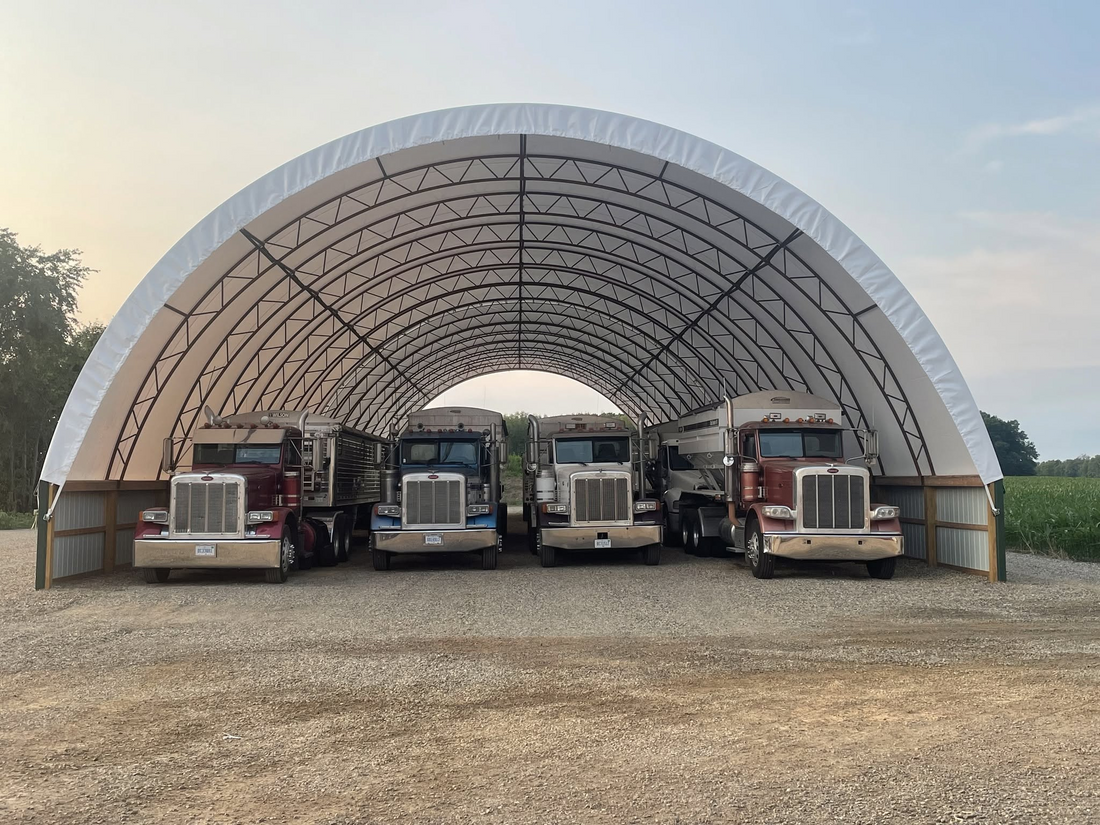
1. Equipment protection. Excavators, generators, and compressors left exposed to rain or direct sun wear down faster. A canopy keeps them dry between shifts.
2. Material staging. Lumber, drywall, insulation, and anything moisture-sensitive needs cover before it gets installed. A canopy keeps deliveries protected until crews are ready for them.
3. Covered work areas. Welding, cutting, and finishing trades often need a dry, wind-blocked space, especially during winter months or rainy seasons.
4. Site offices and break areas. Some crews build out a section of the canopy as a covered meeting or break space, using the containers on either side for walls.
5. Site security enclosures. Pairing the canopy with locked container doors gives you covered storage that's also lockable, useful for tools and smaller equipment.
What Benefits Do They Bring to a Job Site?
The main benefits are speed of installation, no foundation requirement, and full relocation between project phases or job sites.
Breaking that down further:
1. Fast setup. Stocked canopy sizes install within days of arrival, which matters when weather or schedule changes leave no room for a multi-week install.
2. No permanent footprint. Since the containers carry the structural load, there's nothing to demolish or remove when the project closes out.
3. Relocatable between phases. A canopy set up for foundation work can move to cover framing materials a few weeks later, on the same site or a new one entirely.
4. Lower cost than temporary rentals. Renting warehouse space or a temporary structure over months of a build often costs more than owning a canopy you can reuse project after project.
5. Durable through the build cycle. Galvanized steel framing and UV-stable, fire-rated fabric options hold up through a full construction schedule, including exposure to dust, debris, and temperature swings.
What Should You Check Before Renting or Buying One?
Confirm the frame material, fabric rating, and local code requirements before committing to a conex tent for your site.
A short checklist worth running through with any supplier:
|
Check |
Why It Matters |
|
Frame material |
Galvanized steel resists rust across a multi-month build, especially in humid or coastal regions |
|
Fabric rating |
Fire-rated fabric may be required depending on your site's use and local code |
|
Load engineering |
Confirm the design meets your region's wind and snow load requirements under IBC |
|
Container compatibility |
Make sure the frame bolts to standard ISO container top rails without modification |
|
Lead time |
Stocked sizes typically ship in about 10 working days; custom sizes take 6 to 10 weeks |
Sheltirx® builds its SkyShield canopy line with these specs as standard, and maintains a zero structural failure record across installations, which is worth asking any supplier you're comparing against.
Does a Conex Tent Work for Every Phase of a Build?
Not quite every phase, but a conex tent covers most of them well, from site setup through finishing trades, with the biggest gains during material-heavy and weather-exposed stages.
Here's a rough phase-by-phase look:
1. Site prep and mobilization. Useful for covering early equipment and initial material deliveries before permanent storage exists.
2. Foundation and framing. Strong fit here, since this phase generates the most weather-sensitive material deliveries.
3. Interior and finishing trades. Good for covering finish materials and giving trades a dry workspace, though it won't replace enclosed indoor space for climate-controlled finishing work.
4. Close-out. The canopy comes down and either moves to the next project or gets repositioned for final site cleanup storage.
The one phase where it's less of a fit is anything requiring a fully enclosed, insulated, permanent structure, like an on-site office trailer replacement with HVAC. For that, a steel building or a proper trailer setup makes more sense.
FAQ
Q: Can a container tent handle a full construction schedule, or is it just for short-term use?
It can handle a full schedule. The galvanized steel frame and rated fabric are built to hold up through months of exposure to dust, wind, and weather, not just a quick weekend cover.
Q: Do I need a permit to put up a construction shelter like this?
Often yes, even though many jurisdictions treat these as temporary structures. Your supplier should be able to provide engineering documentation and load data to support your permit application.
Q: Can I move the canopy between different areas of the same site?
Yes. Since it bolts to the containers rather than a foundation, you can reposition it as the project moves through phases, as long as you have containers available at the new location.
Q: What size container tent works best for a mid-size construction site?
It depends on what you're covering. A 40 x 40 ft canopy handles most equipment and material staging needs for a mid-size site, while smaller 20 x 20 ft or 20 x 40 ft units work well for tool cover or a single trade's workspace.
Q: Is a shipping container shelter strong enough for high-wind construction sites?
Yes, when engineered correctly. Ask your supplier to confirm the frame meets your site's specific wind load requirements under the International Building Code before installation.
Final Word
Construction sites don't need permanent buildings for most of what happens during a build. They need cover that goes up fast, holds up through the schedule, and comes down clean when the phase ends.
A container tent built around the containers already on your site does exactly that, without adding foundation costs or demolition work to your close-out list.
Sheltirx supplies engineered container canopies built for active construction sites nationwide, backed by a zero structural failure record. Share your site details and target size, and their team can return a same-day quote. Get a quote or call +1 (307) 456-1125.