

Objective
This blog walks through exactly how to pick the right container canopy shelter for your site, covering size and build quality, so you're not guessing at a spec sheet.
Key Takeaways
1. The right container canopy shelter depends on what you're storing and how wide your container span needs to be, not just the lowest price on the page.
2. Hot-dip galvanized steel frames outlast painted steel by years in outdoor industrial settings.
3. A properly engineered container shelter meets local wind and snow load codes, not a generic "industrial grade" label.
4. Sizes for standard container canopies run from 20x20 ft up to 60x80 ft, so most sites can match an in-stock option without waiting on a custom build.
5. Buying a container canopy for sale from stock saves weeks compared to a custom order, if the standard sizes fit your container layout.
You've got two shipping containers sitting a few feet apart, and that gap between them is doing nothing for you. Materials sit exposed. Crews duck into the container itself just to get out of the rain.
Buying a shipping container canopy shelter fixes that gap fast, but the sizing charts and spec sheets across different suppliers rarely agree with each other. One site lists dimensions by container length, another by covered floor space, and neither tells you which frame will actually hold up.
Here's how to cut through that and pick a container canopy shelter that fits your containers, your climate, and your budget.
What Is a Container Canopy Shelter?
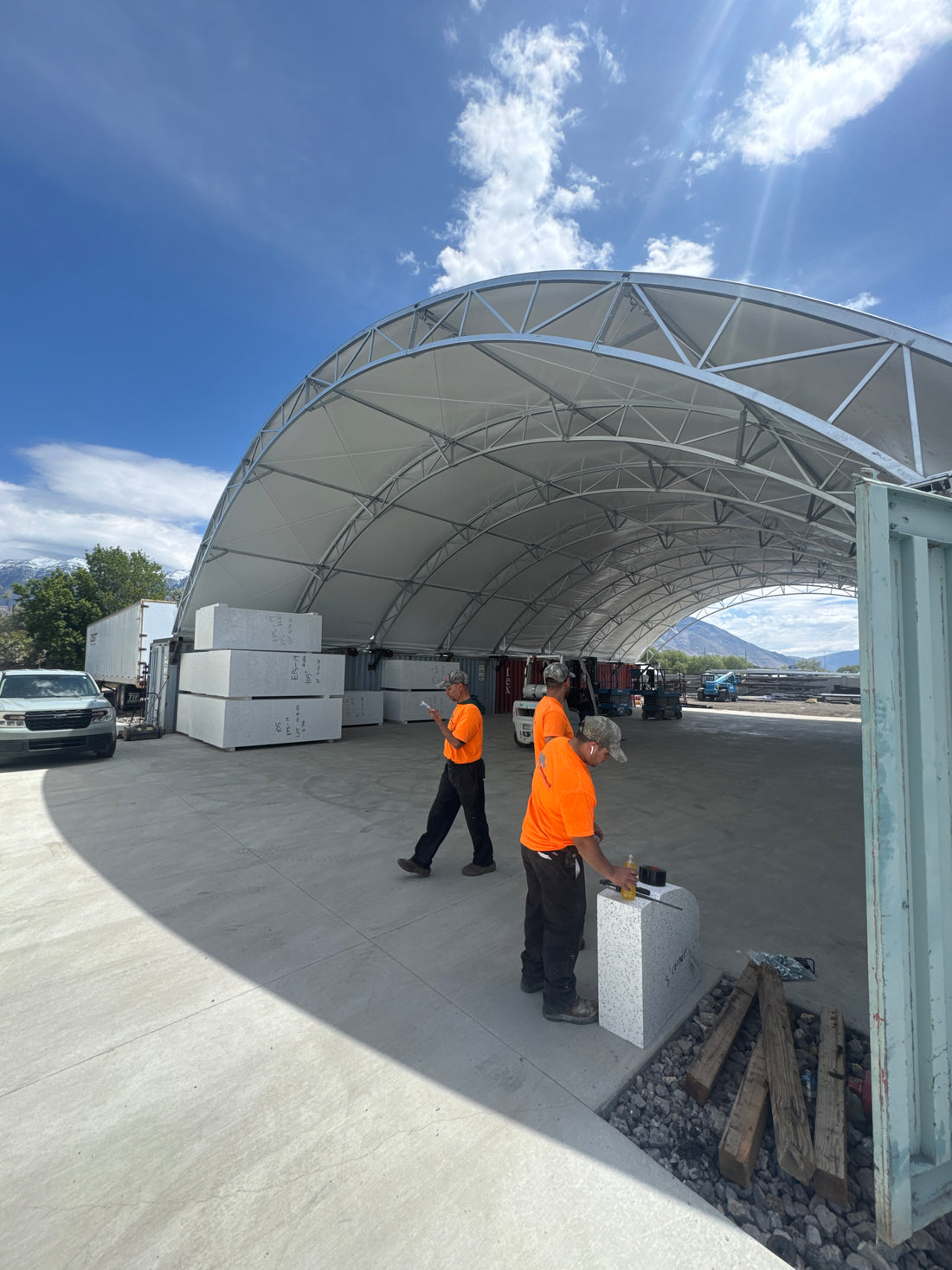
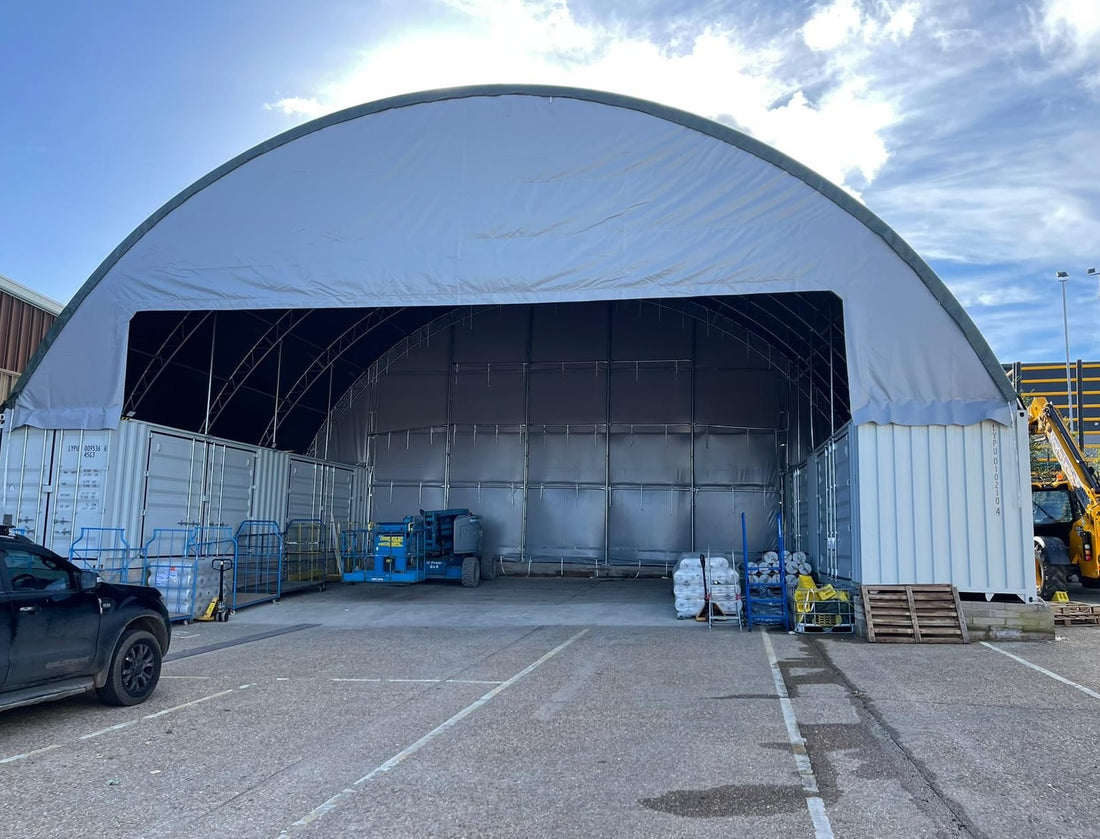
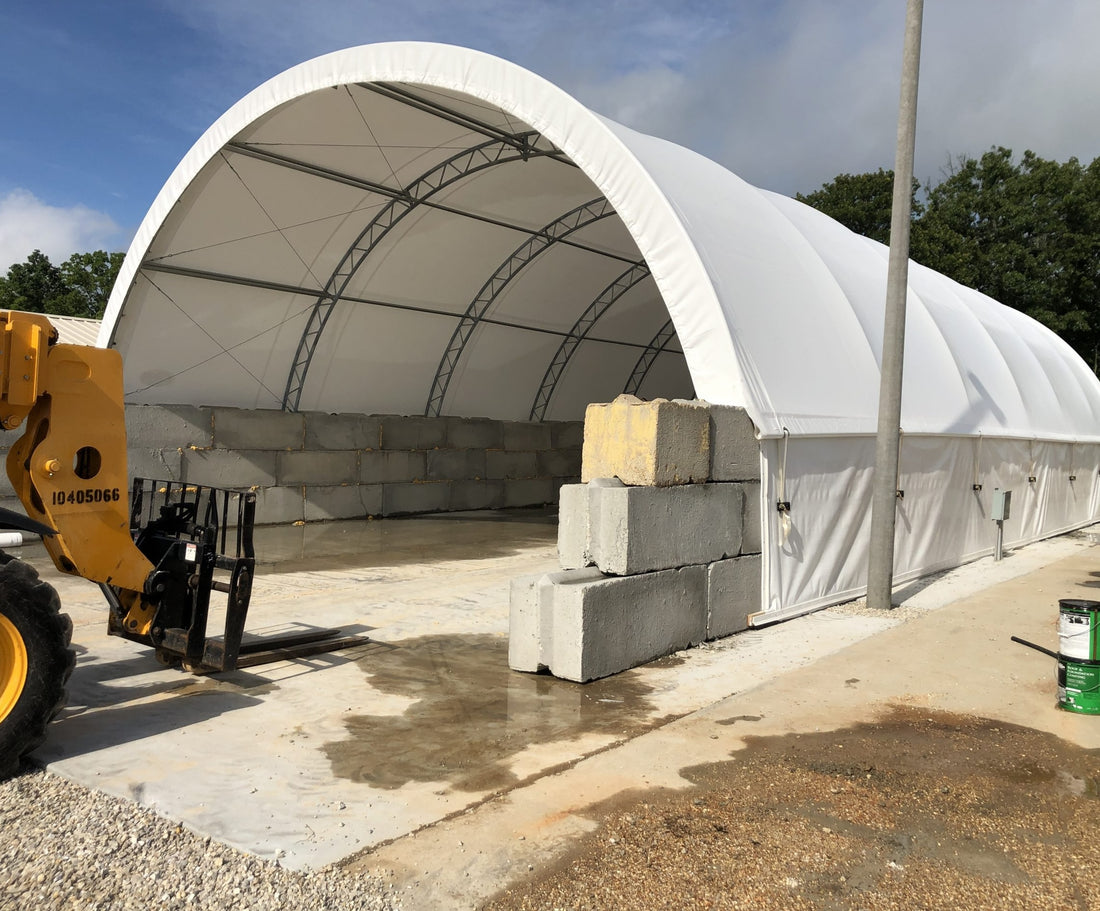
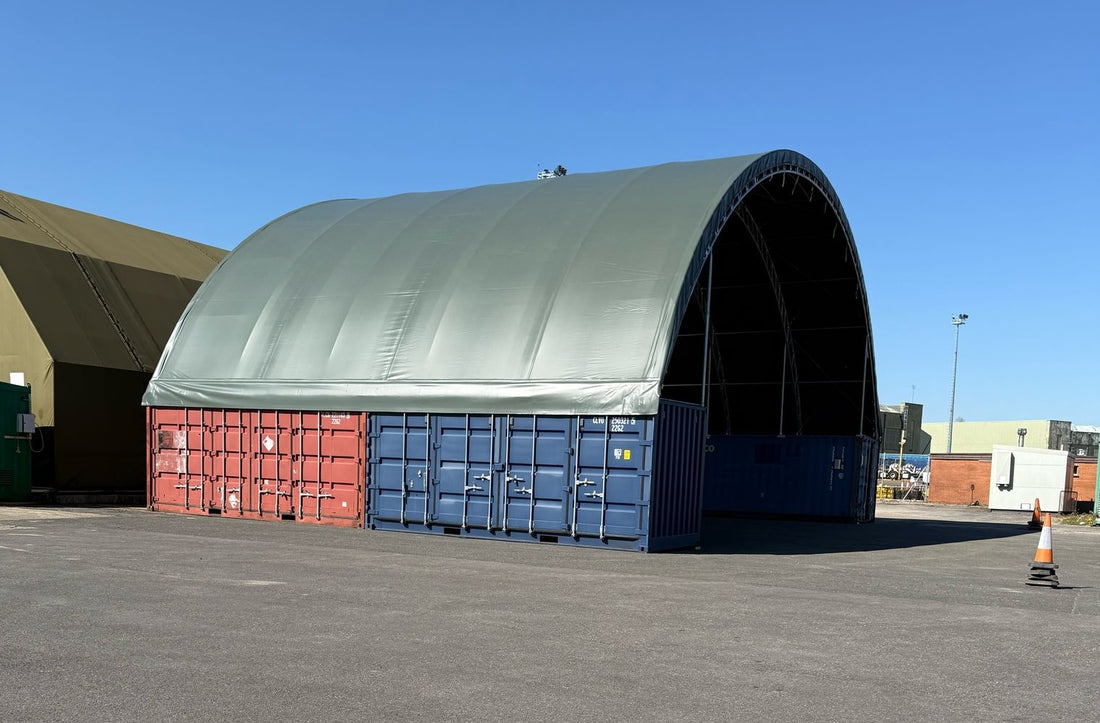
A container canopy shelter is an engineered fabric roof that spans the gap between two shipping containers, using the containers as the mounting structure.
The frame, usually galvanized steel, bolts or clamps to the top rails of each container. A tensioned fabric top stretches across it to block rain, sun, and in a properly rated design, snow load. No foundation, no concrete pad, no months of site prep.
This is different from a tarp strung between posts. It's a structural component sized to match standard container dimensions, built to stay up through real weather, not just look good on install day.
How Does It Attach to Your Containers?
The frame connects directly to the container's top corner castings or rail, then the fabric roof tensions across the span between the two units.
Most systems use the containers themselves as the load-bearing anchor points, which is why container spacing matters before you order. A canopy sized for containers set 20 feet apart won't work if your yard has them spaced at 25.
Installation crews typically finish a standard size in one to two days. There's no curing time and no waiting on an inspector to sign off on a foundation pour before the space is usable.
What Size Do You Actually Need?
Match the canopy width to your actual container spacing first, then size the length to whatever you're storing underneath.
1. Measure the real gap between your containers, not the container length itself. This determines your canopy's width.
2. Think about what's going under it. A single forklift needs less room than a row of pallets or a small fleet vehicle.
3. Add clearance for movement. If people or equipment need to move around inside the shelter, don't size it edge to edge.
4. Check the height rating. Taller equipment or stacked storage needs a canopy with enough clearance, not just floor space.
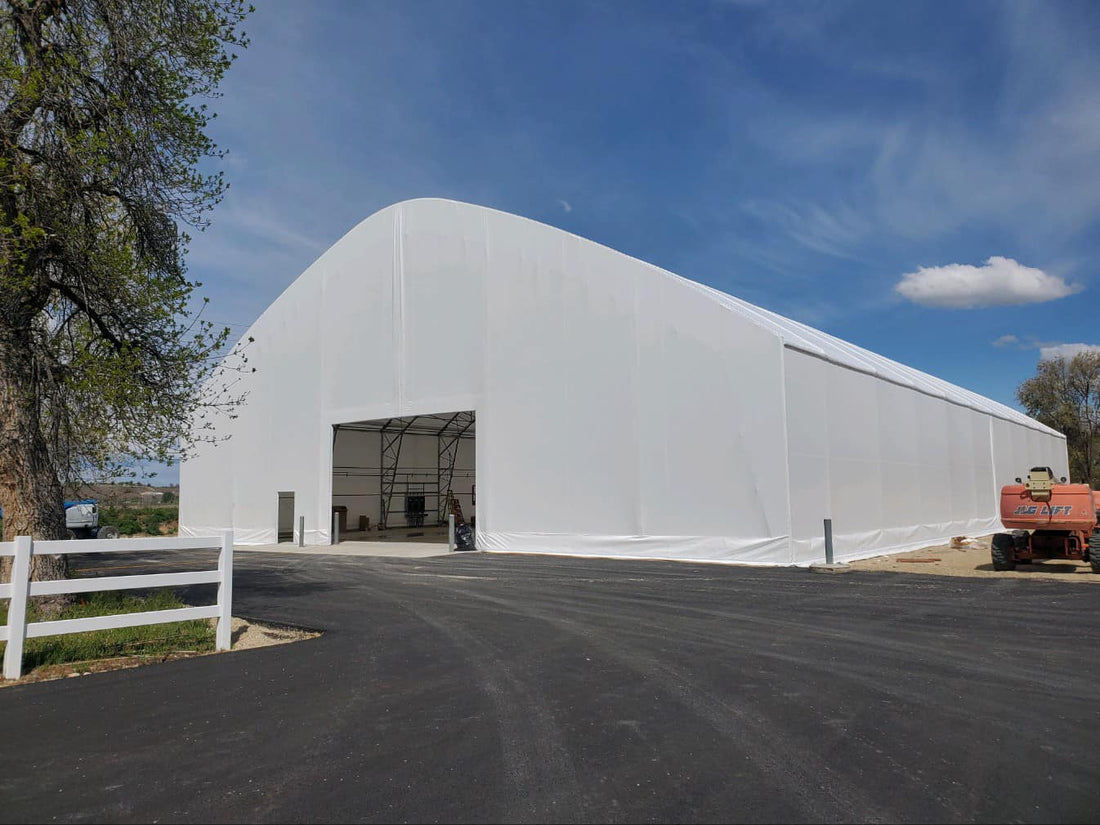
Standard container canopies run from 20x20 ft for a single storage bay up to 60x80 ft for full equipment yards. Sheltirx stocks seven sizes in that range as ready-to-ship container shelters, which covers most standard container layouts without a custom order.
What Should You Check Before You Buy?
Frame material, code compliance, and the supplier's track record matter more than the price on the front page.
Frame material. Hot-dip galvanized steel resists rust in outdoor conditions far longer than painted or powder-coated steel. This single detail decides whether your shelter is still standing in five years or needs replacing in two.
Wind and snow load rating. Ask directly whether the structure is engineered for your region's wind and snow loads, ideally to International Building Code standards or your local code. A canopy that looks identical to a properly rated one can fail in the first real storm if it isn't.
Structural track record. A supplier confident in their build backs it with a real guarantee, not just a warranty on the fabric. Sheltirx points to a zero structural failure record across its installed projects, which is a fair benchmark to hold any supplier to.
Customization options. Span width, end walls, door placement, and lighting all affect whether the finished space works for your crew, not just how it photographs.
Common Ways Companies Use a Container Canopy Shelter
A container canopy shelter shows up most often in a handful of recurring industrial jobs.
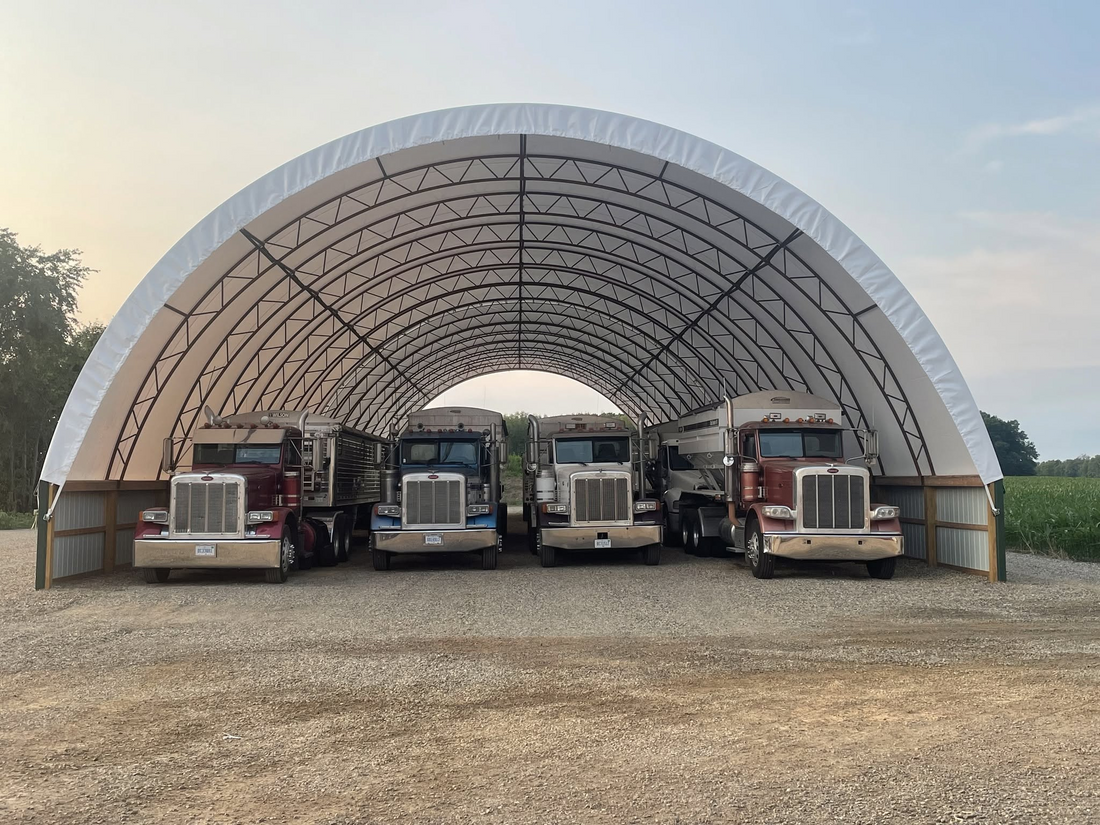
1. Equipment protection. Machinery and vehicles stay dry without individual tarps or covers.
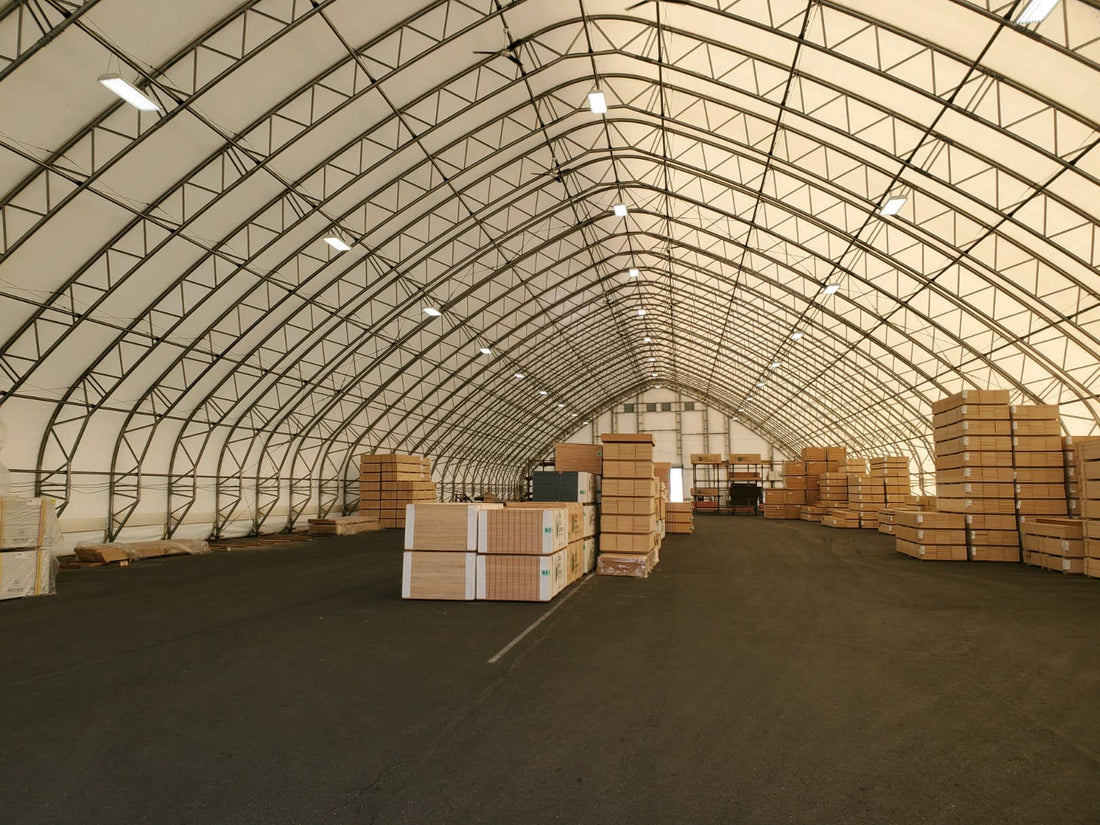
2. Materials staging. Lumber, steel, and palletized goods stay protected between delivery and use.
3. Loading dock cover. Crews keep working through rain without stopping for weather delays.
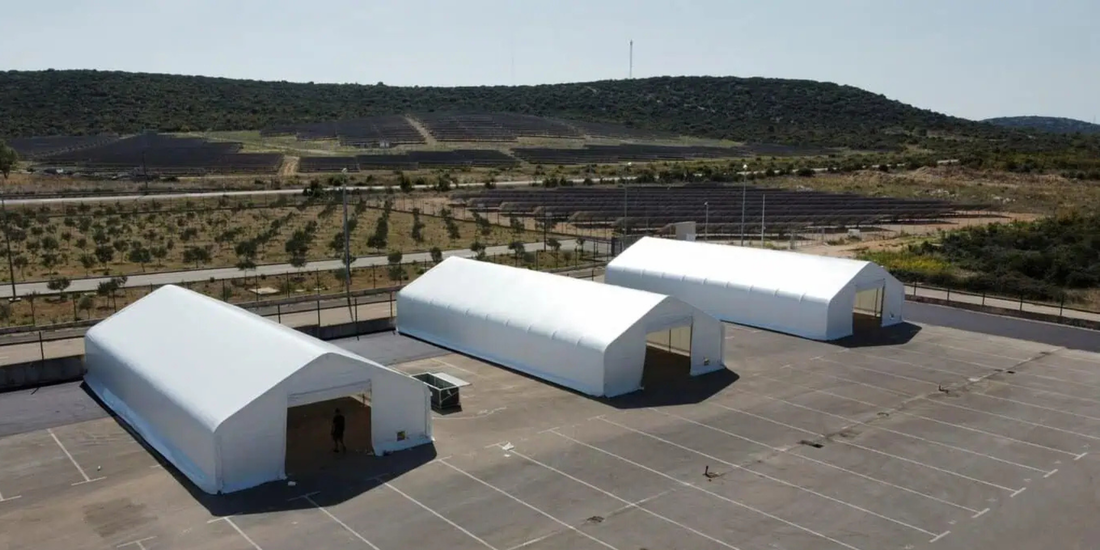
4. Temporary warehousing. Sites waiting on a permanent building get usable covered space in days, not months.
5. Site workspace. A dry, shaded area for tools, fabrication, or breaks that doesn't need a building permit.
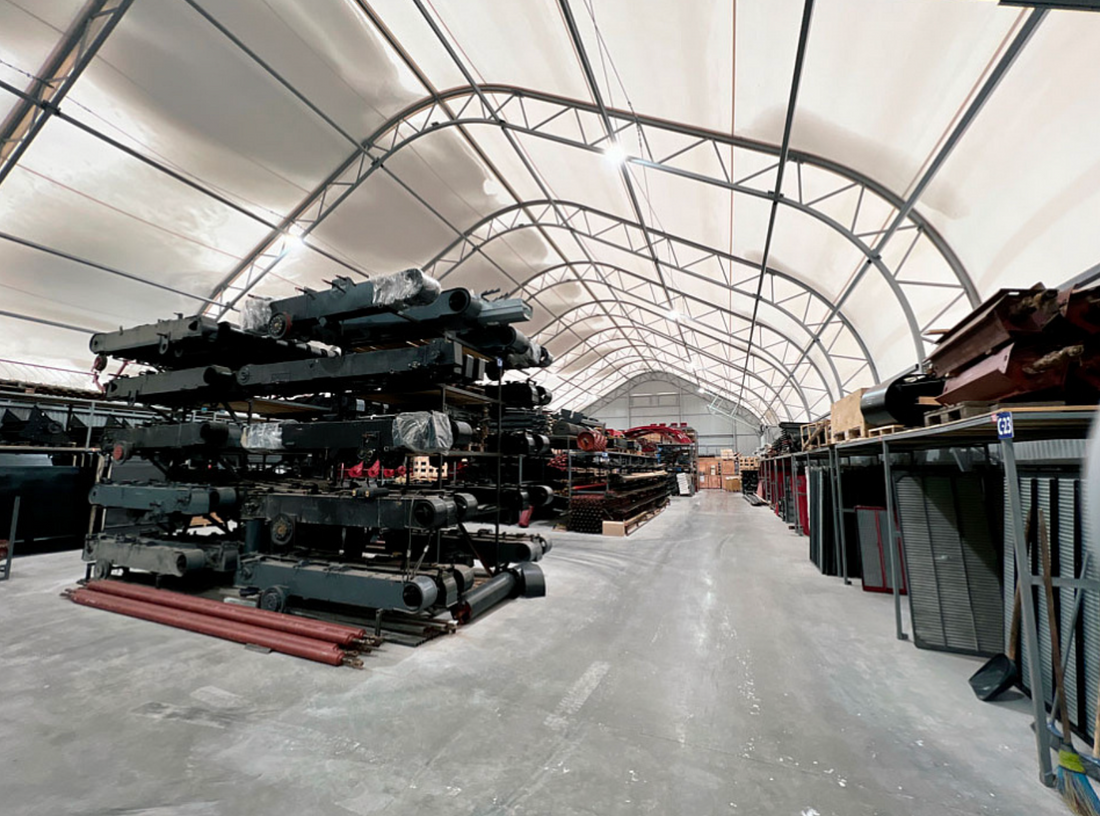
Ports, construction compounds, and logistics yards are the most common settings, but the same setup works anywhere a site already has containers and needs cover fast.
Frequently Asked Questions
Q.What Size Shipping Container Roof Is Needed for Industrial Storage?
The required size depends on the container layout, the area that needs to be covered, and what will be stored under the roof. Check the container length, width, height, and distance between containers before choosing a system.
Q.Can a Shipping Container Roof Protect Industrial Equipment?
Yes. A covered container storage area can help protect equipment from rain, direct sunlight, wind, snow, and other outdoor conditions. The roof should be chosen based on the equipment size and the weather at the site.
Q.Can a Shipping Container Roof Cover Multiple Containers?
Yes, some roof systems can cover multiple containers or be extended with additional bays. The container layout, spacing, roof span, support needs and site conditions should be checked before installation.
Q.Can a Shipping Container Roof Be Used All Year?
Yes, a suitable roof can be used throughout the year. The choice should take local weather conditions into account, including rain, wind, snow, and strong sunlight.
Sheltirx stocks seven standard sizes ready to ship, with custom spans available for sites that need something different. Get a quote and find the right fit for your site.