
Objective
Help buyers in construction, logistics, mining, and industrial operations understand what industrial canopies are, how they work, what separates quality structures from cheap ones, and how to make a confident purchase decision.
Key Takeaways
- Industrial canopies span from container-mounted shelters to large fabric arch structures, the right type depends on your site, not just your budget
- A container canopy uses existing ISO containers as foundations, reducing groundwork requirements and setup time significantly.
- Hot-dip galvanized steel frames and PVC/PVDF fabric are the benchmarks for durability in all-weather industrial applications
- Relocatability is a core financial advantage over permanent builds, structures move with your operation
- Sheltirx SkyShield canopies ship in stock sizes from 20ft to 120ft wide, with same-day quoting available
Industrial Canopies: A Practical Buyer's Guide for Operations That Can't Afford Downtime
You've got equipment sitting in the open, materials exposed to weather, or a yard operation that needs covered space fast. A permanent building takes months to permit and build. A cheap tarp solution lasts one winter season before it fails under wind load.
Industrial canopies sit in the middle, and when they're built right, they perform closer to a permanent structure than most buyers expect.
The problem is the market includes everything from engineered fabric arch systems to cheap steel-frame tent products that look similar in a product photo but behave very differently on a job site. Knowing what separates them before you buy saves you from learning it the hard way on site.
What Industrial Canopies Actually Cover
Industrial canopies are fabric or steel-framed shelters designed to protect people, equipment, materials, and operations from weather without requiring a permanent building. That definition is broad by design, because the category genuinely covers a wide range of structures.
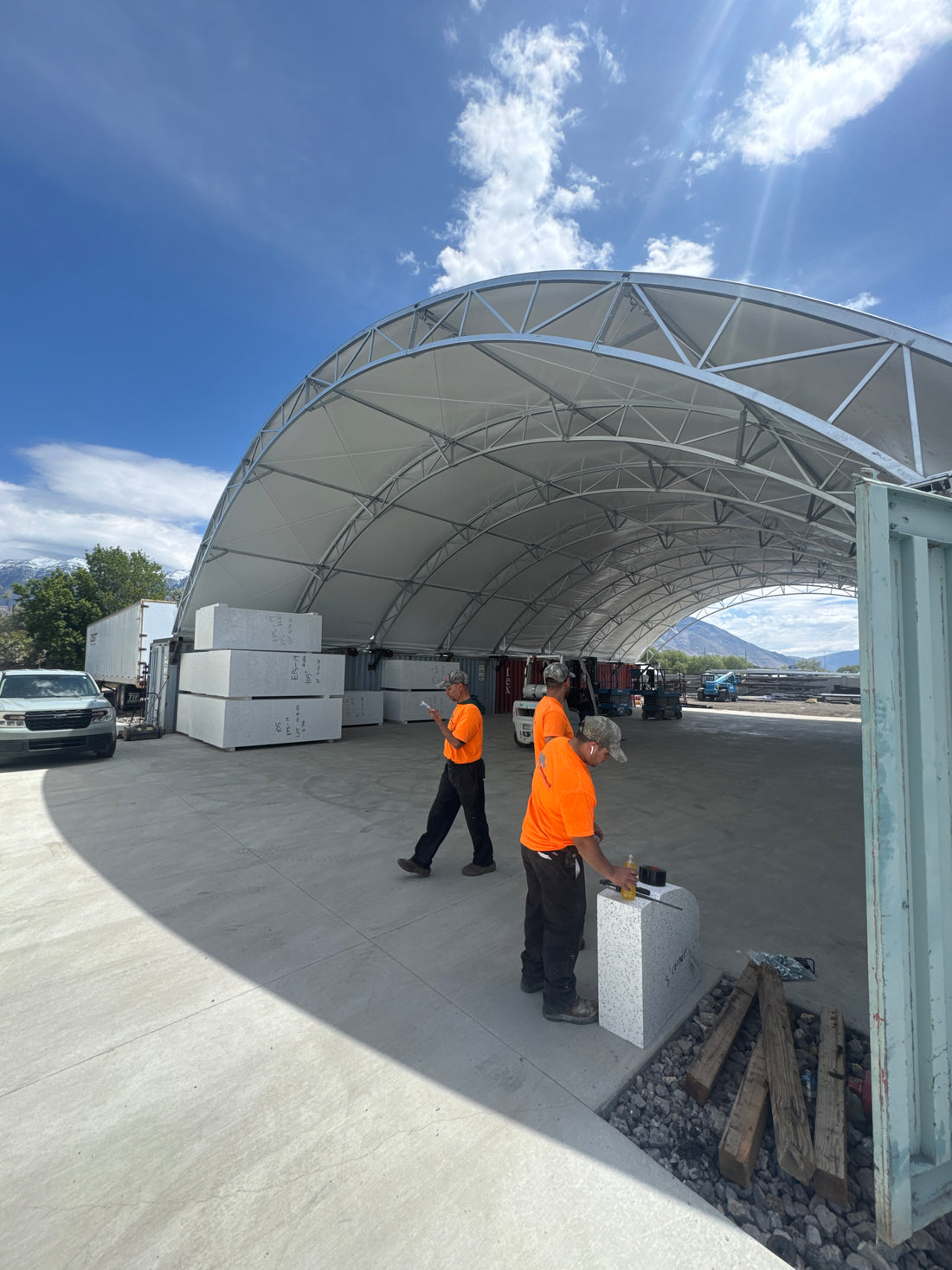
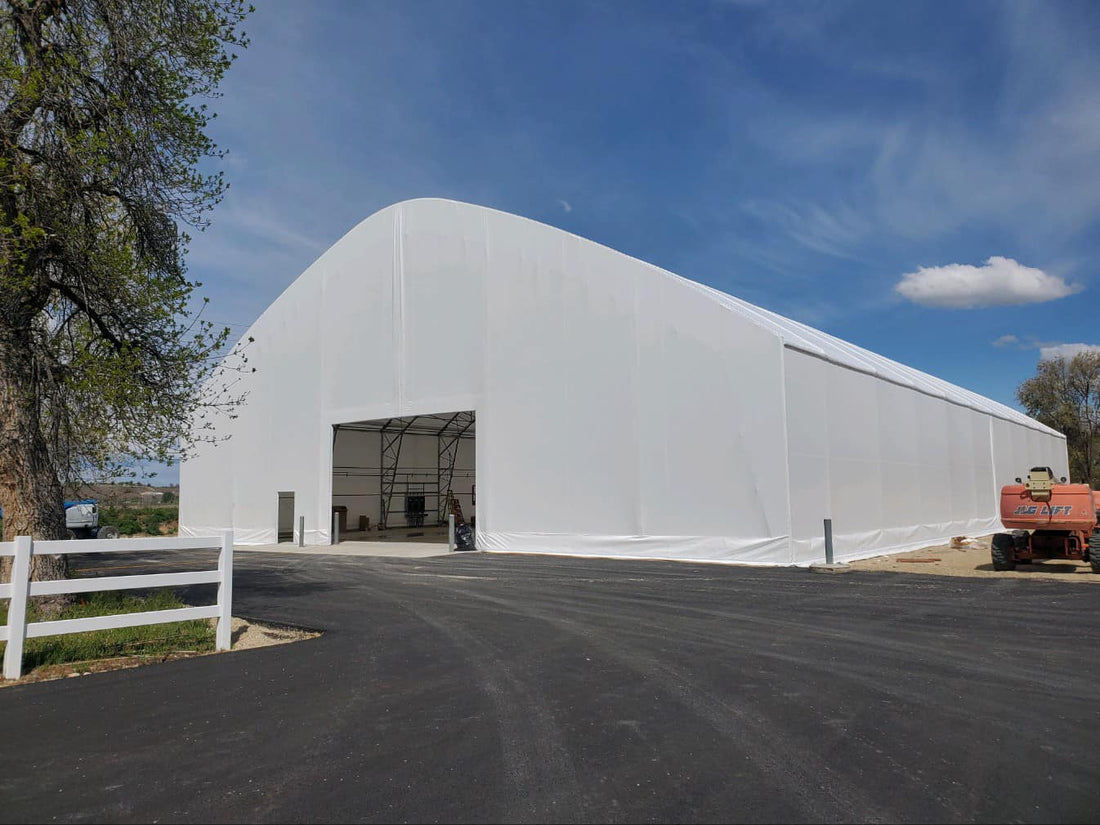
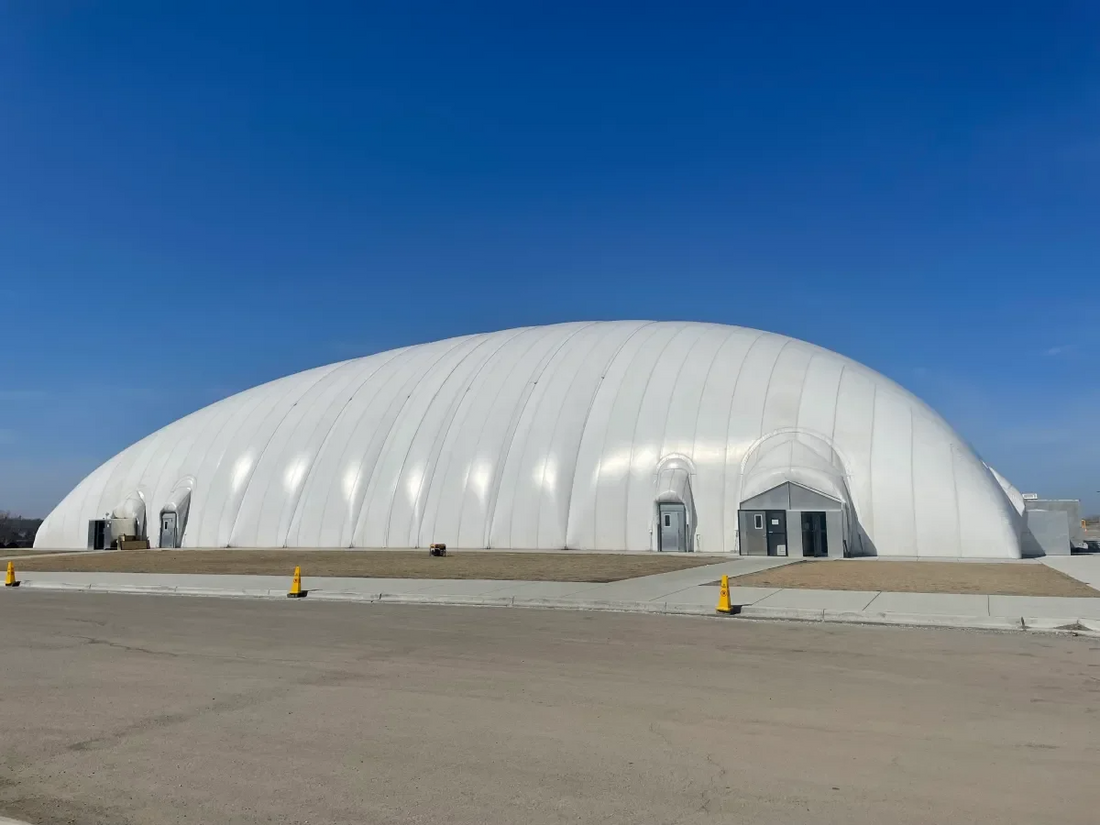
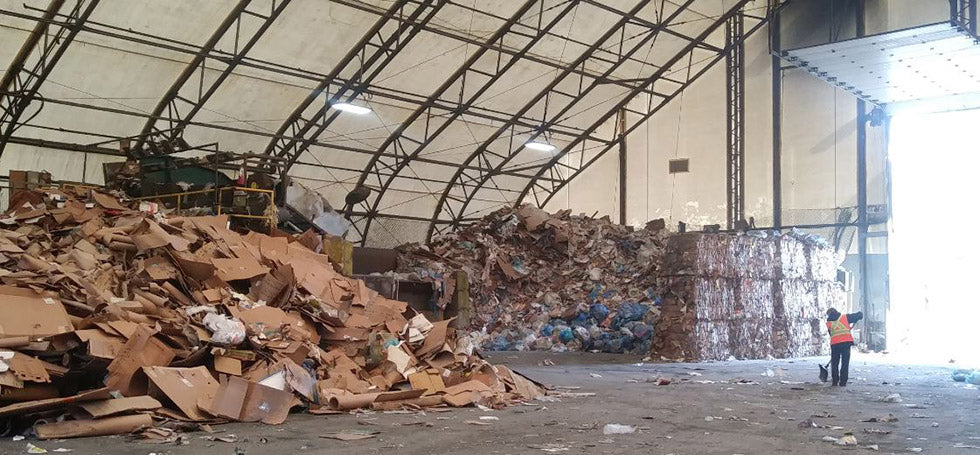
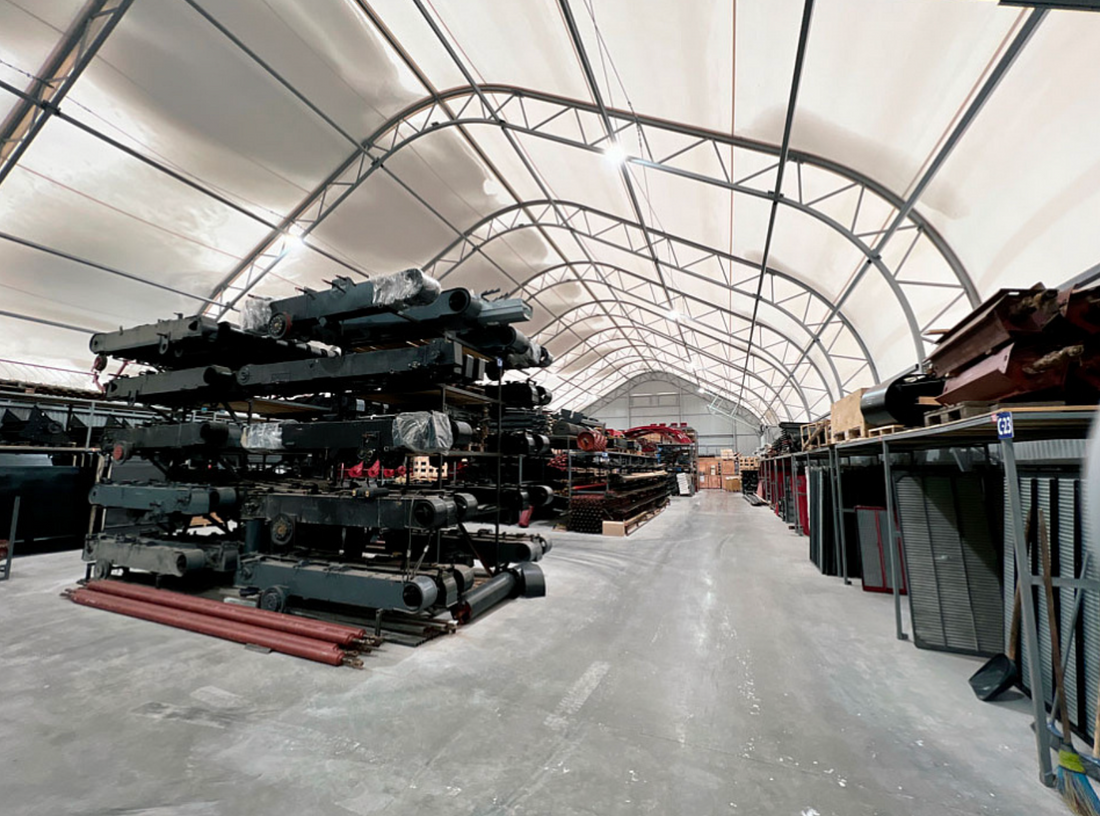
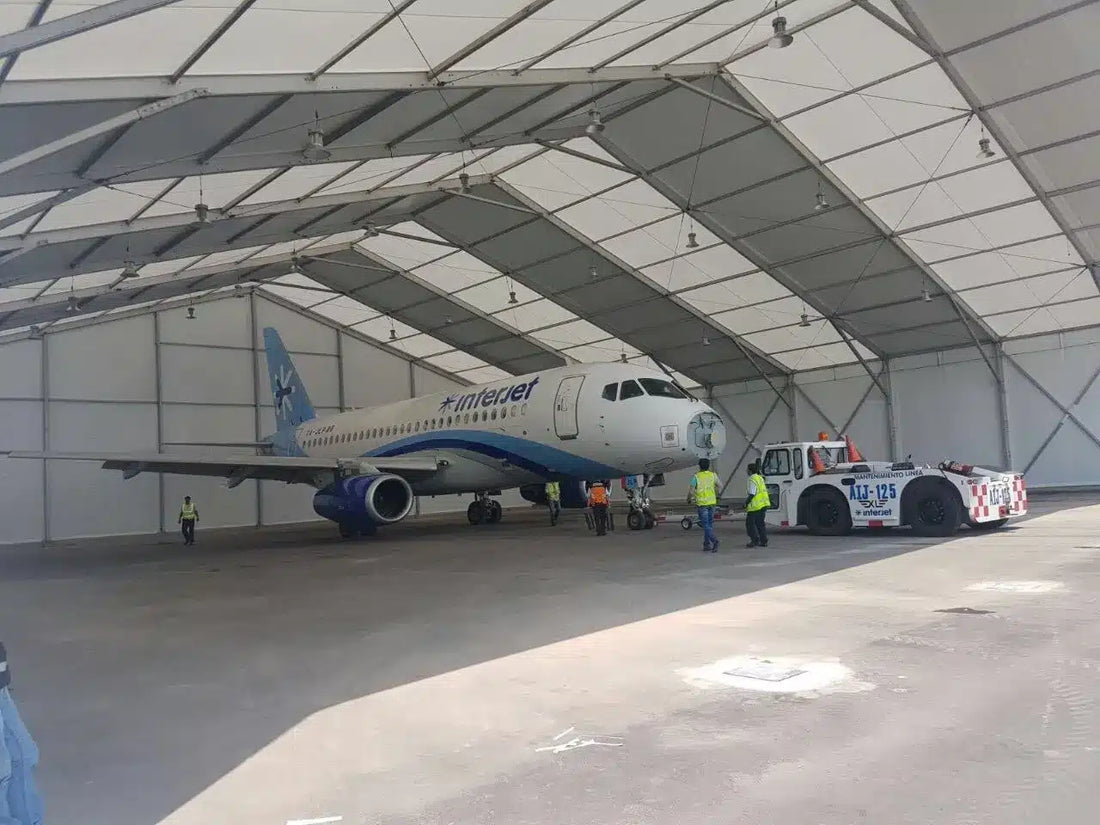
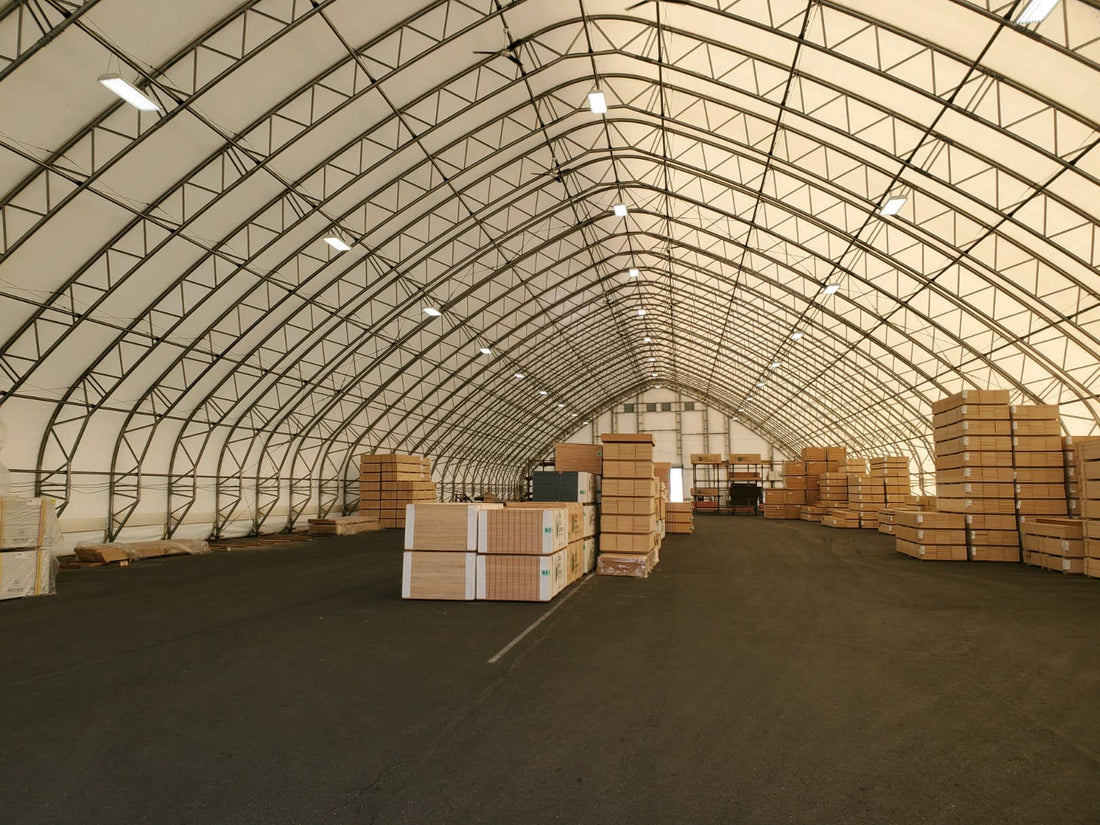
At the lighter end, you have storage tent canopies for temporary yard coverage. At the heavier end, large-span fabric arch buildings cover 80 to 120 feet wide and handle bulk material storage, maintenance bays, and loading operations at a scale that rivals traditional steel buildings.
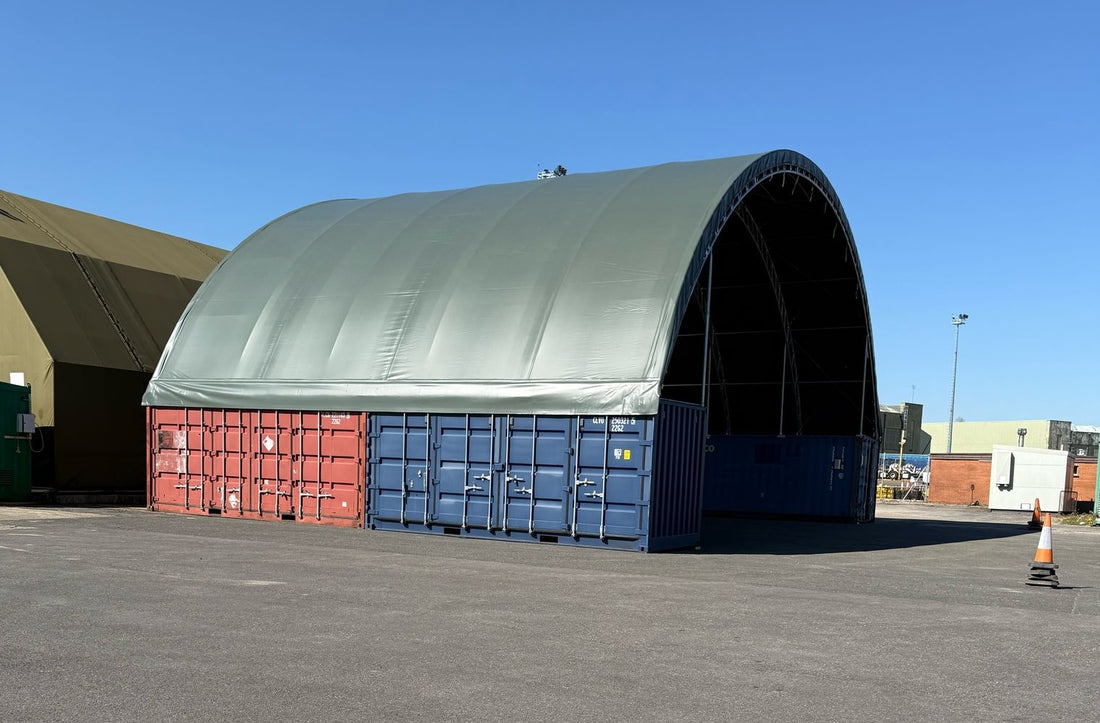
Container canopies sit within this range, using existing shipping containers as the structural foundations. That single design decision removes the need for concrete footings on many sites, which reduces groundwork and setup time considerably.
What connects all of them is the core purpose: protected operational space without the capital commitment, permitting timeline, or permanence of a conventional build.
Container Canopy vs. Other Shelter Types: What's the Difference
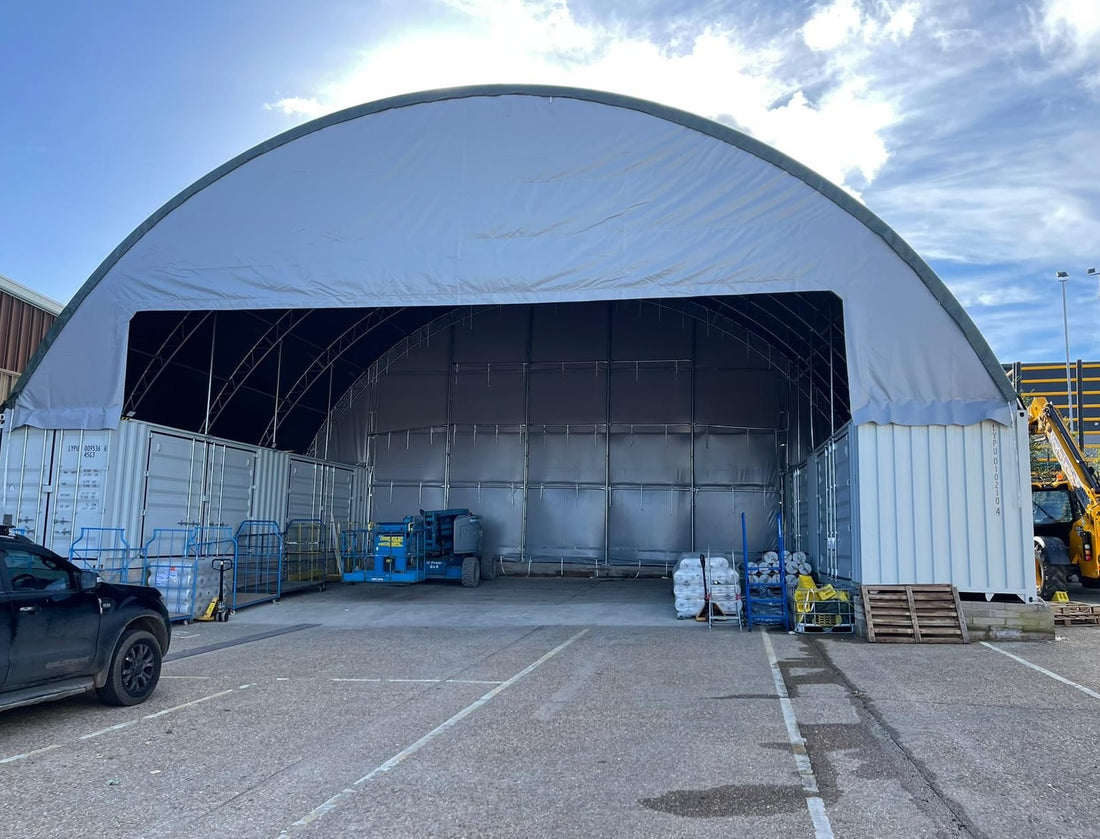
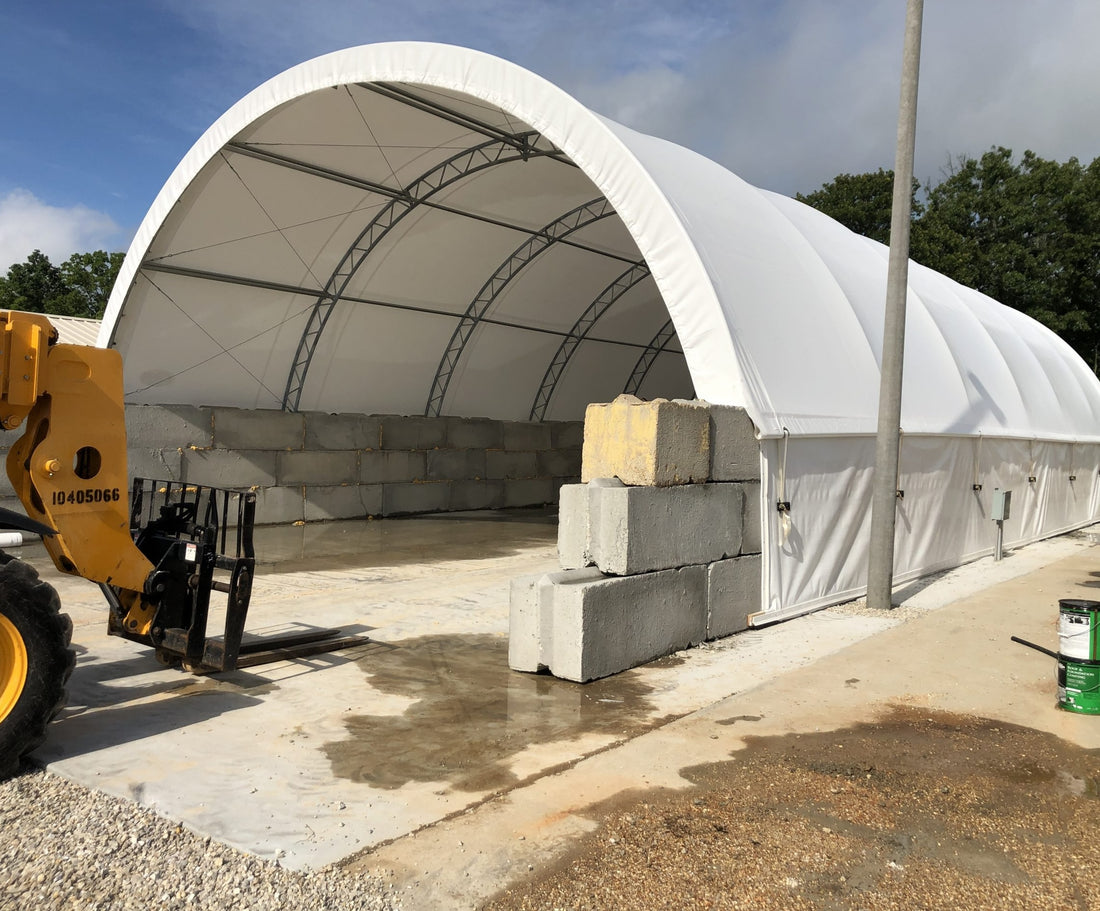
A container canopy, also called a conex canopy or shipping container shelter, mounts directly onto two ISO shipping containers set in parallel. The arch or peaked frame spans between them, and the fabric cover extends over the space between and beyond the containers.
The containers serve as both the foundation and the side walls. That means no groundworks, no concrete pours, and no anchor systems on many sites. For construction compounds, logistics yards, and quarry sites where containers are already on-site, a container shelter is frequently the fastest path to covered space.
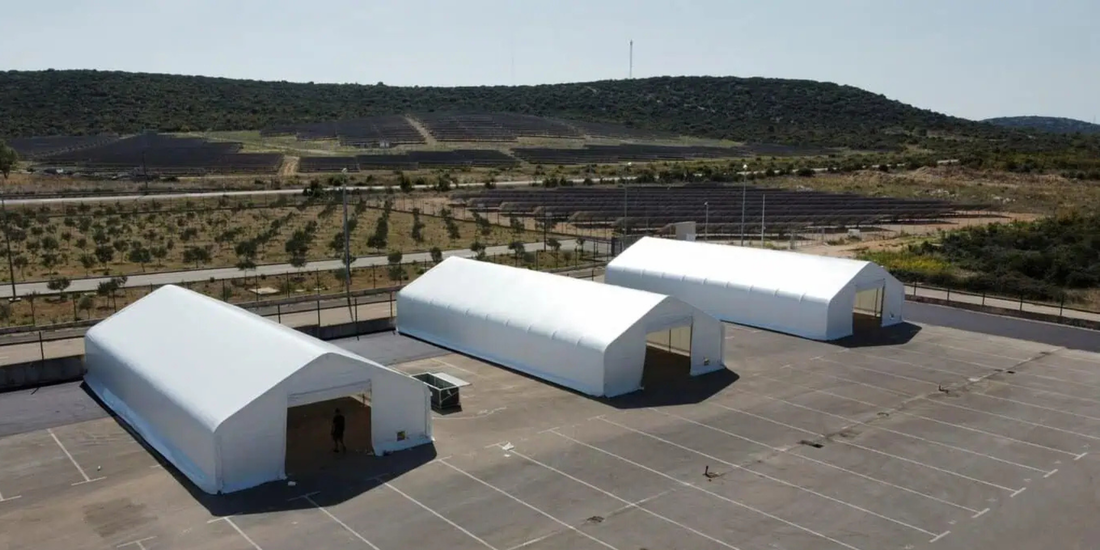
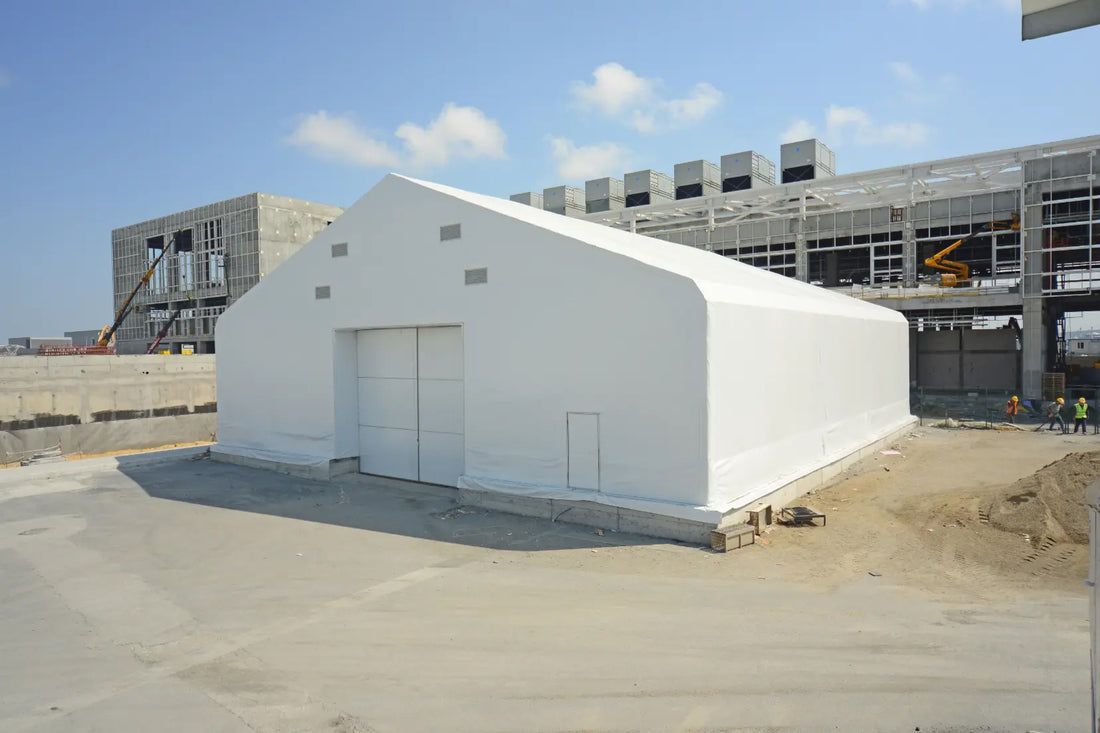
A standard storage shelter, by contrast, requires ground anchoring, concrete pads, blocks, or driven posts depending on the site. These allow for enclosed sides, larger clear spans, and warehouse-style configurations, making them better suited for bulk storage or operations that need a completely enclosed environment.
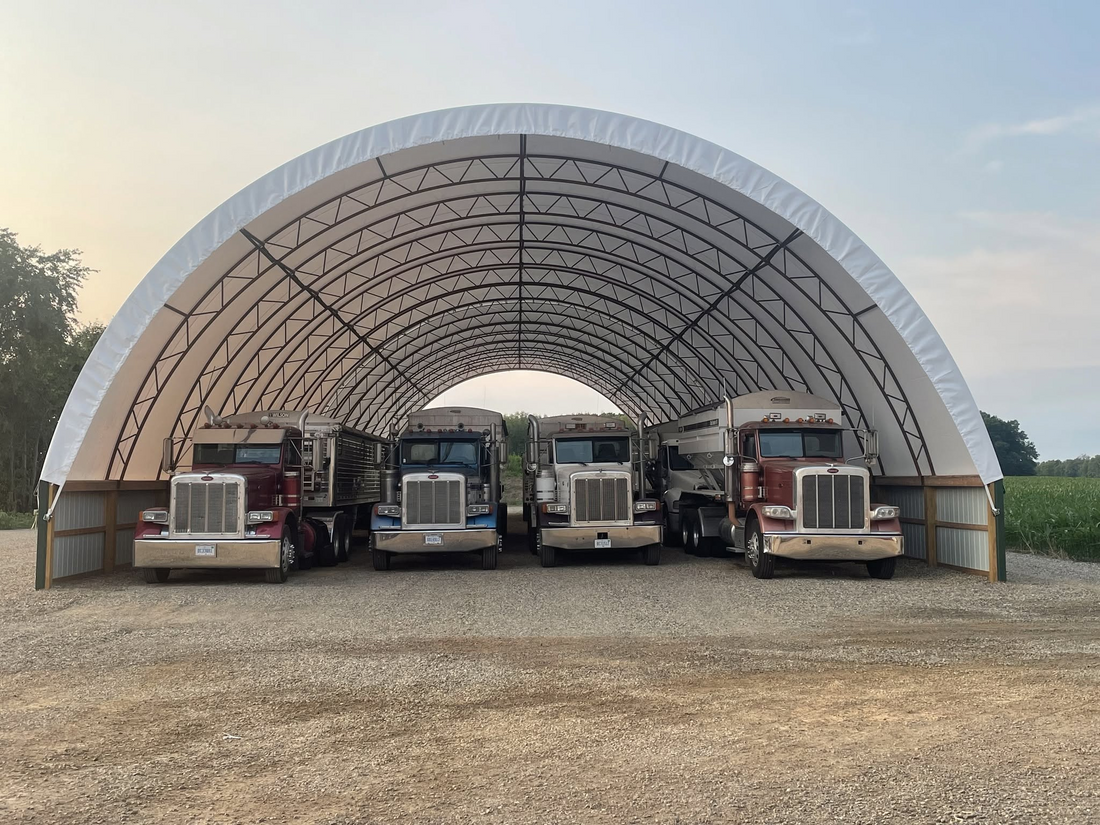
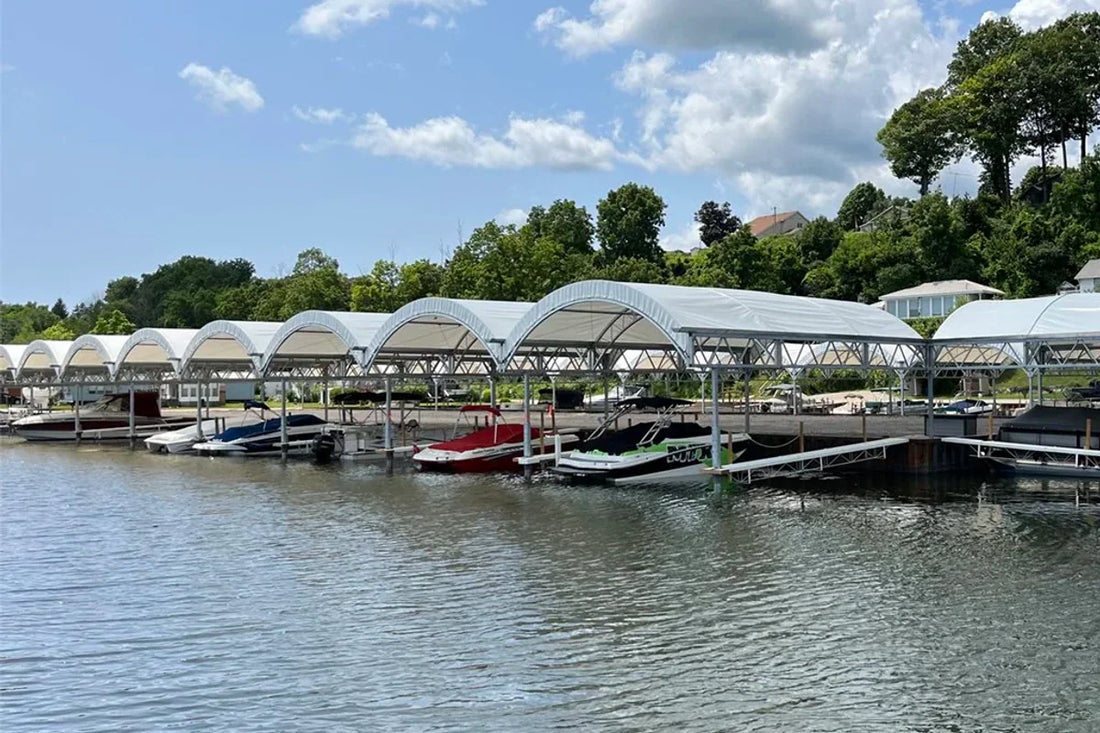
Dome shelters for sale in both configurations operate on similar principles: engineered arches with tensioned fabric. The choice between types comes down to what's already on your site and what the covered space actually needs to do.
Where Industrial Canopies Get Used
The industries buying these structures are varied, but the underlying need is consistent, covered operational space, delivered fast, without a permanent footprint.
Construction sites use container shelters as site compounds, equipment maintenance covers, and materials stores. A 60ft container shelter can cover two excavators or a full lineup of site vehicles with room for a working area alongside them.
Logistics and distribution yards use storage container canopies as buffer loading zones, vehicle staging areas, and overflow storage when warehouse capacity is full. The ability to set up a 100ft canopy in days, without groundworks, is what makes this viable as an operational solution rather than a workaround.
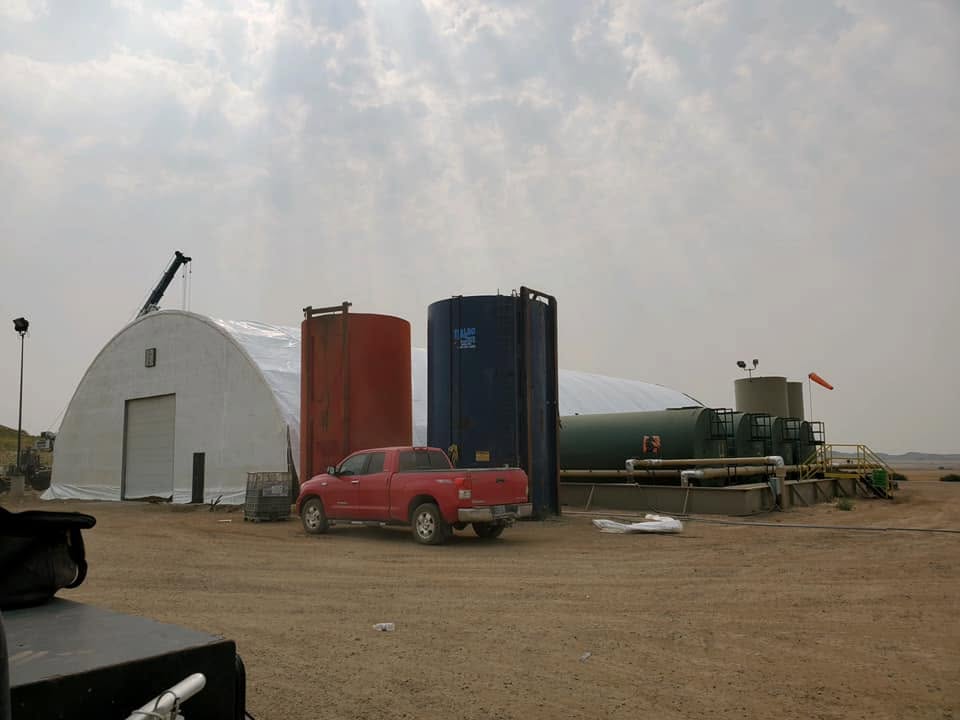
Mining and aggregates operations run heavy-duty canopies over conveyor systems, crusher feeds, and bulk stockpile areas. These environments demand structures that handle constant mechanical vibration, airborne particulates, and sustained wind exposure. Lightweight alternatives don't hold up here.
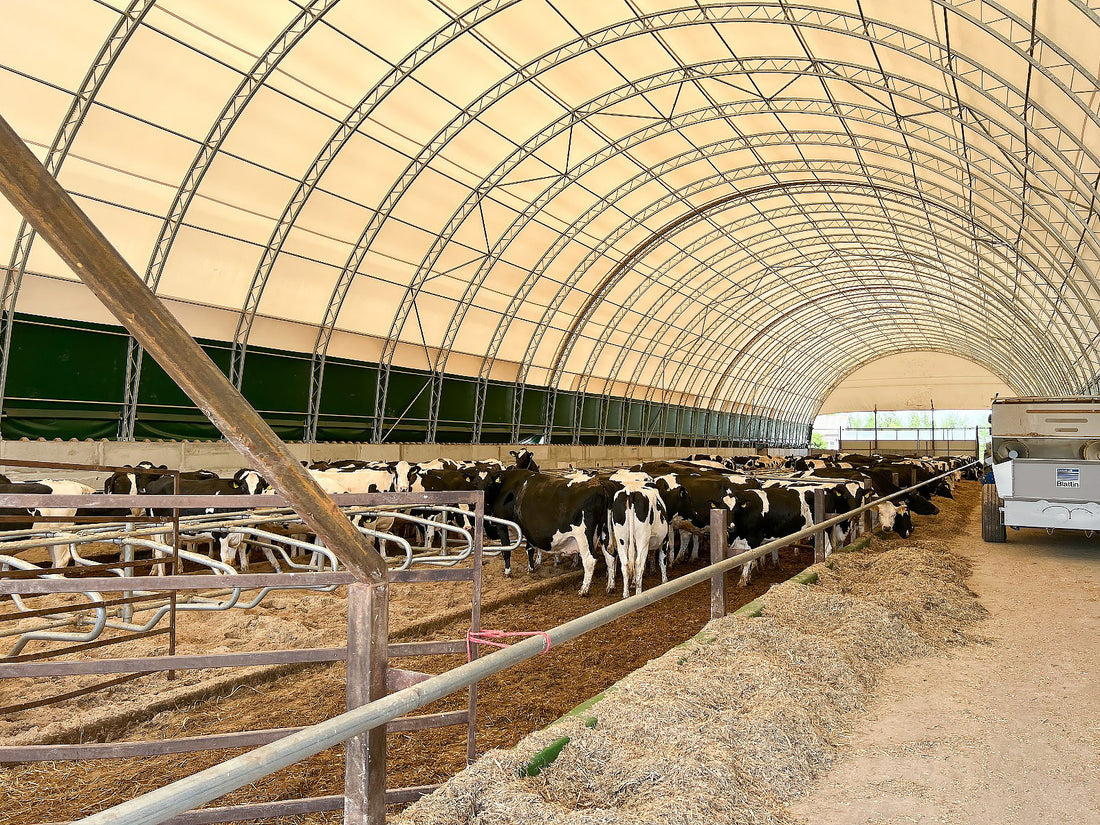
Agriculture and ranching operations use container covers and storage canopies for equipment, hay, and feed storage. Utilities and energy sector projects use them as temporary works covers and equipment laydown yards on project sites.
Government and defense applications lean toward relocatability, the ability to dismantle, transport, and reinstall the same structure at a different location is a significant operational advantage for temporary deployment requirements.
What the Structure Is Actually Made Of
This is where most buyers should spend more time before purchasing. The material specification tells you what a canopy will actually do under load, and how long it will last before it requires repairs or replacement.
Steel frames should be hot-dip galvanized, not painted or cold-galvanized. Hot-dip galvanizing penetrates and bonds to the steel, providing corrosion resistance that painted finishes can't match in outdoor industrial environments. Sites with salt air, chemical exposure, or high humidity are particularly unforgiving to frame steel that wasn't properly treated.
Single-truss and double-truss configurations serve different span requirements. Single-truss frames work for shorter spans and lighter load requirements. Double-truss frames handle longer spans and sites with significant snow or wind load demands. The frame type should be specified to your site location's wind and snow load data, not just chosen by size or price.
Fabric covers vary by grade. Standard PVC fabric handles most applications. PVDF and PTFE fabrics offer higher UV resistance, longer service life, and fire rating options for sites with stricter safety codes. Any fabric used on an industrial structure should be UV-stabilized and fire-rated to meet site safety requirements.
Sheltirx uses heavy-duty PVC, PVDF, and PTFE fabrics across their SkyShield container canopy range, paired with hot-dip galvanized steel frames built to meet IBC and area-specific wind and snow load requirements. That engineering approach is what sits behind their zero structural failure record, not marketing language, but the result of specifying materials correctly for the environments they're deployed in.
What to Look For Before You Buy
The purchasing decision for industrial canopies involves more variables than most buyers account for up front. Here are the ones that matter.
Site conditions first. Know your wind and snow load requirements before you select a structure. A 120ft canopy installed in Wyoming without adequate snow load engineering will fail. The same structure engineered to local IBC requirements will last decades. Ask the supplier for engineering documentation, not just a product specification sheet.
Foundation compatibility. Container canopies need ISO shipping containers on site, typically 20ft or 40ft standard containers set at the correct spacing for the shelter width. If containers aren't on site, the logistics of sourcing them factor into the total project requirements. Storage shelters need ground anchoring, which may require concrete work depending on your surface.
Relocatability requirements. If there's any chance the covered space needs to move, to a different part of the yard, or to a different site entirely, a relocatable fabric structure delivers ROI that a fixed-foundation approach can't. Sheltirx structures are fully relocatable and designed to be dismantled and reinstalled with minimal downtime.
Lead time vs. availability. Stocked structures ship in days. Custom sizes require fabrication lead times, often six to ten weeks. If your operation needs covered space within a tight program, work with a supplier that carries stock inventory in the sizes you need.
For buyers evaluating options, the heavy duty industrial canopies range from Sheltirx covers widths from 20ft to 120ft, with in-stock availability and same-day quoting across standard sizes.
Understanding ROI
Industrial canopy specifications vary significantly based on span width, fabric grade, frame specification, and whether the structure is a stock unit or a custom build.
A 20ft container shelter sits at the entry point of the range and suits single-container vehicle or equipment cover. A 100ft to 120ft canopy covers industrial-scale operations, but the comparison point isn't just a smaller canopy, it's a permanent steel building with a foundation, permitting timeline, and fixed location.
The ROI case for fabric canopies over permanent structures is built on three factors: faster deployment (days versus months), reduced capital requirements, and relocatability. A structure that can move with your operation retains its value in a way that a fixed building cannot.
Maintenance requirements are also lower than most buyers expect. Hot-dip galvanized frames require minimal corrosion maintenance. PVC and PVDF fabrics are designed for long service life in outdoor conditions. The operational requirements of a well-specified canopy over ten years are consistently favorable compared to equivalent permanent construction.
Before requesting a quote, have your site dimensions, intended use, and location ready. For a detailed breakdown of what affects the specifications, check container shelter directly with the Sheltirx team; they can provide guidance once they have your site specs.
FAQ
Do I need permits for an industrial canopy?
Many US jurisdictions classify fabric structures and container canopies as temporary, which can reduce or streamline the permitting process. That said, some areas still require a permit, an engineering letter, and a site plan. Sheltirx provides engineering drawings, load calculations, and documentation to support the permit process, your GC or local AHJ confirms what's required for your specific site.
How long does a container shelter take to install?
Standard container canopy sizes typically install within a few days once the structure is on site and containers are in position. Larger or custom structures take longer depending on size, access conditions, and crew size. The Sheltirx team can provide a realistic installation timeline based on your specific configuration.
Can I add walls or doors to a container canopy?
Yes. End walls, personnel doors, roller doors, and ventilation options can all be added. The base canopy provides weather-resistant overhead cover; enclosure options turn it into a fully enclosed space. Specify your enclosure requirements upfront so the structure is designed to accommodate them.
What's the difference between a container shelter and a storage shelter for my site?
The deciding factor is usually whether you already have containers on site. A conex canopy uses the containers as its foundation, if they're already there, it's faster and cheaper to set up. A storage container canopy with ground anchoring gives you more flexibility in placement and better options for full enclosure. If you're comparing both for the same application, Sheltirx can advise on which configuration makes sense for your specific yard layout and use case.
How long will the structure last?
Properly specified and maintained, a Sheltirx fabric canopy is designed for decades of service. Hot-dip galvanized frames resist corrosion in industrial environments without ongoing treatment. The PVC, PVDF, and PTFE fabric options carry varying service life ratings, with PVDF and PTFE grades suited to the longest-term applications. The structures come backed by Sheltirx's guarantees, reflecting confidence in the engineering and materials rather than just the initial sale.
Get the Right Structure for Your Site
Industrial canopies are a practical solution for covered operational space, provided the structure is engineered for your site, not just sized for your requirements.
Sheltirx designs, supplies, and installs container shelters, storage canopies, and large-span fabric buildings across construction, logistics, mining, agriculture, and government operations. Every structure is backed by engineering documentation, IBC-compliant design, and a zero structural failure record.
Get a same-day quote. Contact the Sheltirx team at +1 (307) 456-1125 or request a quote online with your site dimensions and use case.