
Objective
Help industrial buyers and site managers understand the practical difference between a container awning and a container canopy, and choose the right structure for their application.
Key Takeaways
- A container awning and a container canopy are not the same product
- Each suits different site layouts, operational needs, and load requirements
- Sheltirx offers both, engineered to your site conditions
Someone calls in asking for a "container awning." After a few questions, it turns out what they actually need is a spanning canopy bridging two 40-foot containers to cover a loading area. Different product. Different engineering. Different price.
This mix-up happens regularly. The terms get used interchangeably online, and most generic content doesn't help, it just repeats the confusion.
This post draws a clear line between a container awning and a container canopy: what each one is, how each one works, and which one belongs on your site.
Why the Distinction Matters
Ordering the wrong structure doesn't just mean a refund and a reorder. It means delays, site downtime, and potentially a foundation or anchoring setup that doesn't suit the product you actually need.
A container awning and a shipping container canopy have different span requirements, different fabric loads, and different anchor configurations. Getting clear on which one you need before you quote is the fastest path to a structure that installs correctly and performs for years.
What Is a Container Awning?
A container awning is a cover that extends outward from the side or top of a single shipping container. Think of it as a fixed projection, it creates sheltered space directly adjacent to the container wall.
Common uses: covered access at a container entrance, shade for personnel working at the container door, weather protection for equipment staged alongside a single unit.
The awning mounts directly to the container frame. It doesn't span across open air or bridge multiple containers. The container itself carries most of the structural load, which keeps the anchoring requirements minimal.
Fabric weight and frame gauge on a container awning are typically lighter than on a full canopy, because the span is shorter and the exposure is lower. That changes when the awning faces sustained wind or is in a high-UV region, where a heavier PVC or PVDF fabric becomes the right call.
What Is a Container Canopy?
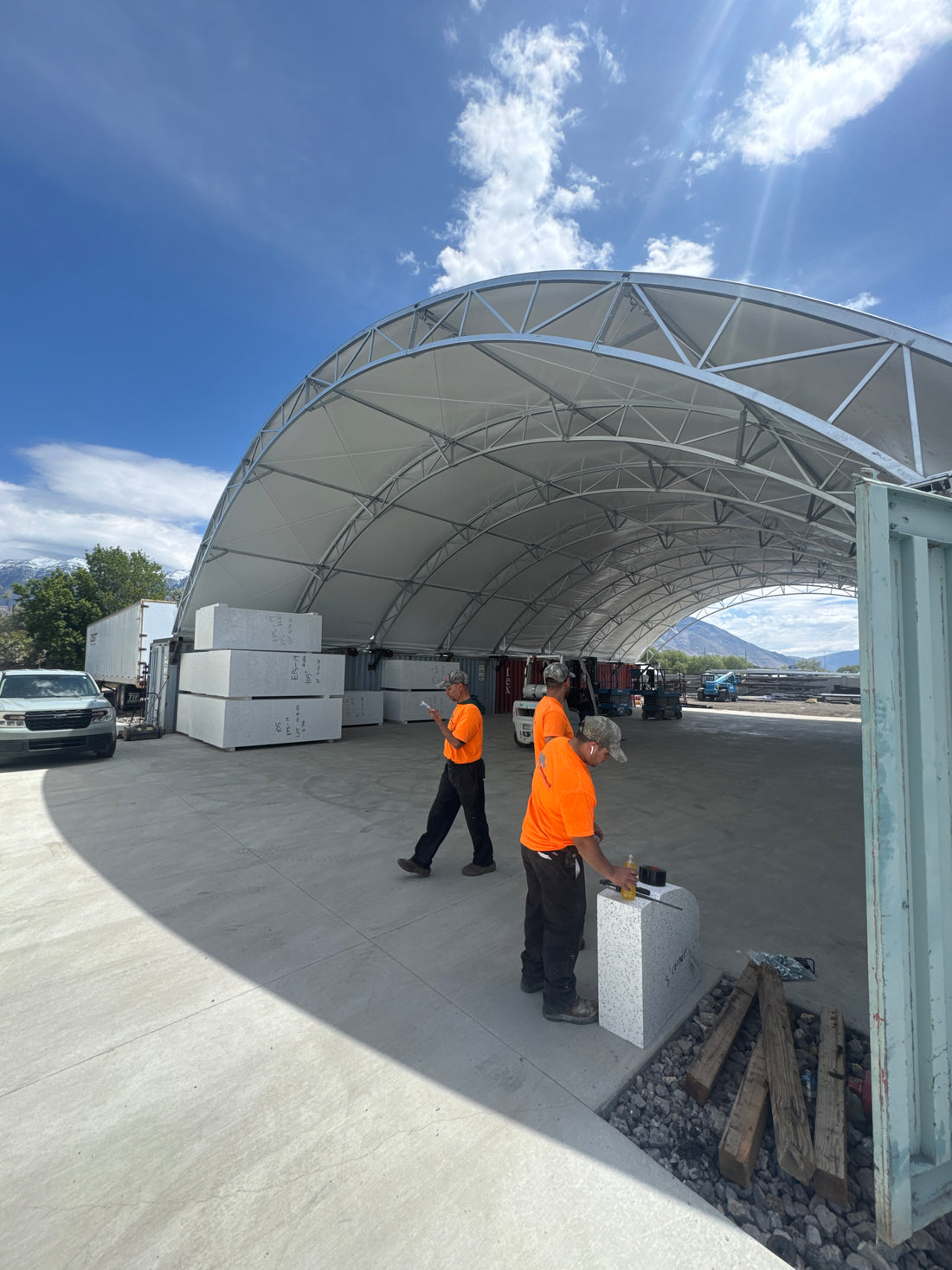
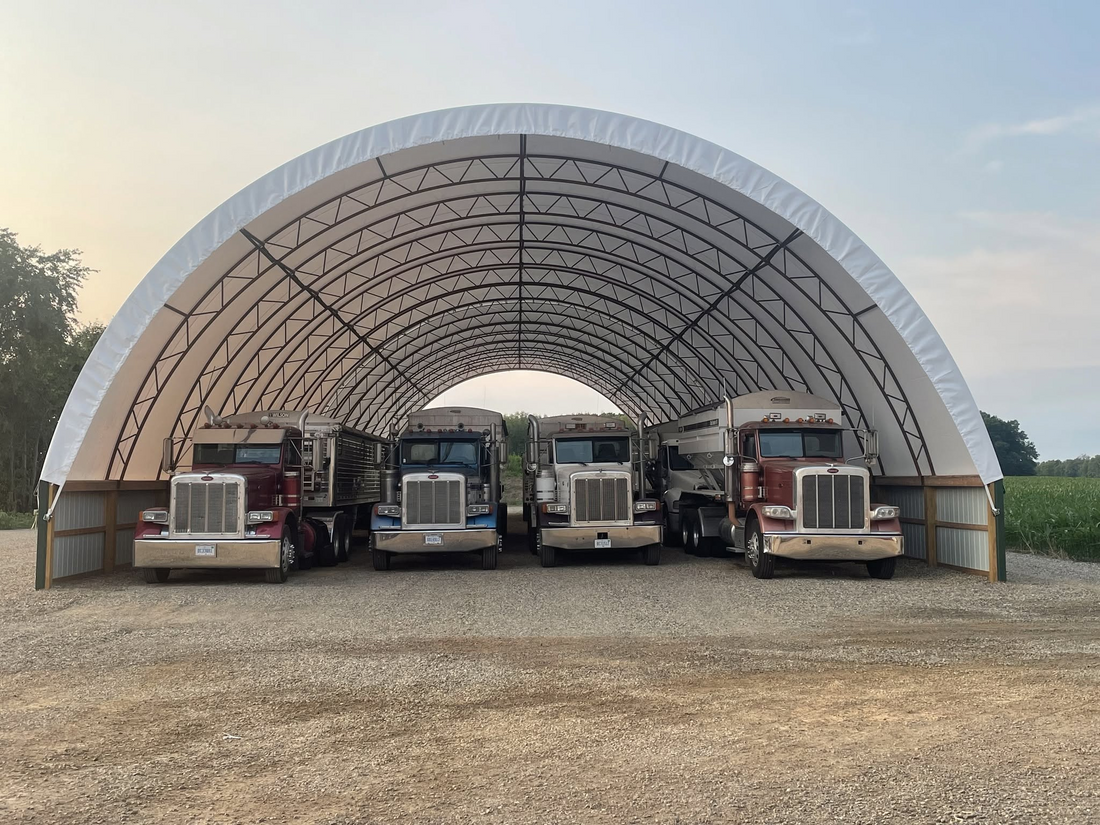
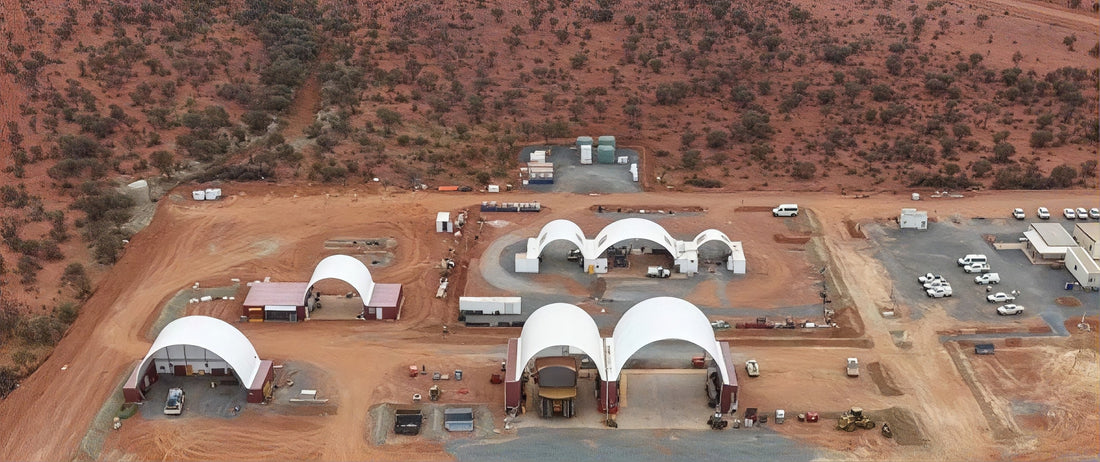
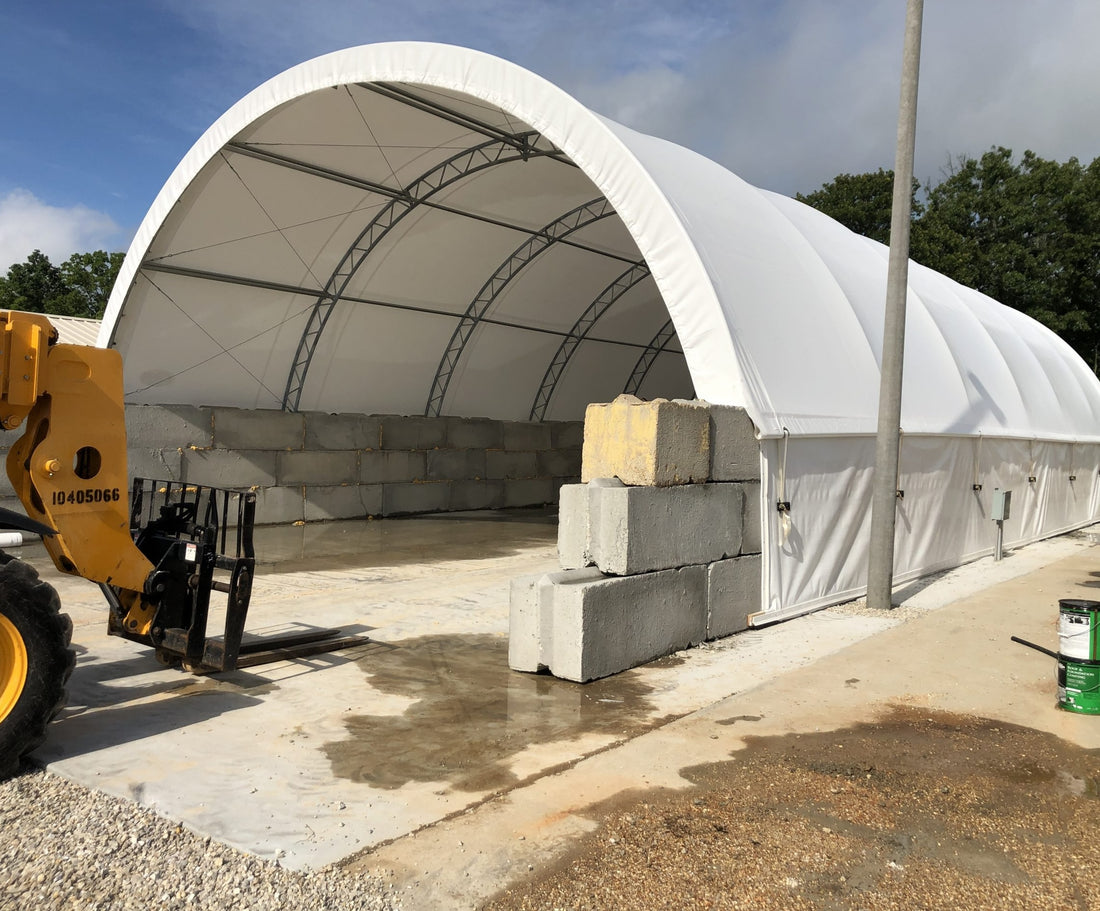
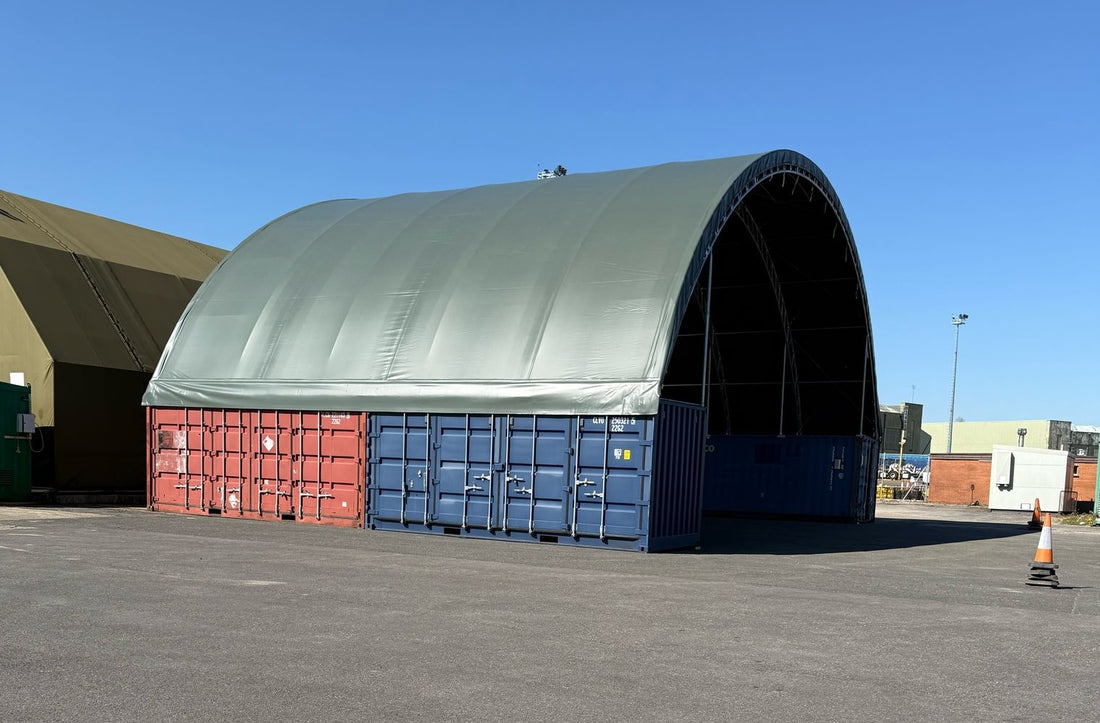
A container canopy, also called a conex canopy or shipping container canopy, spans across one or more containers, covering the space above and between them. The containers act as the primary support structure on either side.
This is what most industrial buyers actually need. A logistics yard with two rows of containers and a loading operation in between needs a canopy, not an awning. The covered span can range from a single container width to a full bridging structure across multiple units.
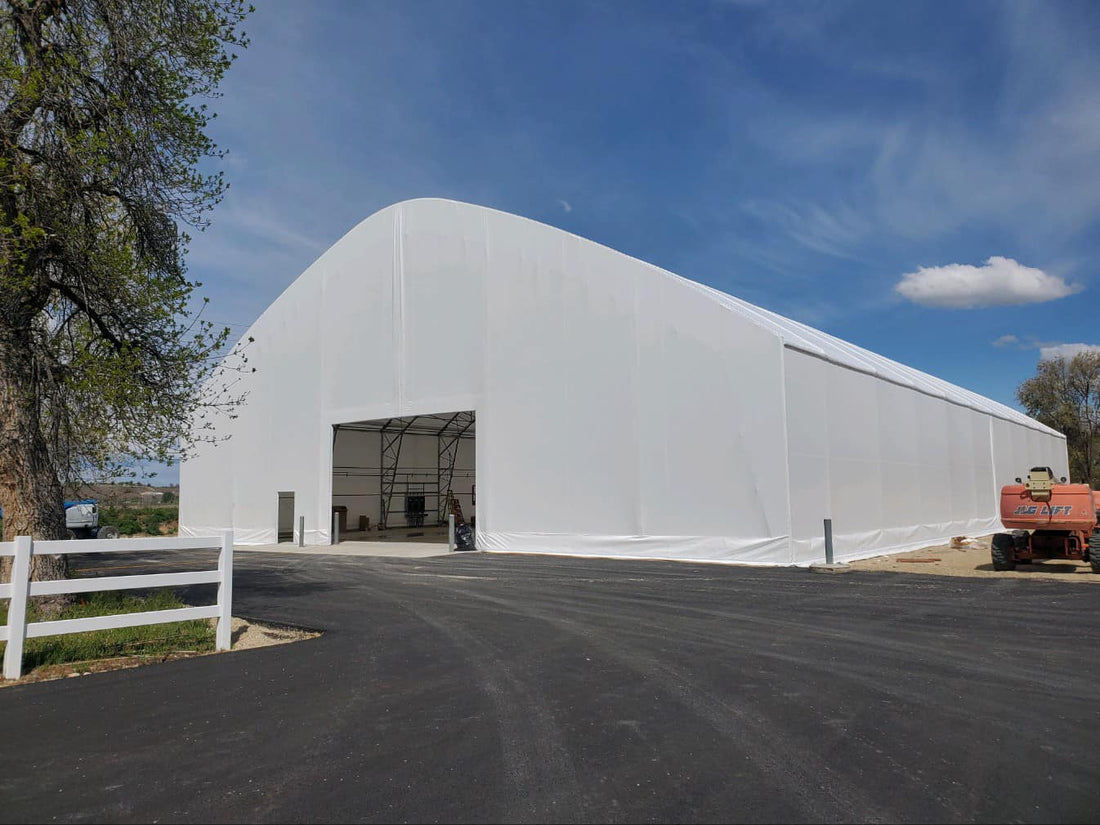
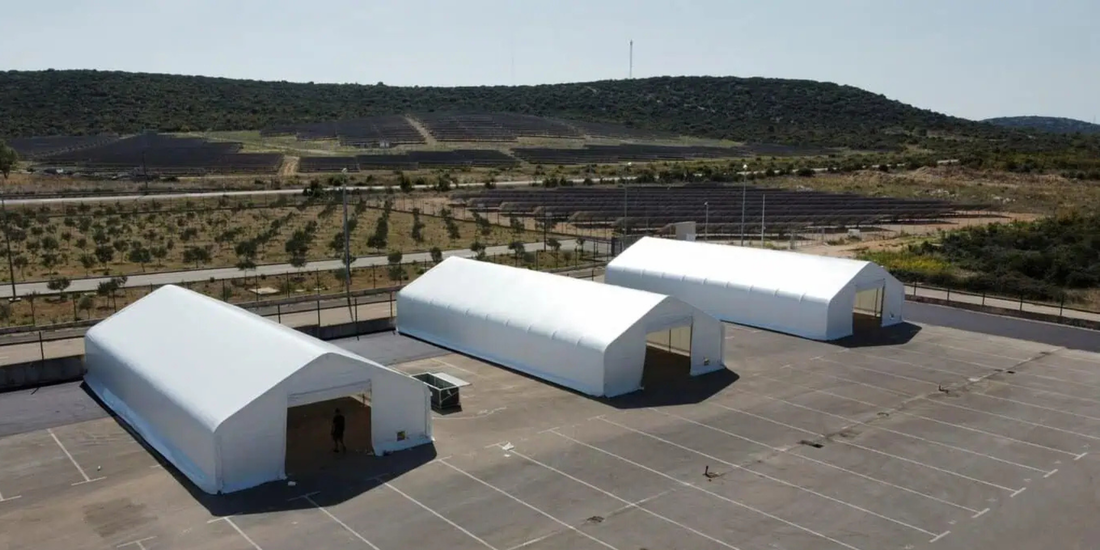
A container shelter takes this further, adding side walls, end closures, or doors to the canopy frame, turning it into a more enclosed working environment. The base structure is the same. The enclosure level is what changes.
For buyers trying to understand the conex box canopy difference, the short version is: a conex canopy is a container canopy by another name, with "conex" being the military-origin term for ISO shipping containers that stuck in industrial usage.
Container Awning vs Canopy: Side-by-Side Comparison
|
Container Awning |
Container Canopy |
|
|
Span |
Projects from one container |
Bridges across containers |
|
Support |
Mounts to single container wall |
Containers on each side carry the load |
|
Covered area |
Adjacent to container |
Between and above containers |
|
Typical use |
Door cover, access shade |
Loading bay, equipment cover, work area |
|
Ground anchoring |
Minimal |
Depends on container placement |
|
Enclosure options |
Limited |
Sides, ends, and doors available |
|
Fabric/frame weight |
Lighter |
Heavier, wider span, higher load |
The container awning vs canopy choice comes down to one question: are you covering space next to a container, or space between containers?
Which One Suits Your Site?
A container awning makes sense when you have a single container, a site office, a tool store, a welfare unit, and you need covered access at the door. It's a simple, low-groundwork addition that extends the usability of that container.
A container canopy or conex canopy is the right call when you're operating between containers. Loading and unloading in the open. Vehicles moving through a gap. Equipment staged in the space between two rows of units. That span needs a structure engineered to cover it properly.
A full container shelter, with enclosed sides and end walls, suits operations that need more than weather protection at the top. Maintenance work that requires a controlled environment. Storage that needs security as well as cover. Cold-weather operations where wind exposure matters.
Understanding container shelter benefits starts with knowing whether you need an open canopy or an enclosed structure, because the benefits depend entirely on what you're asking the structure to do.
What to Check Before You Buy
Span width. Measure the distance between your containers precisely. A canopy that's 50mm short of spanning your gap isn't a canopy, it's a problem on delivery day.
Wind and snow loads. A shipping container canopy in Wyoming faces different loads than a container cover in Southern California. Your supplier should be engineering to your location's actual wind and snow data, not a national average. Sheltirx structures are designed to meet area-specific loads in line with the International Building Code (IBC) or local codes.
Fabric specification. PVC is the standard. PVDF handles higher UV exposure and holds its tensile strength longer. PTFE is the top tier for durability and fire resistance. Ask for the datasheet, not just "heavy-duty fabric."
Relocatability. If your container layout might change, your canopy needs to move with it. All Sheltirx container canopies are fully relocatable, dismantled and reinstalled without specialist equipment.
Lead time. Stocked container canopy sizes typically ship within 10 working days. Custom sizes or enclosed container shelter configurations take longer, usually 6–10 weeks from design to delivery. Know your programme before you order.
FAQ
Q: Can I use an awning and a canopy together on the same site?
Yes, and it's a common setup. A single container used as a site office gets an awning over the door. The two storage containers beside it get a canopy bridging across. Each structure does a different job, and they don't need to match.
Q: My site only has one container. Do I need an awning or can I still get a canopy?
You can engineer a canopy off a single container with ground-mounted posts on the opposite side, it's not exclusively a two-container system. Share your site layout and we'll advise what works structurally.
Q: What's the lead time for a stocked container canopy?
Stocked sizes ship within 10 working days. Custom dimensions or enclosed shelter configurations run 6–10 weeks. If your programme is tight, contact us early, we can often stage delivery to fit around your site access windows.
Q: Are container canopies permanent structures?
Not by design. They're engineered to perform like permanent structures, same load ratings, same material quality, but they're fully relocatable. That's the point. You get structural performance without the permanence.
Conclusion
The container awning vs canopy question has a clear answer once you know your site layout and what the structure needs to cover. An awning works alongside a single container. A canopy works across multiple containers or open spans. A full container shelter adds enclosure when you need it.
Getting the spec right from the start avoids the problems that come with getting it wrong. Sheltirx will advise on the right structure for your site, same day, based on your actual dimensions and use case.